
Cubital Tunnel Syndrome Treatment 2026: Steps That Work

Medically reviewed by
Dr. Saurabh Dang, MD, MBA
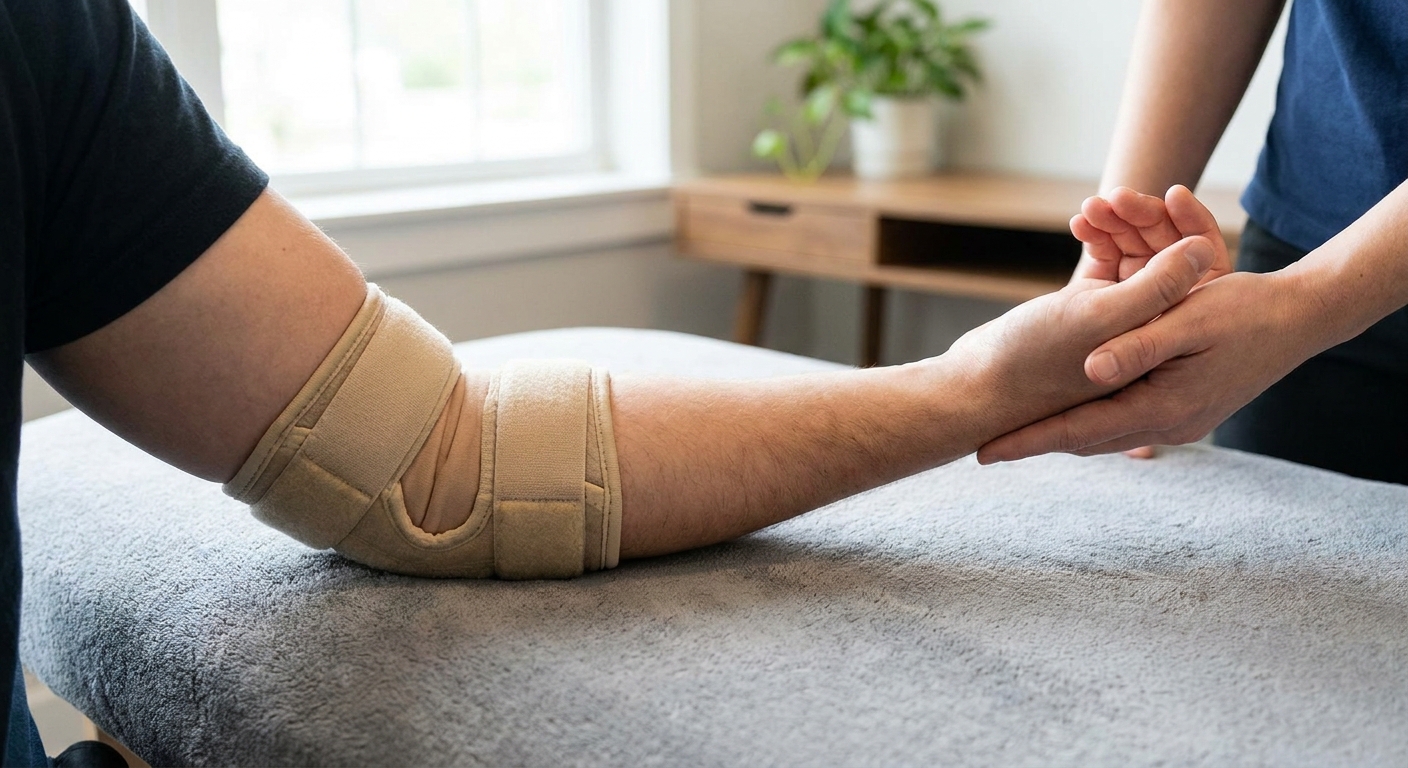
Cubital tunnel syndrome happens when the ulnar nerve gets compressed at the elbow, and the fix depends on catching it before the numbness turns into permanent weakness. This guide walks through the exact sequence a pain specialist follows, from the first splint to the point where an injection or surgical referral makes sense.
TL;DR
- Cubital tunnel syndrome treatment starts with night splinting and nerve gliding exercises, not surgery.
- Most mild-to-moderate cases improve within 6 to 8 weeks of activity modification and bracing in 2026 clinical practice.
- A steroid injection or ulnar nerve block is the next step if symptoms persist past 8 weeks.
- Surgical referral is reserved for muscle wasting, constant numbness, or failed conservative care after 3 months.
- Nerve conduction studies confirm severity and guide whether you need injections or a surgeon.
Why this matters
The ulnar nerve runs through a narrow tunnel behind your elbow, right where you rest your arm on a desk or car door all day. Compress it long enough and you get tingling in the ring and pinky fingers, then grip weakness, then, if ignored, visible muscle wasting in the hand. Cubital tunnel syndrome treatment works best early, before the nerve sustains structural damage that no injection or brace can reverse.
The condition often gets confused with carpal tunnel syndrome treatment, but the compression site and nerve are different, which changes the exercises and splint position entirely. Getting the diagnosis right in the first visit saves months of treating the wrong nerve.
Hudson Pain and Spine sees this pattern constantly in patients who lean on their elbows at a desk, sleep with the arm bent tight against the chest, or spend hours gripping a steering wheel. The pattern is fixable in most people without surgery, but only if the treatment sequence is followed in order.
What you’ll need
- A clinical exam and, if symptoms have lasted more than 2-3 weeks, a nerve conduction study (NCV/EMG)
- An elbow extension splint or foam pad rated for nighttime wear
- 10-15 minutes daily for nerve gliding and stretching exercises
- A log of activities that trigger symptoms (typing position, sleep posture, phone-holding habits)
- Access to interventional pain management if conservative care stalls after 6-8 weeks
The steps
1. Confirm the diagnosis with a nerve conduction study
A physical exam alone misses roughly a third of cases that turn out to be more severe than they look. An NCV/EMG measures how fast signals travel through the ulnar nerve at the elbow and tells you whether you’re dealing with mild irritation or a true compression injury.
This step matters because treatment for mild tingling looks nothing like treatment for a nerve that’s already losing conduction speed. Skip it and you risk under-treating a moderate case for months. Common mistake: waiting until grip weakness shows up before getting tested — by then the nerve has already lost fibers.
2. Stop the compression at the source
Identify exactly what’s loading the elbow: leaning on a desk, sleeping with the arm bent past 90 degrees, or resting the elbow on a car window during long commutes. Remove that specific pressure point first, before anything else.
Most patients see partial relief within 1-2 weeks just from this change, which confirms the diagnosis is correct. Common mistake: switching desk setups but still sleeping with the elbow folded tight against the chest, which undoes the daytime fix overnight.
3. Splint the elbow at night
Wear an extension splint or a rolled towel taped around the elbow to keep it at roughly 30-45 degrees of flexion during sleep. This is the single highest-yield intervention for mild to moderate cubital tunnel syndrome treatment.
Expect noticeable improvement in morning numbness within 2-3 weeks of consistent nightly use. Common mistake: wearing the splint loosely so it slips off by 3 a.m., which means zero hours of actual protection.
4. Start nerve gliding exercises
Ulnar nerve glides, done gently 2-3 times daily, help the nerve move freely through the compressed tunnel instead of adhering to surrounding tissue. These are not stretches — they’re slow, controlled movements through the nerve’s full range.
Done correctly, patients report less tingling with wrist and elbow motion within 3-4 weeks. Common mistake: doing the glides aggressively or too often, which irritates an already inflamed nerve instead of mobilizing it.
5. Add a short anti-inflammatory course
A brief course of NSAIDs, if your physician clears it based on your health history, reduces the swelling around the nerve that’s contributing to compression. This is a bridge, not a fix — it buys comfort while the splint and exercises do the real work.
Common mistake: relying on anti-inflammatories alone for 2-3 months without addressing the mechanical compression, which delays real progress.
6. Escalate to interventional pain management if symptoms persist past 6-8 weeks
If numbness, tingling, or grip weakness hasn’t meaningfully improved after 6-8 weeks of splinting, exercises, and activity changes, an ultrasound-guided ulnar nerve block or targeted corticosteroid injection is the next move. This step reduces inflammation directly at the compression site and can buy months of relief while the nerve heals.
For patients whose nerve pain has become chronic despite injections, peripheral nerve stimulation is a further option worth discussing with a specialist. Common mistake: jumping straight to injections in week one, before giving splinting and activity modification a fair trial.
7. Get a surgical referral if conservative care fails
Muscle wasting in the hand, constant (not intermittent) numbness, or no improvement after 3 months of consistent conservative treatment are the signals that mean surgical decompression should be discussed. Surgery for cubital tunnel syndrome has a strong track record when done before permanent nerve damage sets in, but it’s not a first-line step in 2026 practice.
Common mistake: delaying the surgical conversation out of hoping symptoms will resolve on their own once wasting has already started — at that point, time works against you.
8. Rehab and follow-up
Whether you resolve with conservative care, injections, or surgery, follow-up nerve testing 6-12 weeks later confirms the nerve is actually recovering, not just that symptoms feel better. Grip strength and sensation testing should be part of every follow-up visit.
Common mistake: stopping follow-up once pain fades, then missing a slow relapse that shows up months later.
Get your ulnar nerve evaluated
Schedule a diagnostic visit for elbow numbness or tingling before it progresses.
Troubleshooting
- Numbness returns every morning despite the splint. Check the splint angle — it should hold the elbow at 30-45 degrees, not fully straight or fully bent. A slipped splint provides zero protection overnight.
- Grip strength keeps dropping. This is a red flag for nerve fiber loss, not a normal recovery bump. Get repeat nerve testing rather than waiting out another month of exercises.
- Tingling spikes after phone or laptop use. Elbow flexion while typing or scrolling recompresses the nerve. Keep the elbow closer to 90 degrees or straighter during screen time.
- Symptoms improve, then flare after a long drive. Steering wheel position often re-triggers cubital tunnel syndrome. Adjust seat and armrest height so the elbow doesn’t rest on a hard edge.
- No change after 6 weeks of consistent conservative care. This is the point to move to an injection rather than extending the same routine another month.
- Tingling spreads beyond the ring and pinky fingers. That pattern suggests a different or additional nerve issue — worth ruling out with a broader exam, since it may point toward pinched nerve treatment for arm numbness and tingling rather than cubital tunnel alone.
Tools and resources
- Elbow extension splint (foam or rigid, worn nightly)
- Nerve conduction study / EMG referral
- Daily nerve gliding exercise routine
- Activity log tracking triggers (desk posture, sleep position, driving habits)
- Ultrasound-guided nerve block or steroid injection, when conservative care stalls
- Follow-up sensation and grip strength testing at 6-12 weeks
What to do next
If conservative measures haven’t moved the needle by week 6, the next conversation is about injections or, for cases with overlapping elbow tendon pain, ruling out conditions like tennis elbow and golfer’s elbow pain, which can mimic or coexist with cubital tunnel symptoms. Getting the right diagnosis at this stage prevents months of treating the wrong structure.
FAQ
What is the best cubital tunnel syndrome treatment for mild cases?
Night splinting combined with nerve gliding exercises is the best first-line cubital tunnel syndrome treatment for mild cases in 2026. Most patients see improvement in morning numbness within 2-3 weeks of consistent use.
Is cubital tunnel syndrome the same as carpal tunnel syndrome?
No, cubital tunnel syndrome compresses the ulnar nerve at the elbow while carpal tunnel syndrome compresses the median nerve at the wrist. The symptoms, exam findings, and treatment sequence differ even though both cause hand tingling.
How much does cubital tunnel syndrome treatment cost?
Costs vary by whether treatment stays conservative (splint and exercises) or escalates to nerve conduction testing, injections, or surgery. Insurance coverage and specific fees should be confirmed directly with your provider’s office.
Can cubital tunnel syndrome heal without surgery?
Yes, most mild to moderate cases resolve with splinting, activity changes, and nerve gliding exercises within 6-8 weeks. Surgery is reserved for cases with muscle wasting, constant numbness, or no response to conservative care after 3 months.
How long does it take for cubital tunnel syndrome to improve?
Mild cases often improve within 2-3 weeks of consistent night splinting and activity modification. Moderate cases can take 6-8 weeks before injections or further intervention are considered.
What happens if cubital tunnel syndrome is left untreated?
Untreated compression can progress from intermittent tingling to constant numbness and eventually visible muscle wasting in the hand. Nerve damage at that stage is harder to reverse, which is why early treatment matters.
Do steroid injections work for cubital tunnel syndrome?
An ultrasound-guided injection near the compression site can reduce inflammation and relieve symptoms when splinting and exercises alone haven’t worked by week 6-8. It’s typically used as a bridge before considering surgical referral.
When should I see a pain specialist for elbow numbness?
See a specialist if numbness or tingling in the ring and pinky fingers lasts more than 2-3 weeks or if grip strength starts to decline. Early evaluation with nerve testing prevents permanent nerve damage.
One last thing
The detail most patients miss: sleep posture causes more cubital tunnel flare-ups than desk setup, because the elbow stays bent for 7-8 hours straight with no chance to reposition. Fix the night splint before overhauling your workstation, and you’ll likely see faster results.
Related guides
- Pinched nerve treatment for arm numbness and tingling
- How to treat tennis elbow and golfer’s elbow pain
About the Medical Reviewer
Dr. Saurabh Dang is a double board-certified interventional pain management specialist serving Central and Northern New Jersey. He combines clinical expertise with a patient-centered approach to help patients find lasting relief from chronic pain conditions.
Read Full Bio →Seeking Treatment for Nerve Block Injections?
Dr. Dang and the team at Hudson Pain and Spine offer specialized care and advanced interventional treatments.
Ready to Find Relief from Pain?
Schedule your consultation with Dr. Saurabh Dang at our Englewood office.
Serving patients across Central and Northern New Jersey — Bergen, Passaic, and Middlesex counties.