
Best Hip Bursitis Treatment Options Ranked (2026)

Medically reviewed by
Dr. Saurabh Dang, MD, MBA
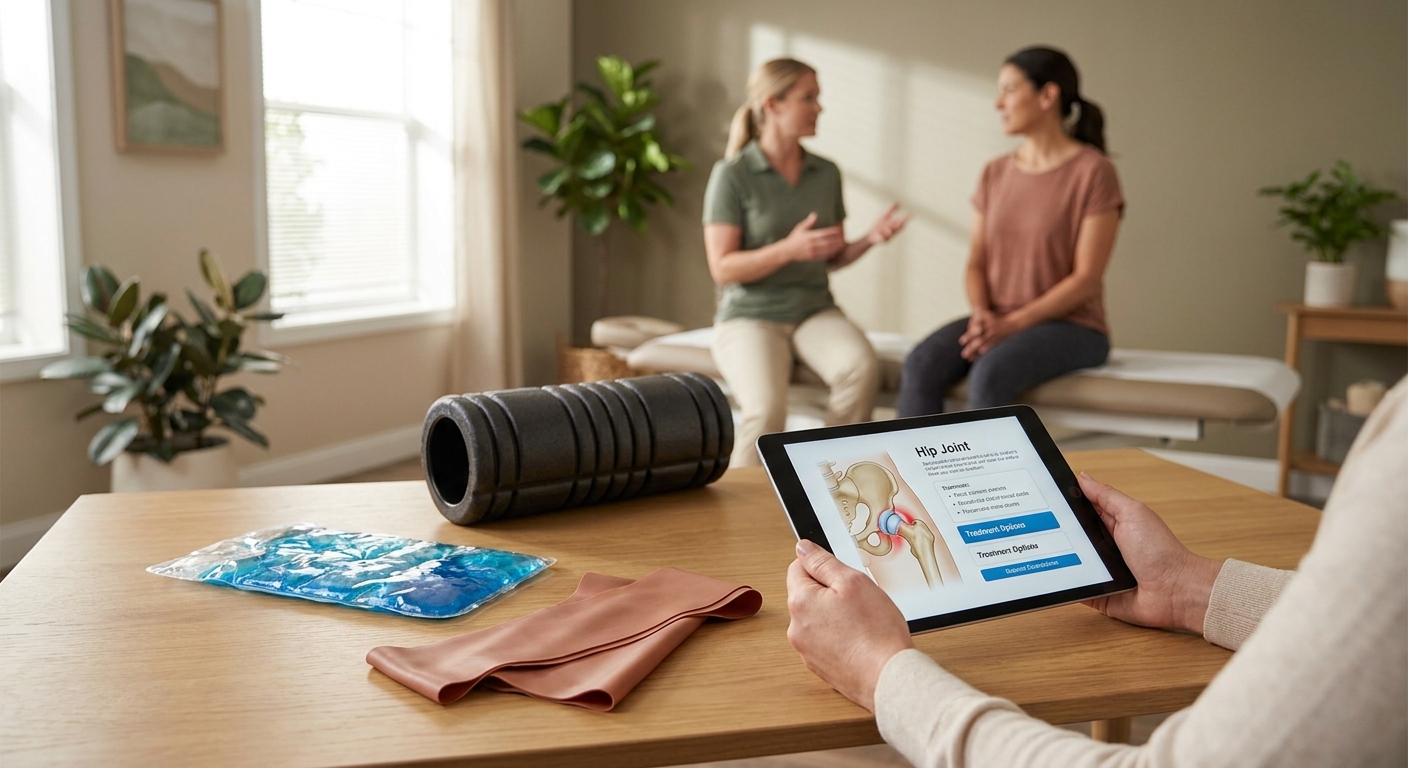
Hip bursitis pain responds to a predictable ladder of treatments, and skipping straight to injections or surgery before trying the basics wastes both time and money. This guide ranks the actual options in order of how interventional pain specialists sequence them in 2026, from home care to surgical referral.
TL;DR
- Corticosteroid injection is the fastest hip bursitis treatment for confirmed trochanteric bursitis: Buy.
- Physical therapy plus activity modification resolves most mild cases within 6-8 weeks: Buy.
- PRP injection is a reasonable second-line option when steroids stop working: Consider.
- Surgical bursectomy is rarely needed and should be a last resort: Skip for most patients.
- Runners and active adults need a different rehab plan than sedentary patients with hip arthritis overlap.
Why this matters
Hip bursitis, most often trochanteric bursitis on the outer hip, causes sharp pain when lying on that side, climbing stairs, or standing up after sitting. It’s frequently misdiagnosed as hip arthritis or a labral tear because the pain patterns overlap. Getting the diagnosis right changes the whole treatment plan.
Untreated bursitis doesn’t just linger, it compounds. Compensating for outer-hip pain changes gait mechanics, which stresses the lower back and the opposite hip. Active patients, including runners working through hip pain, often push through the ache until a simple case turns into a chronic one requiring more aggressive treatment.
How this list was ranked
Treatments here are ordered by clinical sequencing, not marketing preference: what a board-certified interventional pain physician tries first, second, and last. Ranking factors include time to relief, evidence strength for trochanteric and iliopsoas bursitis specifically, and how often each option needs to be repeated. Surgical options sit at the bottom because guidelines reserve them for confirmed structural bursa damage that doesn’t respond to at least two rounds of conservative and injection-based care.
The ranked list
1. Activity modification and physical therapy — the starting point
This is where every hip bursitis case should begin, no exceptions. A targeted PT program focused on hip abductor strengthening and IT band flexibility resolves mild-to-moderate bursitis in 6 to 8 weeks for most patients.
What it does: reduces the friction between the IT band and the greater trochanter that irritates the bursa in the first place. It also corrects the gait compensation that keeps flaring the same spot.
Why now: starting here costs nothing more than time and avoids unnecessary injections in patients who’d resolve on their own. Verdict: Buy — always try this first unless pain is already limiting sleep and daily function.
2. Corticosteroid injection — the fast reliever
An ultrasound-guided corticosteroid injection into the trochanteric bursa is the single fastest way to break a bursitis flare. Relief typically starts within 48 to 72 hours and lasts 2 to 3 months per injection.
This is the standard second-line treatment when PT alone hasn’t cut pain enough, or when pain is severe enough to block sleep and exercise from day one. Most patients get no more than 2-3 injections per year in the same joint to protect surrounding tendon tissue. Verdict: Buy — the highest-value single procedure for confirmed bursitis.
3. Platelet-rich plasma (PRP) injection — the biologic option
PRP therapy concentrates a patient’s own platelets and injects them into the irritated bursa and surrounding tendon tissue to stimulate healing rather than just numb pain. How platelet-rich plasma therapy treats joint pain covers the mechanism in detail.
This matters most for patients whose steroid injections keep wearing off faster each time, a sign of underlying tendon degeneration rather than pure inflammation. PRP takes longer to work — often 4 to 6 weeks to notice full effect — but the relief tends to hold longer than a repeat steroid shot. Verdict: Consider for recurring cases, not first-line for a first flare.
4. Trigger point injections — the muscle-spasm fix
When chronic hip bursitis triggers secondary muscle spasm in the gluteus medius or piriformis, a trigger point injection directly into the knotted muscle can break the pain-spasm cycle that a bursa injection alone won’t touch. How trigger point injections relieve muscle pain explains the technique.
This is a complementary treatment, not a replacement for bursa-targeted care — it addresses the muscle guarding that develops around a painful hip, not the bursa itself. Verdict: Consider as an add-on when muscle tightness is part of the picture.
5. Differentiating hip arthritis from bursitis
Misdiagnosis is common because groin-and-outer-hip pain from arthritis mimics bursitis symptoms. Best treatments for hip arthritis pain walks through how arthritis-driven hip pain is managed differently, including joint-space injections rather than bursa injections.
Getting an accurate diagnosis before treatment prevents months of injections aimed at the wrong structure. Verdict: Buy the diagnostic step — imaging or exam confirmation before committing to a treatment path.
6. Radiofrequency ablation for recalcitrant cases
For patients with chronic bursitis pain that keeps returning despite repeated steroid and PRP injections, some interventional specialists use radiofrequency techniques to calm the sensory nerves feeding the bursa region, similar to how RFA is used for other joint pain sources. This is reserved for a small subset of chronic, treatment-resistant cases. Verdict: Hold — only after conservative and injection-based options have been fully tried.
7. Surgical bursectomy — the last resort
Surgical removal of the bursa is only considered when imaging confirms structural bursa damage and at least two rounds of injections plus PT have failed over 6 months or more. Recovery involves weeks of limited weight-bearing and a real risk of scar tissue forming a new source of pain. Verdict: Skip for the vast majority of patients — bursitis rarely needs a scalpel.
Comparison table
| Treatment | Time to relief | Duration of relief | Best for |
|---|---|---|---|
| PT + activity modification | 6-8 weeks | Ongoing if maintained | First-time, mild-moderate cases |
| Corticosteroid injection | 48-72 hours | 2-3 months | Acute flares, sleep-disrupting pain |
| PRP injection | 4-6 weeks | Longer than steroids | Recurring flares, tendon involvement |
| Trigger point injection | Days | Weeks to months | Add-on for muscle spasm |
| Radiofrequency technique | 1-2 weeks | Months | Treatment-resistant chronic cases |
| Surgical bursectomy | Weeks (recovery) | Long-term | Confirmed structural damage only |
Where to get treated
- Confirm the diagnosis first. An exam and, if needed, ultrasound or MRI should rule out labral tears and hip arthritis before any injection is scheduled.
- Ask whether the injection will be ultrasound-guided. Guided injections place the medication directly in the bursa instead of nearby tissue, which affects how well it works.
- Check insurance coverage before booking. Interventional procedures usually require prior authorization, and how to get insurance approval for pain procedures explains what documentation speeds that up.
Get a hip bursitis diagnosis confirmed
Board-certified interventional pain evaluation for outer-hip and low back pain in NJ.
FAQ
What is the best hip bursitis treatment?
For most patients, physical therapy paired with a corticosteroid injection is the best hip bursitis treatment, resolving pain within 6-8 weeks for mild cases and within days for acute flares treated with an injection. Chronic or recurring cases may need PRP or radiofrequency-based options.
How long does a corticosteroid injection last for hip bursitis?
A corticosteroid injection for hip bursitis typically relieves pain for 2 to 3 months. Most patients limit injections to 2-3 per year in the same bursa to protect surrounding tendon tissue.
Is hip bursitis the same as hip arthritis?
No, hip bursitis and hip arthritis are different conditions that can feel similar. Bursitis causes sharp outer-hip pain when lying on that side, while arthritis causes deeper groin pain and stiffness, and the two require different treatment approaches.
Can hip bursitis heal without an injection?
Yes, mild to moderate hip bursitis often resolves within 6 to 8 weeks using physical therapy, activity modification, and anti-inflammatory measures alone. Injections are typically reserved for pain that disrupts sleep or doesn’t improve with conservative care.
Does PRP work better than steroid injections for hip bursitis?
PRP injections tend to provide longer-lasting relief than repeat steroid injections for recurring bursitis, though they take 4-6 weeks to reach full effect compared to 48-72 hours for steroids. PRP is generally used after steroid injections stop holding.
When is surgery needed for hip bursitis?
Surgery for hip bursitis is only needed when imaging confirms structural bursa damage and at least 6 months of conservative and injection-based treatment has failed. This applies to a small minority of chronic cases.
Can running cause hip bursitis?
Yes, repetitive hip motion and IT band friction from running are common causes of trochanteric bursitis. Runners often need a modified rehab plan that addresses gait mechanics, not just rest.
How much does hip bursitis treatment cost with insurance?
Costs vary by plan and procedure, but most insurance plans cover physical therapy and corticosteroid injections for confirmed bursitis once prior authorization is approved. Checking coverage before scheduling avoids surprise bills.
One last thing
The detail most patients miss: hip bursitis pain that’s worse at night and improves with movement during the day often points to a muscle-guarding component, not just bursa inflammation, which is exactly why trigger point work sometimes outperforms a second steroid shot when the first one only half-worked. If a corticosteroid injection stops holding after the first round, that’s the signal to ask about PRP or a muscle-focused add-on rather than repeating the same shot in 2026 and expecting a different result.
Related guides
- Hip pain treatment for runners and active adults
- Best treatments for hip arthritis pain
- How platelet-rich plasma therapy treats joint pain
- How trigger point injections relieve muscle pain
- How to get insurance approval for pain procedures
About the Medical Reviewer
Dr. Saurabh Dang is a double board-certified interventional pain management specialist serving Central and Northern New Jersey. He combines clinical expertise with a patient-centered approach to help patients find lasting relief from chronic pain conditions.
Read Full Bio →Seeking Treatment for Chronic Pain?
Dr. Dang and the team at Hudson Pain and Spine offer specialized care and advanced interventional treatments.
Ready to Find Relief from Pain?
Schedule your consultation with Dr. Saurabh Dang at our Englewood office.
Serving patients across Central and Northern New Jersey — Bergen, Passaic, and Middlesex counties.