
Stress Fracture Treatment for Athletes: Best Options 2026

Medically reviewed by
Dr. Saurabh Dang, MD, MBA
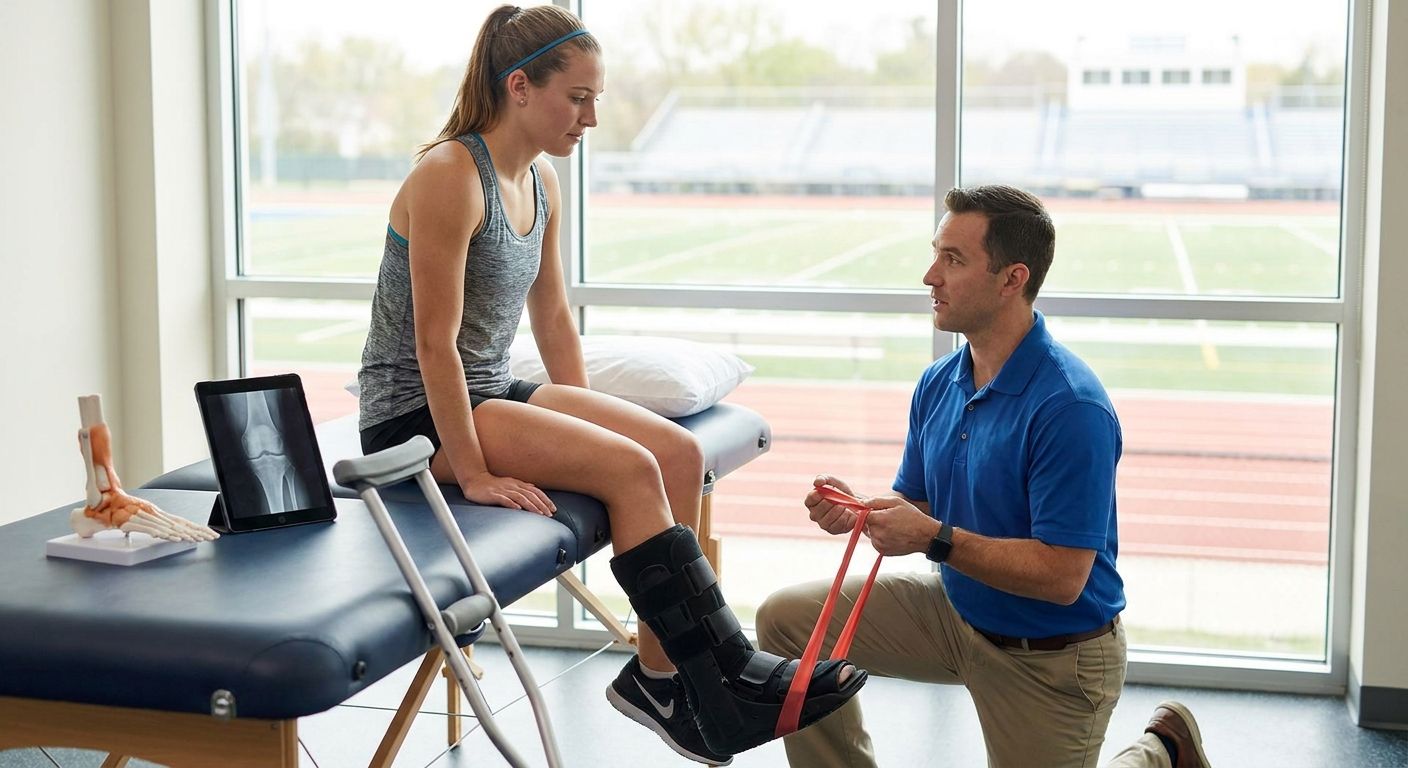
Most stress fractures in athletes heal with the right combination of rest, bracing, and a graduated return to sport — but the wrong sequence turns a 6-week injury into a 6-month one. This guide ranks the treatment approaches that actually change outcomes, from activity modification to interventional pain management for athletes who still hurt after the bone has healed on imaging.
TL;DR
- Relative rest and offloading remain the top stress fracture treatment for athletes in 2026 — non-negotiable, not optional.
- High-risk sites like the navicular and femoral neck need a walking boot or brace: Buy the compliance, skip the guesswork.
- Bone growth stimulation is a Consider, not a default, and only pays off when healing stalls past 6-8 weeks.
- Athletes with pain that outlasts the fracture on imaging need a pain management workup, not more rest.
- Surgery is a last resort reserved for fractures that fail conservative care at 12-16 weeks.
Why this matters
A stress fracture is a fatigue injury, not a trauma injury — the bone loses the race between breakdown and repair because training load outpaced recovery. That distinction is why generic “rest it and see” advice fails so often: the treatment that works depends entirely on which bone is involved and how the athlete got there.
About 80% of stress fractures cluster in the tibia, metatarsals, and navicular, and those sites don’t carry the same risk. A second metatarsal stress fracture and a femoral neck stress fracture both hurt with running, but one heals in 6-8 weeks of relative rest and the other can progress to a full fracture if an athlete keeps training on it. Getting the risk category right at diagnosis is what separates a fast return and a season-ending setback.
How this list was built
The treatments below are ranked by how consistently they change healing time and return-to-play outcomes for athletes, drawing on established sports medicine classification of low-risk versus high-risk stress fracture sites and standard interventional pain management practice for athletes whose pain outlasts their imaging findings. Each entry gets a plain verdict — Buy, Consider, or Skip — based on where it fits in a typical recovery timeline, not on hype.
The ranked treatments
1. Relative rest and activity modification — the foundation
This is the treatment every other option sits on top of. Relative rest doesn’t mean total inactivity — it means removing the specific repetitive load (running, jumping, cutting) that caused the fracture while allowing low-impact cross-training like swimming or cycling within pain-free limits.
Most low-risk stress fractures — tibial shaft, most metatarsals — heal in 6 to 8 weeks with disciplined offloading. Athletes who “test” the bone every few days by running through mild soreness are the ones who show up at week 10 still hurting. Verdict: Buy.
2. Immobilization with a boot or brace — for higher-risk sites
Navicular, fifth metatarsal (proximal/Jones fracture), femoral neck, and sacral stress fractures carry a higher risk of progressing to a complete fracture and generally need a walking boot, brace, or in some cases non-weight-bearing crutches rather than just cutting back mileage. This isn’t a comfort measure — it’s load control.
Athletes returning from running injuries who skip bracing on a high-risk site are the ones who end up in sports injury pain treatment for runners conversations months later instead of back on the road. Verdict: Buy for high-risk sites, Skip for low-risk sites where it adds nothing.
3. Bone growth stimulation — for stalled healing
Electrical or low-intensity pulsed ultrasound bone stimulators are sometimes added when a stress fracture isn’t progressing on repeat imaging past the expected 6-8 week window, particularly in slower-healing bones like the navicular or fifth metatarsal.
This isn’t a first-line treatment for a straightforward metatarsal stress fracture — it’s a tool for the fracture that isn’t behaving on schedule. Verdict: Consider, only after imaging shows delayed union.
4. Nutrition, vitamin D, and load-history screening
Any athlete with a stress fracture — especially a first one in an unusual bone, or a repeat fracture — deserves a look at bone health: vitamin D and calcium status, menstrual history, and training load history. Relative Energy Deficiency in Sport (RED-S) and low bone density are common contributors that get missed when the focus stays purely on the fracture itself.
Skipping this step is how athletes end up with a second or third stress fracture within a year. Verdict: Buy, especially for endurance athletes and anyone with a repeat fracture.
5. Structured physical therapy and graduated return to sport
Once imaging or clinical exam clears the bone, a structured return-to-run or return-to-sport program — walking, then run-walk intervals, then full training over several weeks — protects against re-injury far better than jumping straight back into a training schedule.
This phase matters just as much for a weightlifter loading a healed foot as it does for a distance runner; the principle of graduated load applies across pain management for weightlifters and CrossFit athletes just as it does for track athletes. Verdict: Buy.
6. Interventional pain management for lingering pain
Here’s the gap most stress fracture advice skips: some athletes clear imaging — the bone shows healing — but still have pain with load. That residual pain can come from surrounding soft tissue, nerve irritation, or a biomechanical compensation pattern that developed during the offloading period, not from the bone itself.
This is where a pain management evaluation earns its place: targeted diagnostic workup, and options like nerve blocks or trigger point injections when soft-tissue pain is the actual barrier to return, not the fracture line itself. Hudson Pain and Spine sees this pattern often in athletes referred after a fracture has technically healed. Verdict: Consider, once imaging confirms healing but pain persists past the expected timeline.
7. Surgical fixation — the last resort
Surgery is reserved for high-risk stress fractures that fail conservative treatment at 12-16 weeks, displaced fractures, or specific anatomic sites (like some femoral neck fractures) where the risk of progression is too high to wait out. It’s rare relative to the total volume of stress fractures athletes get, and it’s a decision made with an orthopedic surgeon, not a first-line pain management move.
For an athlete facing this conversation, the same graduated-return logic used after other major sports injuries applies afterward — the kind of protocol covered in sports injury pain treatment for youth athletes and adapted for adults. Verdict: Skip unless conservative care has already failed.
Still in pain after your fracture healed?
Get evaluated for the soft-tissue or nerve pain that imaging alone won’t explain.
Comparison table
| Treatment | Best for | Typical timeline | Verdict |
|---|---|---|---|
| Relative rest / activity modification | Every stress fracture | 6-8 weeks (low-risk sites) | Buy |
| Boot or brace | Navicular, 5th metatarsal, femoral neck | Concurrent with rest phase | Buy (high-risk sites) |
| Bone growth stimulation | Delayed healing on repeat imaging | Added after 6-8 weeks stalled | Consider |
| Nutrition / bone health screening | Repeat fractures, endurance athletes | Ongoing | Buy |
| Structured return to sport | Post-clearance reconditioning | 2-6 weeks | Buy |
| Interventional pain management | Pain outlasting imaging findings | Evaluated case by case | Consider |
| Surgical fixation | Failed conservative care, high-risk sites | Last resort at 12-16 weeks | Skip unless indicated |
Where to get evaluated
- Start with imaging, not guessing. An X-ray can miss an early stress fracture; MRI is more sensitive and changes the treatment plan for high-risk sites.
- Match the specialist to the phase. Orthopedics for acute fracture management and any surgical decision, pain management for lingering pain after the bone has cleared imaging.
- Don’t restart training on pain relief alone. Reduced pain is not the same as bone healing — return-to-sport decisions need imaging or clinical confirmation, not just a good day.
Athletes in Bergen, Passaic, and Middlesex counties dealing with pain that outlasts a healed stress fracture can get evaluated at Hudson Pain and Spine’s Englewood, Woodland Park, or Edison offices.
FAQ
What is the best stress fracture treatment for athletes?
Relative rest combined with load-appropriate bracing is the best stress fracture treatment for athletes, since most low-risk fractures heal in 6 to 8 weeks once the repetitive load is removed. High-risk sites like the navicular or femoral neck typically need a boot or brace on top of rest.
Can you run through a stress fracture?
No — running through a stress fracture is the most common reason a 6-8 week injury turns into a 3-month injury or a complete fracture. Pain that worsens with impact and improves with rest is the classic warning sign to stop loading the bone.
How long does a stress fracture take to heal in athletes?
Low-risk stress fractures in bones like the tibia or most metatarsals heal in about 6 to 8 weeks with proper offloading. Higher-risk sites such as the navicular, fifth metatarsal, or femoral neck can take 12 to 16 weeks and sometimes require immobilization.
Do all stress fractures need a walking boot?
No — boots and braces are mainly reserved for higher-risk stress fracture sites where the fracture could progress or displace. A straightforward low-risk metatarsal or tibial stress fracture often responds to activity modification alone.
Is surgery ever needed for a stress fracture?
Surgery is uncommon and reserved for stress fractures that fail conservative treatment after 12 to 16 weeks, displaced fractures, or specific high-risk anatomic sites. Most athletes never need it if the fracture is caught and offloaded early.
When should an athlete see a pain specialist for a stress fracture?
See a pain specialist when imaging shows the bone has healed but pain with activity persists past the expected timeline. That pattern often points to soft-tissue, nerve, or biomechanical issues that need a separate diagnostic workup from the original fracture.
Does nutrition affect stress fracture healing?
Yes — vitamin D, calcium status, and overall training load history affect both healing speed and the risk of a repeat stress fracture. Athletes with a first fracture in an unusual bone or a history of repeat fractures should get bone health screened.
What’s the difference between a stress reaction and a stress fracture?
A stress reaction is the earlier stage of bone stress injury before a visible fracture line forms on imaging, and it generally heals faster with less offloading time. A true stress fracture shows a fracture line and needs the fuller rest and bracing protocol described above.
One last thing
The detail that trips up the most athletes isn’t the fracture itself — it’s the assumption that pain-free means healed. Imaging clearance and pain relief are two different milestones, and skipping straight from “it doesn’t hurt anymore” to full training is the single most common reason stress fractures recur in the same athlete within a year.
Related guides
About the Medical Reviewer
Dr. Saurabh Dang is a double board-certified interventional pain management specialist serving Central and Northern New Jersey. He combines clinical expertise with a patient-centered approach to help patients find lasting relief from chronic pain conditions.
Read Full Bio →Seeking Treatment for Nerve Block Injections?
Dr. Dang and the team at Hudson Pain and Spine offer specialized care and advanced interventional treatments.
Ready to Find Relief from Pain?
Schedule your consultation with Dr. Saurabh Dang at our Englewood office.
Serving patients across Central and Northern New Jersey — Bergen, Passaic, and Middlesex counties.