
Can costochondritis be a sign of something serious?

Medically reviewed by
Dr. Saurabh Dang, MD, MBA

Costochondritis itself is usually not dangerous, but chest pain that feels like costochondritis can come from a serious heart or lung condition. Call 911 for new or unexplained chest pain with shortness of breath, fainting, cold sweats, or pain spreading to your arm, jaw, or back; tenderness when you press your chest does not rule out an emergency.
TL;DR
- Can costochondritis be serious? Usually not itself, but similar chest wall pain can signal a heart or lung emergency.
- Chest tenderness supports costochondritis; it does not safely exclude a heart attack.
- Call 911 for chest pain with breathlessness, fainting, cold sweats, or spreading pain.
- Hudson Pain and Spine provides non-emergency pain management; emergency chest pain needs emergency assessment first.
Why this matters
The safety question is not simply how much your chest hurts. It is whether a clinician has established the cause and whether your symptoms have changed since that evaluation.
This 2026 guide separates emergency warning signs from reasons to arrange follow-up. Hudson Pain and Spine provides interventional pain management in New Jersey, but a routine pain appointment is not a substitute for emergency assessment of unexplained chest pain.
Can costochondritis be a sign of something serious?
Confirmed costochondritis is generally a benign chest wall condition, not a disease that damages your heart. The concern is a different condition being mistaken for costochondritis, or another illness occurring alongside it. A previous diagnosis does not explain every future episode of chest pain.
Costochondritis affects the cartilage connections between your ribs and breastbone. Typical findings include localized tenderness and pain that worsens with upper-body movement, coughing, or deep breathing. Those findings help a clinician assess you, but none independently proves that your heart and lungs are safe.
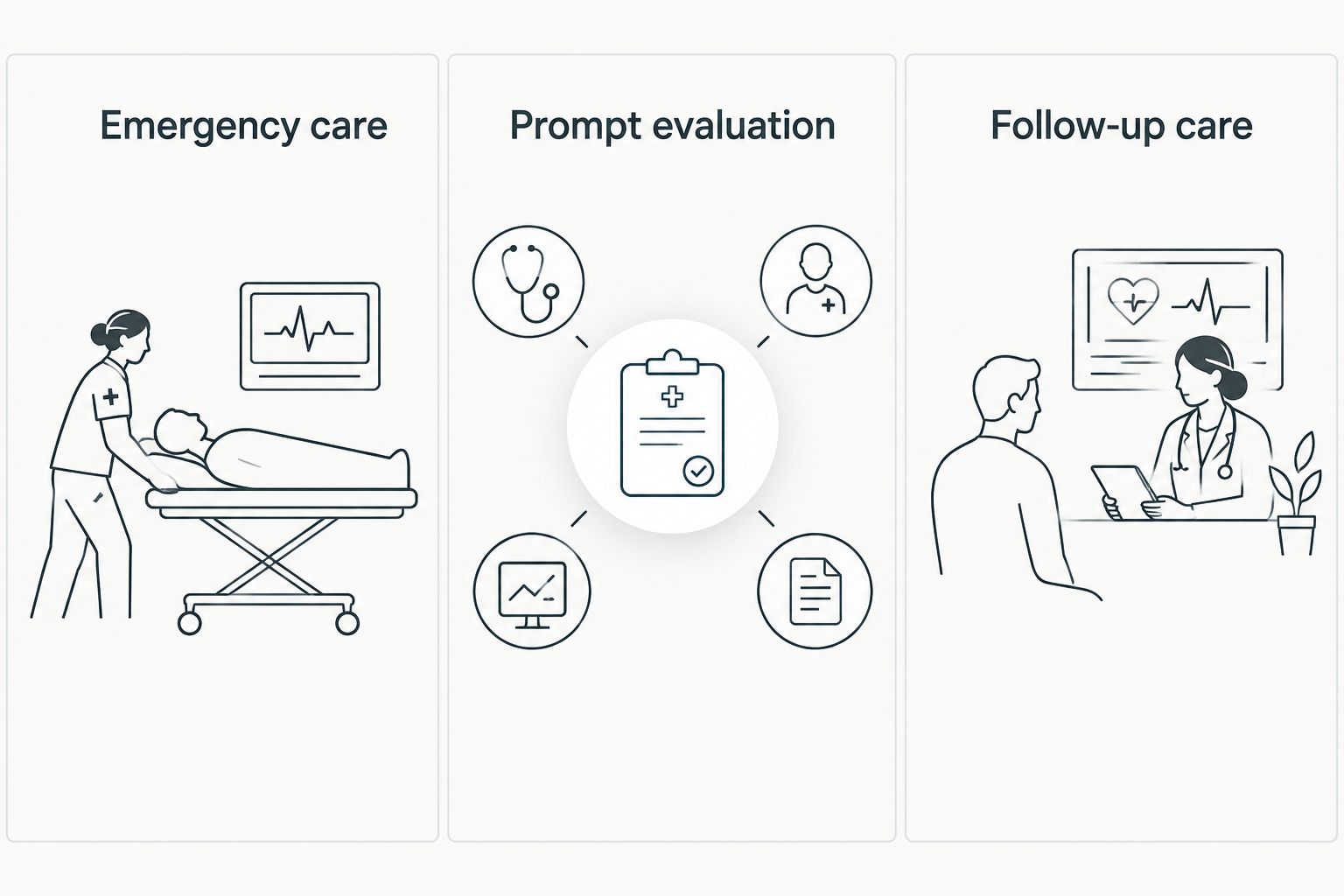
| Care setting | Best for | What it provides | Important limitation |
|---|---|---|---|
| Emergency care | New or unexplained chest pain with warning signs | Immediate assessment for time-sensitive heart and lung conditions | Not replaced by home monitoring or a routine appointment |
| Prompt evaluation | New chest pain without obvious emergency signs, or a changing symptom pattern | Examination and decisions about appropriate testing | A symptom checklist cannot establish the diagnosis |
| Follow-up care | Previously assessed chest wall pain that persists without new warning signs | Review of recovery, activity, and symptom treatment | A prior diagnosis does not rule out a new problem |
Use this comparison to choose where to seek help, not to diagnose yourself. When symptoms suggest an emergency, do not wait to see whether rest or pain medicine helps.
When should you call 911 for chest pain?
Call 911 for chest pain or discomfort accompanied by any of the following, particularly when symptoms are new, severe, or unexplained:
- Pressure, squeezing, heaviness, or tightness in your chest.
- Shortness of breath, fainting, or severe lightheadedness.
- Cold sweats, nausea, or vomiting with chest discomfort.
- Pain spreading into an arm, the jaw, the neck, or the back.
- Sudden severe chest or upper-back pain.
- Sudden chest pain with difficulty breathing or coughing blood.
Do not drive yourself when you suspect a heart attack or another chest emergency. Follow the emergency dispatcher’s instructions rather than trying to identify the cause at home.
In 2026, the practical safety rule remains the same: do not use a prior costochondritis diagnosis to dismiss a new warning sign. Heart attacks do not always cause dramatic pain, and some people experience breathlessness, unusual fatigue, or nausea rather than the classic crushing sensation.
What if there are no obvious emergency warning signs?
New chest pain still deserves medical assessment, even when you can point to a tender spot. Contact a clinician promptly for guidance about the appropriate setting; worsening symptoms or uncertainty about an emergency should not wait for a routine office visit.
Fever, a persistent cough, redness, warmth, or visible swelling over the painful area also warrants prompt evaluation. These findings are not something to label automatically as uncomplicated costochondritis. Chest pain following a significant injury needs assessment as well.
After an examination, follow-up care is appropriate when your clinician has identified chest wall pain and provided a plan. If the pattern changes, return to the assessment step rather than assuming that your original treatment simply needs more time.
Why chest pain symptoms vary
Pain intensity alone does not distinguish costochondritis from a dangerous condition. Your clinician considers several features together, including:
- Pain location: A small tender area supports a chest wall source, but location alone does not establish the cause.
- Movement and breathing: Twisting, lifting, coughing, and deep breathing can aggravate chest wall pain; breathing-related pain also occurs with lung conditions.
- Associated symptoms: Breathlessness, sweating, fainting, fever, or coughing blood changes the urgency of assessment.
- Onset and pattern: Sudden pain, exertional symptoms, or a change from your usual discomfort deserves particular attention.
- Medical history: Heart disease, blood-clot history, recent surgery, and other risk factors affect the evaluation.
- Local examination findings: Swelling, redness, a rash, or injury-related tenderness can point toward a different explanation.
Bring these details to your appointment. Describing the pattern is more useful than deciding in advance that the pain is inflammation, anxiety, or a pulled muscle.
Does pain when you press your chest mean it is harmless?
Pain reproduced by pressure is a clue, not a clearance test. Chest wall tenderness is common with costochondritis, but it cannot safely rule out a heart attack or another serious cause on its own.
A clinician combines your history and examination with testing when indicated. Depending on the concern, that assessment can include an electrocardiogram, blood tests, or chest imaging. Not every patient needs every test, and there is no single scan that confirms ordinary costochondritis.
Avoid repeatedly pressing the area to check whether the pain is still there. That does not add diagnostic certainty and can aggravate an already sensitive chest wall.
Can costochondritis damage your heart or turn into cancer?
Costochondritis does not turn into cancer and does not directly damage the heart. Persistent pain is a reason to review the diagnosis and treatment plan, not proof of cancer or heart disease.
A new lump, unexplained weight loss, persistent fever, or steadily worsening focal pain needs medical evaluation. These symptoms do not establish a particular diagnosis, but they should not be attributed to costochondritis without assessment.
Visible swelling also deserves attention. A related condition called Tietze syndrome can cause swelling, while infection and other chest wall problems require different management.
Can costochondritis last a long time without being dangerous?
Costochondritis can persist or recur without causing heart damage. However, pain that continues to disrupt sleep, work, or ordinary movement deserves follow-up rather than indefinite self-treatment.
There is no reliable recovery deadline for an individual based only on the diagnosis. Repeated strain, ongoing coughing, and other health conditions can affect symptoms. Persistent pain also creates a reason to check whether another chest wall, rib, joint, or nerve problem better explains the pattern.
For your 2026 follow-up visit, describe whether pain is improving, unchanged, or worsening. A change in pattern matters more than simply counting how long you have had the label.
What helps after a clinician confirms costochondritis?
Start with a clinician-approved conservative plan, not an automatic request for an injection. Reducing provoking activities, using appropriate symptom relief, and gradually restoring comfortable movement are common approaches after serious causes have been considered.
The following options address different needs. None substitutes for evaluating new or changing chest pain.
| Approach | Best for | Potential benefit | Limitation or caution |
|---|---|---|---|
| Activity modification | Pain triggered by lifting, pushing, or repetitive upper-body work | Reduces repeated irritation while you recover | Prolonged complete inactivity can make returning to activity harder |
| Heat or cold | Local discomfort after the diagnosis is established | Offers temporary symptom relief | Protect your skin; stop if the application worsens symptoms |
| Clinician-approved pain medicine | Symptoms interfering with daily activity | Helps control discomfort | Medication risks depend on your health history and other medicines |
| Guided exercise or physical therapy | Persistent movement-related limitations | Supports a gradual return to comfortable movement | Exercises need adjustment if they provoke pain |
Anti-inflammatory medicines are not appropriate for everyone. Kidney disease, a history of stomach bleeding, blood thinners, pregnancy, and cardiovascular conditions can affect medication choices. Acetaminophen also requires attention to liver health and duplicate ingredients in combination products.
For a fuller discussion after diagnosis, see the guide to treatments for costochondritis chest wall pain. Do not use relief from a medicine as evidence that the original pain was harmless.
When does a pain management consultation make sense?
A pain consultation becomes relevant when a clinician has assessed the chest pain, identified a non-emergency cause, and symptoms continue despite an appropriate initial plan. The aim is to confirm what is generating the pain and identify treatment that fits that diagnosis.
Hudson Pain and Spine is appropriate for patients seeking non-emergency interventional pain management in New Jersey. The practice provides board-certified interventional pain management from offices in Englewood, Woodland Park, and Edison. A consultation does not mean that you need a procedure or that a procedure is the right treatment for costochondritis.
Bring previous examination notes, test results, and a current medication list. Explain what you have tried and what happened, including side effects or activities that consistently bring the pain back.
Explore non-emergency pain care
Review the practice after urgent causes of chest pain have been assessed.
What should you track before a follow-up visit?
For a 2026 appointment, keep a short symptom record rather than repeatedly testing your chest. Useful details include:
- The exact location and whether the pain spreads.
- Whether it starts at rest, during exertion, or with a particular movement.
- Whether breathing, coughing, meals, or position changes affect it.
- Any breathlessness, fever, rash, dizziness, or swelling.
- Treatments used, symptom changes, and medication side effects.
- Any recent injury, illness, surgery, or prolonged immobility.
Do not delay urgent care to complete the record. Its purpose is to support a clinical conversation once you are safe, not to decide whether you qualify for emergency assessment.
FAQ
Can costochondritis be serious even if I have had it before?
Costochondritis itself is usually not dangerous, but a previous diagnosis does not make new chest pain safe. New breathlessness, fainting, cold sweats, or spreading pain requires emergency assessment.
Should I go to the emergency room if pressing my chest hurts?
Chest tenderness does not rule out an emergency. Call 911 if chest pain comes with warning signs such as shortness of breath, fainting, cold sweats, or pain spreading to your arm, jaw, or back.
Can costochondritis cause shortness of breath?
Costochondritis can make deep breathing painful, but new or unexplained shortness of breath should not be assumed to come from costochondritis. Chest pain with breathing difficulty needs urgent assessment.
Can I exercise if I have confirmed costochondritis?
Exercise should follow the plan your clinician gives you after evaluating the chest pain. Avoid movements that clearly aggravate symptoms, and stop exercising if you develop chest pressure, unusual breathlessness, dizziness, or spreading pain.
Does costochondritis show up on a chest X-ray?
Ordinary costochondritis is not usually visible on a chest X-ray. Clinicians use your history and examination to assess it and order imaging or other tests when they need to investigate another cause.
Can anxiety cause pain that feels like costochondritis?
Anxiety can cause chest discomfort and can coexist with costochondritis, but it should not be the automatic explanation for new chest pain. A clinician needs to assess symptoms and relevant risks before attributing them to anxiety.
Can Hudson Pain and Spine evaluate an emergency chest pain episode?
Hudson Pain and Spine provides non-emergency interventional pain management, not a replacement for emergency chest pain assessment. Call 911 for chest pain with emergency warning signs rather than waiting for a pain appointment.
One last thing
A change from your usual pain matters more than the familiarity of your diagnosis. In 2026, keep your costochondritis treatment plan and your emergency action plan separate: manage established chest wall symptoms as instructed, but seek reassessment for a new pattern. Feeling better after rest, heat, or medication is not a reliable test of what caused the pain.
Related guides
- When to see a pain management specialist for chronic pain
- How to connect physical therapy to interventional pain treatment
- How to connect a referral packet to your first pain visit
About the Medical Reviewer
Dr. Saurabh Dang is a double board-certified interventional pain management specialist serving Central and Northern New Jersey. He combines clinical expertise with a patient-centered approach to help patients find lasting relief from chronic pain conditions.
Read Full Bio →Seeking Treatment for Chronic Pain?
Dr. Dang and the team at Hudson Pain and Spine offer specialized care and advanced interventional treatments.
Ready to Find Relief from Pain?
Schedule your consultation with Dr. Saurabh Dang at our Englewood office.
Serving patients across Central and Northern New Jersey — Bergen, Passaic, and Middlesex counties.