
Chronic Pain Daily Routine Management: Your 2026 Guide

Medically reviewed by
Dr. Saurabh Dang, MD, MBA
Chronic Pain Daily Routine Management: Your 2026 Guide
TL;DR:
- Managing chronic pain involves building consistent daily habits that combine movement, relaxation, nutrition, and emotional support. Pacing activities based on a set schedule prevents flare-ups and reduces fatigue, supporting long-term improvement. A multimodal approach that includes therapy, lifestyle changes, and medical care offers the most effective pathway to relief.
Chronic pain daily routine management is defined as a structured set of daily habits and strategies designed to reduce pain interference, maintain function, and improve quality of life. Unlike a single treatment or medication, it works through consistency across physical, behavioral, and lifestyle domains. CDC guidelines from 2022 confirm that non-pharmacologic, multimodal approaches are the recommended first line of care for chronic pain. The good news is that you can build these habits gradually, starting with small changes that compound into real, lasting relief.
What are the essential daily habits to ease chronic pain?
The most effective daily habits for managing chronic pain combine gentle movement, relaxation, nutrition, and emotional support. No single habit works alone. The power comes from stacking them into a consistent routine your body and mind can rely on.
Gentle movement and graded activity
Graded physical activity is the foundation of any chronic pain self-care plan. Starting with as little as 3–5 minutes of gentle exercise, such as walking, stretching, or water aerobics, prevents the post-activity flares that discourage people from moving at all. The goal is gradual progression, not performance. Over weeks, even modest increases in activity rebuild strength and reduce pain sensitivity.

Relaxation and mindfulness
Deep breathing, progressive muscle relaxation, and mindfulness meditation each reduce the nervous system’s pain response. Practicing even 10 minutes of mindful breathing daily lowers perceived pain intensity over time. These techniques are not passive. They actively retrain how your brain processes pain signals.
Nutrition and hydration
Chronic inflammation drives many pain conditions, and diet directly influences inflammation levels. Prioritize anti-inflammatory foods such as leafy greens, fatty fish, berries, and olive oil. Stay well hydrated throughout the day, since dehydration amplifies muscle tension and fatigue.
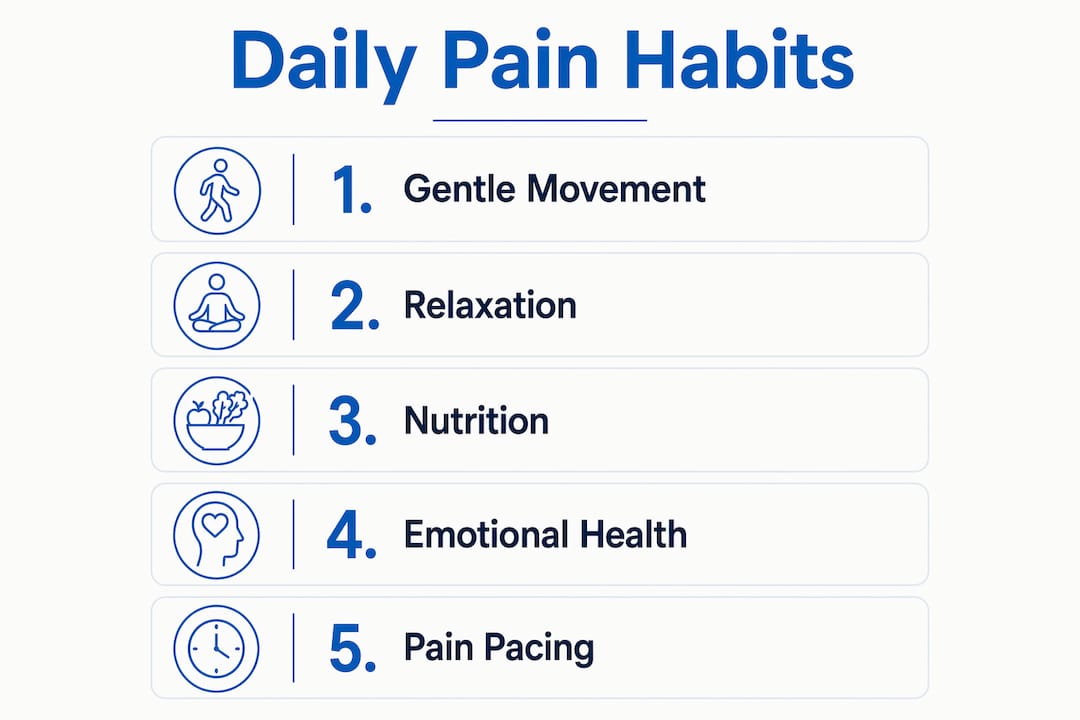
Behavioral and emotional health
Journaling, engaging in meaningful activities, and maintaining social connections all reduce the emotional burden of chronic pain. Isolation worsens pain perception. Even brief daily interactions or a short creative activity can shift your focus and improve mood.
Here is a practical daily living checklist to anchor your routine:
- Morning: 5 minutes of gentle stretching or walking
- Midday: Relaxation break with deep breathing or mindfulness
- Afternoon: Meaningful activity or social connection
- Evening: Pain journal entry and light nutrition review
- Throughout: Hydration and medication adherence as prescribed
Pro Tip: Set one small, specific goal each morning, such as “I will walk to the end of the block.” Small wins build the confidence and consistency that sustain long-term pain management.
How can pain pacing and activity modification improve daily pain management?
Pain pacing is defined as regulating activity intensity and duration based on a time schedule rather than pain signals. This distinction matters enormously. Most people stop activity when pain spikes and push hard when pain eases. That pattern creates the boom-and-bust cycle that leaves you exhausted, frustrated, and in more pain than when you started.
Why the boom-and-bust cycle is so damaging
On a good day, you tackle the laundry, clean the kitchen, and go for a long walk. The next day, you can barely get out of bed. This all-or-nothing approach is one of the most common pitfalls in managing chronic pain. It reinforces pain sensitivity and erodes your confidence in your own body.
How to implement pacing in your daily routine
Effective pacing starts by identifying your baseline capacity, the amount of activity you can do without triggering a flare. Practical pacing sets activity limits at roughly 20% below that baseline, with scheduled rest breaks built in before pain escalates. You stop based on the clock, not on how you feel in the moment.
Concrete pacing strategies include:
- Use a timer: Work for 15–20 minutes, then rest for 5–10 minutes, regardless of pain level.
- Alternate task intensity: Follow a physically demanding task with a seated or low-effort one.
- Schedule enjoyable activities: Place them at consistent times so they become anchors in your day.
- Break chores into segments: Wash dishes for 10 minutes, sit, then return rather than finishing all at once.
Consistent pacing helps retrain the nervous system. Over time, your stamina increases because you are no longer triggering repeated flare cycles. If you find pacing difficult to implement alone, an occupational therapist can build a personalized plan around your specific daily demands.
Pro Tip: Create a comfort station at home with heat or cold packs, water, your medication, your phone, and a pain journal. Having essentials within reach means you move less during flare-ups and recover faster.
Which multimodal therapies complement a daily pain routine?
A multimodal approach to chronic pain combines medication, physical therapy, cognitive and behavioral therapies, and lifestyle adjustments. Research consistently shows this combination outperforms any single treatment. The biopsychosocial model of pain, which integrates physical, cognitive, and lifestyle factors, is now the standard framework used by pain specialists and the CDC alike.
Cognitive behavioral therapy (CBT)
CBT is the most studied non-drug pain treatment available. It teaches you to identify and change thought patterns that amplify pain, such as catastrophizing or fear-avoidance. A self-directed CBT program using daily automated calls and weekly coach feedback reduced pain interference faster than standard clinician-delivered care in a randomized trial of 764 participants. Patients in the self-directed group started treatment a median of 16 days after enrollment, compared to 41 days for standard care. That head start translates directly into faster relief.
Physical therapy and graded exercise
Physical therapy addresses the structural contributors to pain through targeted strengthening, flexibility work, and movement retraining. A physical therapist designs a graded exercise program that progresses at a pace your body can handle. This is not the same as going to the gym. It is a clinical, supervised approach to rebuilding function.
Additional evidence-based therapies
The table below summarizes the therapies most commonly integrated into daily pain management routines, along with their primary role.
| Therapy | Primary role in daily management |
|---|---|
| Cognitive behavioral therapy (CBT) | Reduces pain catastrophizing and fear-avoidance behaviors |
| Graded exercise and physical therapy | Rebuilds strength, flexibility, and movement confidence |
| Mindfulness and relaxation training | Lowers nervous system arousal and perceived pain intensity |
| Topical treatments and electrotherapy | Provides localized relief as an adjunct to behavioral strategies |
| Lifestyle modification (sleep, diet) | Reduces systemic inflammation and fatigue that amplify pain |
Multimodal care combining decision-support and ongoing monitoring produced clinically meaningful improvements in pain and function over 9–12 months across a systematic review of 3,816 individuals. That is not a marginal benefit. It is a consistent, reproducible result across a large population.
How to troubleshoot common challenges in a pain management routine?
Staying consistent with a chronic pain routine is genuinely hard. Pain fluctuates, motivation dips, and life gets in the way. Recognizing the obstacles ahead of time makes them easier to manage when they appear.
Emotional barriers
Frustration, grief, and fear are normal responses to living with chronic pain. They also make it harder to stick to your routine. Shifting your goal from “curing” pain to “managing daily function” reduces the emotional weight of setbacks. Experts recommend focusing on what you can do today rather than comparing yourself to who you were before pain.
Staying consistent when pain levels change
Adjusting your routine to match your current pain level is not failure. It is smart management. On high-pain days, scale back to your minimum baseline rather than stopping entirely. Maintaining some level of activity, even a 5-minute seated stretch, preserves the habit and prevents the nervous system from reverting to a heightened pain state.
Practical strategies to stay on track include:
- Use a pain journal or tracking app to spot patterns and identify triggers.
- Build social accountability by sharing your goals with a trusted friend or family member.
- Schedule professional check-ins with your pain specialist to adjust your plan as needed.
- Celebrate consistency, not perfection. Showing up on hard days matters more than performing perfectly on easy ones.
Pro Tip: When motivation drops, review your pain journal from two or three weeks ago. Seeing measurable progress, even small improvements in sleep or activity tolerance, restores perspective and keeps you moving forward.
Early self-directed management increases therapy adherence and reduces pain interference over time. Starting sooner, even imperfectly, produces better outcomes than waiting for the “right” moment. If you find yourself stuck despite your best efforts, that is the signal to seek professional guidance rather than push harder alone.
Key Takeaways
Consistent daily habits combining graded activity, pain pacing, CBT, and multimodal care produce better long-term outcomes than any single treatment for chronic pain.
| Point | Details |
|---|---|
| Start with small movement goals | Begin with 3–5 minutes of gentle exercise and increase gradually to avoid flare-ups. |
| Use time-based pacing | Set activity limits at 20% below your baseline and stop by the clock, not by pain level. |
| Combine therapies for best results | Multimodal care including CBT, physical therapy, and lifestyle changes outperforms single treatments. |
| Track progress with a pain journal | Monitoring patterns helps you identify triggers and stay consistent through difficult days. |
| Seek professional support early | Starting self-directed or clinician-guided programs sooner leads to faster and greater pain relief. |
Hudson Pain and Spine is here to support your pain management routine
Living with chronic pain is not something you have to figure out alone. At Hudson Pain and Spine, the clinical team works with patients across Northern and Central New Jersey to build individualized, multimodal care plans.
Whether you need interventional pain treatments such as epidural injections, nerve blocks, or spinal cord stimulation, or you want guidance on integrating physical therapy and behavioral strategies into your daily routine, Hudson Pain and Spine offers the full spectrum of care. Patients in Bergen, Passaic, and Middlesex counties can access multiple convenient locations and flexible scheduling. Book a consultation and take the first step toward a routine that works for your life.
FAQ
What is chronic pain daily routine management?
Chronic pain daily routine management is a structured approach using consistent daily habits, including graded activity, pacing, relaxation, and behavioral strategies, to reduce pain interference and improve function over time.
How does pain pacing help with chronic pain?
Pain pacing prevents the boom-and-bust cycle by setting time-based activity limits at roughly 20% below your baseline capacity, allowing gradual stamina building without triggering flare-ups.
Is CBT effective for managing chronic pain at home?
Yes. A randomized trial of 764 participants found that a self-directed CBT program reduced pain interference faster than standard clinician-delivered care, with patients starting treatment a median of 16 days after enrollment.
How many therapies should I combine in my pain routine?
CDC guidelines recommend combining non-pharmacologic and non-opioid therapies tailored to individual needs. A multimodal plan typically includes physical therapy, behavioral strategies, lifestyle adjustments, and medical treatment as appropriate.
When should I see a pain specialist about my routine?
See a pain specialist if your current routine is not reducing pain interference, if flare-ups are increasing in frequency, or if emotional barriers such as fear or depression are making it hard to stay consistent.
Recommended
- Enough is enough: advanced treatment for chronic pain | Hudson Pain and Spine Blog
- How your daily commute leads to chronic pain | Hudson Pain and Spine Blog
- Chronic Pain Treatment Options Explained for Adults | Hudson Pain and Spine Blog
- What Is Multimodal Pain Treatment? A Clear Guide | Hudson Pain and Spine Blog
About the Medical Reviewer
Dr. Saurabh Dang is a double board-certified interventional pain management specialist serving Central and Northern New Jersey. He combines clinical expertise with a patient-centered approach to help patients find lasting relief from chronic pain conditions.
Read Full Bio →Seeking Treatment for Chronic Pain?
Dr. Dang and the team at Hudson Pain and Spine offer specialized care and advanced interventional treatments.
Ready to Find Relief from Pain?
Schedule your consultation with Dr. Saurabh Dang at our Englewood office.
Serving patients across Central and Northern New Jersey — Bergen, Passaic, and Middlesex counties.