
CRPS Treatment Options 2026: What Works, In Order

Medically reviewed by
Dr. Saurabh Dang, MD, MBA
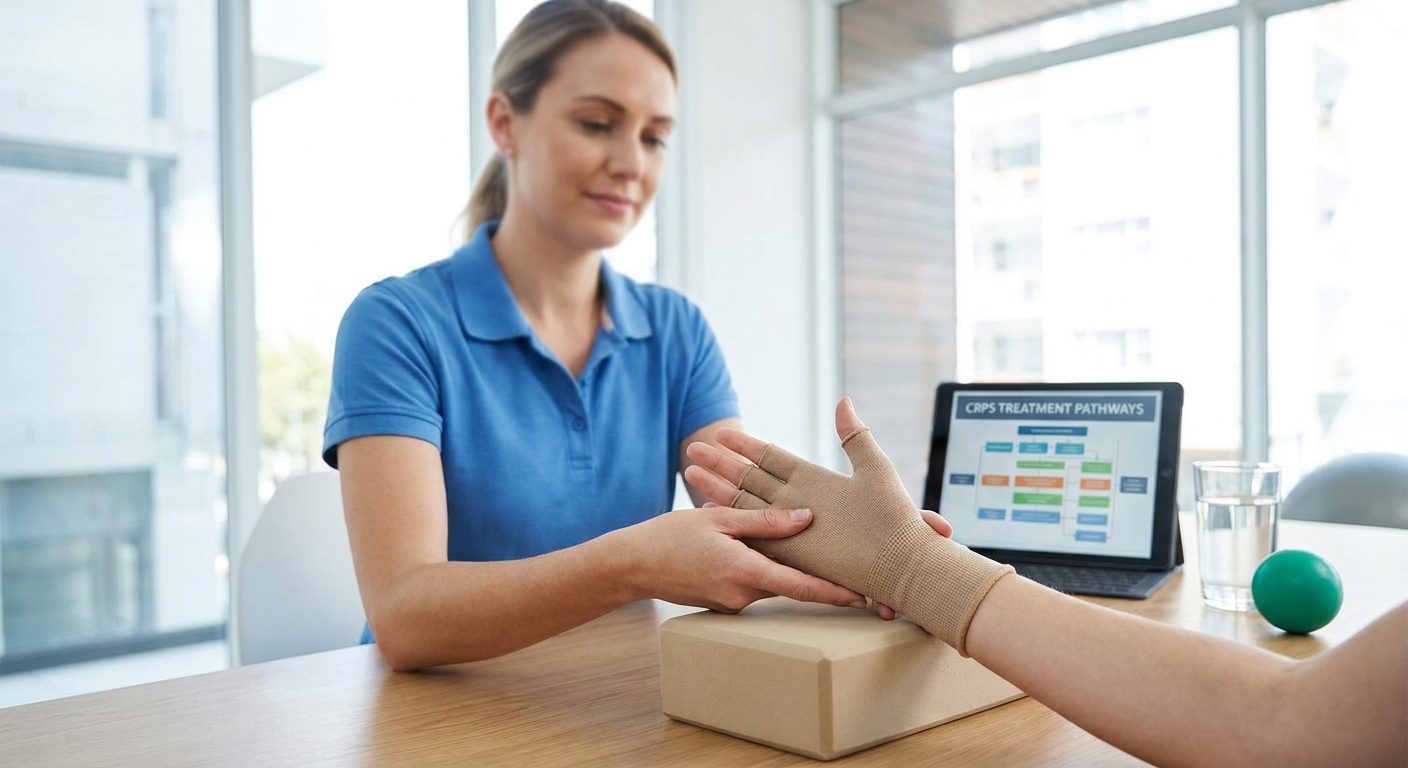
Complex regional pain syndrome (CRPS) is a nerve pain condition that usually follows an injury, fracture, or surgery, and it responds best when treatment starts early and combines several approaches at once.
TL;DR
- Early treatment within 3 to 6 months of CRPS onset produces the best long-term outcomes in 2026 clinical practice.
- Sympathetic nerve blocks and physical therapy form the first-line CRPS treatment options for most patients.
- Spinal cord stimulation and peripheral nerve stimulation are the standard step-up when blocks and PT plateau.
- Ketamine infusion therapy is reserved for CRPS that resists first- and second-line treatment.
- Waiting past 12 months to seek a specialist raises the risk of permanent nerve and bone changes.
Why this matters
CRPS does not behave like ordinary post-injury pain. It spreads beyond the original injury site, brings burning pain, swelling, temperature changes in the skin, and sometimes changes in hair or nail growth on the affected limb.
The condition is diagnosed clinically using the Budapest Criteria, which groups symptoms into four categories: sensory, vasomotor, sudomotor/edema, and motor/trophic changes. A patient needs symptoms from at least three of those four categories, plus one abnormal finding on exam, to meet the diagnosis.
Timing drives everything. CRPS treated within the first 3 to 6 months has a meaningfully better shot at remission than CRPS left untreated past a year, because untreated nerve pain patterns become harder to reverse the longer they run unchecked. That’s the single most important fact in this guide: don’t wait for CRPS to get worse before calling a pain specialist.
What you’ll need
- A diagnosis confirmed by a physician using the Budapest Criteria, ideally from a pain management or neurology specialist
- Imaging or bone scan results if ordered, to rule out other causes of the pain
- A referral or direct access to an interventional pain practice for nerve block procedures
- A physical therapist experienced in desensitization and graded motor imagery, not general orthopedic PT
- Insurance authorization for procedures like sympathetic blocks or spinal cord stimulation trials — approval timelines vary by carrier
- A support person for procedure days, since some blocks require monitored sedation
The treatment steps
1. Get an accurate diagnosis first
CRPS gets misdiagnosed as tendinitis, nerve entrapment, or simple post-surgical inflammation more often than it should. A specialist applies the Budapest Criteria and rules out competing diagnoses like carpal tunnel syndrome or a pinched nerve before labeling the case CRPS.
Common mistake: patients accept a vague “nerve pain” label for months without a formal CRPS diagnosis, which delays the specific treatments that actually work.
2. Start physical therapy within 2 weeks of diagnosis
Desensitization therapy and graded motor imagery retrain how the brain processes signals from the affected limb. Therapy 2 to 3 times a week for the first 6 to 8 weeks is standard, focused on light touch tolerance before any strengthening work begins.
Expected outcome: reduced hypersensitivity to touch and improved range of motion within the first month. Common mistake: pushing into aggressive strengthening too early, which can flare CRPS symptoms and set recovery back.
3. Try a sympathetic nerve block
A sympathetic nerve block (stellate ganglion block for the arm, lumbar sympathetic block for the leg) interrupts the overactive nerve signals driving CRPS pain. Most patients get a diagnostic block first, then a series of therapeutic blocks if the first one provides relief.
This is one of the first-line CRPS treatment options because it’s low-risk and gives immediate feedback: if the block reduces pain by half or more for several hours, it confirms the sympathetic nervous system is involved and predicts response to further blocks.
4. Layer in medication management
Gabapentin or pregabalin target nerve pain signals directly, and a short corticosteroid taper can calm early inflammatory CRPS. Bisphosphonates are sometimes added when bone scans show increased turnover in the affected limb.
Common mistake: relying on opioids as a first step. Opioids don’t address the nerve signaling problem driving CRPS and carry dependency risk without matching benefit — a non-opioid approach to chronic pain management is the more effective starting point for this condition.
5. Move to spinal cord stimulation or peripheral nerve stimulation if blocks plateau
When sympathetic blocks help but the relief doesn’t hold, a spinal cord stimulation or peripheral nerve stimulation trial is the next step. The trial period runs 3 to 7 days with a temporary lead before committing to a permanent implant, so patients know whether it works before any permanent decision.
This step matters because CRPS that responds to a stimulation trial often sees pain reduction sustained over months, not just hours like a single nerve block.
6. Consider ketamine infusion for resistant cases
When CRPS doesn’t respond adequately to blocks, stimulation, and standard medication, ketamine infusion therapy is used to reset the pain pathways involved in central sensitization. Infusions are typically scheduled in a series rather than a one-time treatment.
Common mistake: jumping to ketamine before trying nerve blocks and stimulation. It’s a resistant-case tool, not a first step.
7. Build a home management routine alongside procedures
Between procedure appointments, TENS units, mirror therapy, and structured desensitization exercises keep the nervous system calmer day to day. Patients who stick with a home routine tend to need fewer rescue procedures over the following year.
Expected outcome: fewer pain flares between scheduled treatments. Common mistake: stopping home exercises the moment a procedure provides relief — CRPS pain patterns can return without ongoing reinforcement.
Get a CRPS treatment plan started
Board-certified evaluation for CRPS and nerve pain across Bergen, Passaic, and Middlesex counties.
Troubleshooting
- Pain spreads to a new limb after treatment starts. This can happen with CRPS and needs an updated exam — don’t assume the original treatment plan failed; ask about adjusting block frequency or adding stimulation.
- Nerve block relief fades faster each time. Diminishing returns from repeat blocks is a signal to move to spinal cord stimulation or peripheral nerve stimulation rather than repeating blocks indefinitely.
- Insurance denies the stimulation trial. Prior authorization for CRPS procedures often requires documented failure of conservative treatment first — a clear paper trail of blocks and PT visits speeds up approval for pain procedures.
- Physical therapy causes a flare instead of improvement. Therapy intensity may be too aggressive for where the nervous system is at — desensitization work should stay below the pain-flare threshold, not push through it.
- Symptoms improve then plateau around month 3. This is common and usually means it’s time to add a second modality (block plus stimulation, or stimulation plus medication) rather than waiting longer on a single approach.
- Cold intolerance and skin color changes persist despite pain relief. Vasomotor symptoms can lag behind pain improvement by weeks — flag this for your specialist rather than assuming treatment isn’t working.
Tools and resources
- How peripheral nerve stimulation treats chronic nerve pain for a deeper look at the stimulation step
- How ketamine infusion therapy treats resistant chronic pain for the resistant-case option
- How TENS therapy helps manage chronic pain at home for the home routine between procedures
- How to manage chronic pain without opioids for the medication-management approach
- How to get insurance approval for pain procedures before scheduling a stimulation trial
What to do next
If a fracture, surgery, or sprain from earlier in 2026 hasn’t resolved the way it should — burning pain, swelling that won’t go down, skin that’s changed color or temperature — get evaluated against the Budapest Criteria before the pain pattern sets in further. The insurance approval guide above is worth reading before that first specialist visit, since CRPS procedures often need documented conservative care first.
FAQ
What are the best CRPS treatment options in 2026?
The best CRPS treatment options combine physical therapy, sympathetic nerve blocks, and medication management first, stepping up to spinal cord stimulation or peripheral nerve stimulation if pain persists. Ketamine infusion therapy is reserved for cases resistant to those first- and second-line treatments.
How is CRPS diagnosed?
CRPS is diagnosed using the Budapest Criteria, which requires symptoms from at least three of four categories: sensory, vasomotor, sudomotor/edema, and motor/trophic changes. Imaging and bone scans can support the diagnosis but aren’t required to confirm it.
Is CRPS curable?
CRPS treated early, within the first 3 to 6 months of onset, has a meaningfully better chance of remission than CRPS left untreated for over a year. Some patients reach lasting remission; others manage CRPS long-term with a combination of procedures and home routines.
How long does a sympathetic nerve block take to work?
A sympathetic nerve block for CRPS typically provides feedback within hours of the procedure — a strong initial response predicts benefit from a therapeutic series. Relief duration varies and often requires repeat blocks or a step-up to stimulation.
What’s the difference between spinal cord stimulation and peripheral nerve stimulation for CRPS?
Spinal cord stimulation targets signals at the spinal cord level and suits widespread limb pain, while peripheral nerve stimulation targets a specific nerve closer to the pain source. Both use a 3 to 7 day trial period before a permanent implant decision.
Can CRPS be treated without opioids?
Yes — non-opioid options including nerve blocks, gabapentin or pregabalin, physical therapy, and stimulation therapy address the nerve signaling problem behind CRPS more directly than opioids. Opioids don’t correct the underlying signaling issue driving CRPS pain.
When should I see a specialist for suspected CRPS?
See a pain management specialist as soon as pain, swelling, or skin changes from an injury spread beyond the original site or don’t improve on the expected timeline. Waiting past 6 to 12 months reduces the odds of full remission.
One last thing
CRPS is one of the few pain conditions where the treatment order matters as much as the treatments themselves — a stimulation trial tried before nerve blocks skips the diagnostic information the blocks would have provided, and that sequencing mistake costs patients months in 2026 they didn’t need to lose.
Related guides
- How peripheral nerve stimulation treats chronic nerve pain
- How ketamine infusion therapy treats resistant chronic pain
- How TENS therapy helps manage chronic pain at home
- How to manage chronic pain without opioids
- How to get insurance approval for pain procedures
About the Medical Reviewer
Dr. Saurabh Dang is a double board-certified interventional pain management specialist serving Central and Northern New Jersey. He combines clinical expertise with a patient-centered approach to help patients find lasting relief from chronic pain conditions.
Read Full Bio →Seeking Treatment for Nerve Block Injections?
Dr. Dang and the team at Hudson Pain and Spine offer specialized care and advanced interventional treatments.
Ready to Find Relief from Pain?
Schedule your consultation with Dr. Saurabh Dang at our Englewood office.
Serving patients across Central and Northern New Jersey — Bergen, Passaic, and Middlesex counties.