
Pain Management for Chefs and Cooks: 2026 Treatment Guide

Medically reviewed by
Dr. Saurabh Dang, MD, MBA
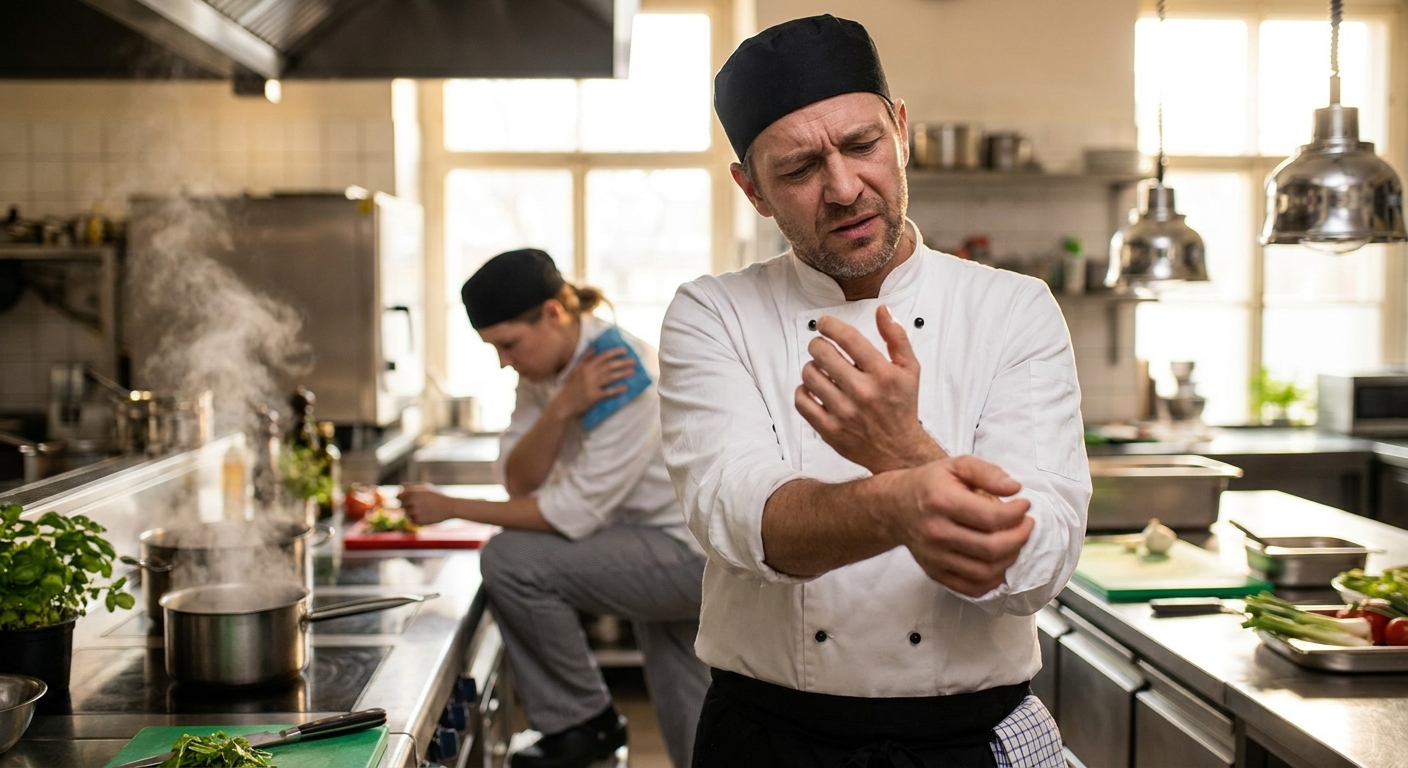
Ten-hour shifts on a hard tile floor, repetitive knife work, hot pans, heavy stockpots — the injuries that build up in a professional kitchen are predictable, and they rarely heal on their own. This guide covers the pain management options that actually work for chefs and line cooks in 2026, and where each one fits.
TL;DR
- Plantar fasciitis from standing 10+ hour shifts responds to injections or PRP, not just gel insoles.
- Carpal tunnel from repetitive knife grip gets treated with nerve blocks before surgery becomes necessary.
- Pain management for chefs and cooks only works if treatment schedules fit around service, not around a 9-to-5.
- Trigger point injections clear shoulder and upper-back knots from hunching over prep stations faster than stretching alone.
- Non-opioid, injection-based care gets line cooks back on the line without the downtime opioids create.
Why this matters
Kitchen work is one of the most physically demanding jobs that doesn’t get treated like one. Line cooks and chefs stand on unforgiving floors for 10 to 14 hours, repeat the same wrist and shoulder motions thousands of times a shift, and lift 40-pound stockpots without a spotter. The result is a specific injury profile: plantar fasciitis, carpal tunnel syndrome, wrist tendinitis, and chronic low back pain from lifting and bending over low counters.
Most cooks push through it because taking a day off means someone else covers the station. That’s exactly the wrong move. Untreated repetitive strain gets worse under a knife, not better, and by the time it’s bad enough to force time off, the fix takes longer. The retail workers who stand all day face a similar pattern — standing-related foot and back pain that gets ignored until it’s chronic. Kitchen staff have it worse because they add repetitive hand and wrist strain on top of it.
Who this is for
This is for line cooks, sous chefs, executive chefs, and prep staff working double shifts on their feet, gripping a knife for hours, and lifting hot, heavy equipment without ergonomic support. If you’ve got heel pain that’s worse at the start of a shift, numbness or tingling in your fingers by the end of service, or a low back that seizes up when you bend for the bottom shelf of the walk-in, this applies to you.
What to look for in pain management for chefs and cooks
Scheduling that respects shift work
A cook can’t take three weeks off to heal. Look for a practice that offers same-week appointments and treatments with same-day or next-day return to work, because a plan that assumes a 9-to-5 recovery window doesn’t fit a kitchen schedule.
Diagnosis tied to the actual movement
Plantar fasciitis from standing is a different problem than plantar fasciitis from running, and carpal tunnel from knife grip behaves differently than carpal tunnel from typing. A specialist who asks about your station, your knife hand, and your shift length will treat the actual mechanism, not just the symptom.
Non-opioid options first
Opioids dull the pain but do nothing for the underlying strain, and they’re a poor fit for anyone standing over an open flame or holding a blade. Injection-based and nerve-targeted treatments address the source without the sedation risk.
Minimal downtime procedures
Corticosteroid injections, nerve blocks, and trigger point injections typically require 24 to 72 hours of modified activity, not weeks. That’s the difference between missing one shift and missing a pay period.
A specialist who treats the whole body, not one joint
Kitchen injuries rarely show up alone. A cook with plantar fasciitis often also has low back pain from compensating for foot pain, and wrist tendinitis often travels with shoulder tightness from the same repetitive motion. Look for a pain management practice built around interventional care across the whole body, not a single-joint specialist.
Top treatment options for chef and line cook injuries
The daily-grind pick: plantar fasciitis and heel pain. Standing 10 to 14 hours on tile or rubber mats inflames the plantar fascia, and by 2026 this is one of the most common complaints among kitchen staff who’ve been on the line more than five years. Corticosteroid injections calm the inflammation in a single visit, and platelet-rich plasma (PRP) is an option for cooks who’ve had repeat flare-ups. Downtime runs one to three days. Read more on how to treat plantar fasciitis heel pain. Buy.
The repetitive-motion pick: carpal tunnel syndrome. Years of gripping a chef’s knife in the same angle compress the median nerve, producing numbness and tingling in the thumb, index, and middle fingers — often worse by the end of a double. A nerve block or targeted injection reduces inflammation around the nerve and can delay or eliminate the need for surgical release. Details are in how to treat carpal tunnel syndrome nerve pain. Consider, especially before symptoms progress to constant numbness.
The hunch-over-the-station pick: shoulder and upper-back trigger points. Prep work at a low counter for hours builds knots in the trapezius and rhomboids that don’t release with foam rolling. A trigger point injection delivers relief the same day, often within minutes, and pairs well with posture correction for the station itself. Consider for cooks whose shoulder tightness returns within days of stretching.
The wrist-twist pick: De Quervain’s tenosynovitis. Repetitive wrist motion from whisking, plating, and twisting knife cuts inflames the tendons at the base of the thumb, producing sharp pain when gripping. A corticosteroid injection combined with a thumb spica brace resolves most cases without surgery. Consider if pain flares specifically with gripping motions rather than constant numbness.
The lifting-injury pick: chronic low back pain. Bending to lift stockpots and cases from low shelves stresses the lumbar spine over time, and for cooks with disc-related pain, an epidural steroid injection or radiofrequency ablation can bring lasting relief when rest and over-the-counter medication stop working. Consider once back pain persists beyond two weeks or radiates into the leg.
What to avoid
- Relying on anti-fatigue mats alone. They reduce impact but don’t treat existing plantar fascia inflammation — a cook with active heel pain needs an injection, not just better flooring.
- Ignoring early tingling in the fingers. Numbness that comes and goes is often the first sign of carpal tunnel; waiting until it’s constant means a longer recovery and a higher chance of needing surgery.
- Long-term opioid use for repetitive strain. Opioids mask pain without addressing the mechanical cause, and sedation around knives, fryers, and open flames is a real safety risk on the line.
Get evaluated before the strain gets worse
Board-certified interventional pain care with locations in Englewood, Woodland Park, and Edison, NJ.
Verdict comparison table
| Condition | Common Kitchen Cause | Treatment Option | Typical Downtime | Verdict |
|---|---|---|---|---|
| Plantar fasciitis / heel pain | Standing 10-14 hour shifts on hard floors | Corticosteroid or PRP injection | 1-3 days | Buy |
| Carpal tunnel syndrome | Repetitive knife grip, wrist flexion | Nerve block or injection | 1-2 days | Consider |
| Shoulder / upper-back trigger points | Hunching over prep stations | Trigger point injection | Same day | Consider |
| De Quervain’s tenosynovitis | Repetitive wrist twisting (whisking, plating) | Corticosteroid injection, bracing | 1-2 days | Consider |
| Chronic low back pain | Lifting stockpots, bending for low shelves | Epidural injection or RFA | 3-5 days | Consider |
Hudson Pain and Spine treats every condition on this table as part of standard interventional pain management, coordinating around shift schedules when patients ask.
FAQ
What’s the best pain management option for chefs with chronic foot pain?
A corticosteroid injection is the fastest way to calm active plantar fasciitis in chefs who stand for long shifts, with PRP as an option for repeat flare-ups. Insoles and stretching help prevent recurrence but don’t resolve inflammation that’s already set in.
Is carpal tunnel syndrome common among line cooks?
Yes, repetitive knife grip and wrist flexion make carpal tunnel syndrome one of the more common nerve issues seen in line cooks by 2026. Numbness or tingling in the thumb and first two fingers, especially by the end of a shift, is the earliest sign.
How much does pain management cost without insurance in NJ?
Costs vary by procedure and location, and specifics are covered in the guide on procedure costs without insurance. Most cooks carrying insurance through an employer or marketplace plan have coverage for injections tied to a documented occupational injury.
Can chefs keep working during pain treatment?
Most injection-based treatments allow a return to modified work within 24 to 72 hours, which fits a kitchen schedule far better than surgery or extended physical therapy alone. Heavy lifting and repetitive motion are usually restricted for a short window after the procedure.
What’s the difference between trigger point injections and physical therapy for kitchen-related strain?
Trigger point injections release muscle knots immediately, often within the same visit, while physical therapy builds strength and corrects movement patterns over weeks. Most cooks get the fastest relief combining both — an injection for the acute knot and therapy to prevent it from returning.
Does insurance cover pain management for repetitive strain injuries?
Coverage depends on the plan and whether the injury is documented as occupational, and detailed guidance on insurance approval is available separately. Workers’ compensation claims often cover treatment differently than standard health insurance.
When should a line cook see a pain specialist instead of waiting it out?
See a specialist once pain lasts more than two weeks, interferes with gripping a knife, or causes numbness that doesn’t resolve overnight. Waiting longer usually means a longer recovery once treatment finally starts.
Are non-opioid treatments effective for chronic kitchen injuries?
Yes, injection-based and nerve-targeted treatments address the mechanical cause of repetitive strain, which opioids don’t touch. Non-opioid approaches also avoid the sedation risk that’s especially dangerous around knives and open flames.
One last thing
The injury that sends most kitchen staff into a pain management office isn’t the back — it’s the wrist. De Quervain’s tenosynovitis and carpal tunnel together account for a disproportionate share of occupational strain visits among cooks, more than lower back complaints, because the wrist repeats the same motion thousands of times a shift with almost no variation. Chefs who address wrist pain early, before numbness becomes constant, avoid the surgical route almost entirely.
Related guides
About the Medical Reviewer
Dr. Saurabh Dang is a double board-certified interventional pain management specialist serving Central and Northern New Jersey. He combines clinical expertise with a patient-centered approach to help patients find lasting relief from chronic pain conditions.
Read Full Bio →Seeking Treatment for Epidural Injections?
Dr. Dang and the team at Hudson Pain and Spine offer specialized care and advanced interventional treatments.
Ready to Find Relief from Pain?
Schedule your consultation with Dr. Saurabh Dang at our Englewood office.
Serving patients across Central and Northern New Jersey — Bergen, Passaic, and Middlesex counties.