
Pain Management for Hairstylists in 2026: What Works

Medically reviewed by
Dr. Saurabh Dang, MD, MBA
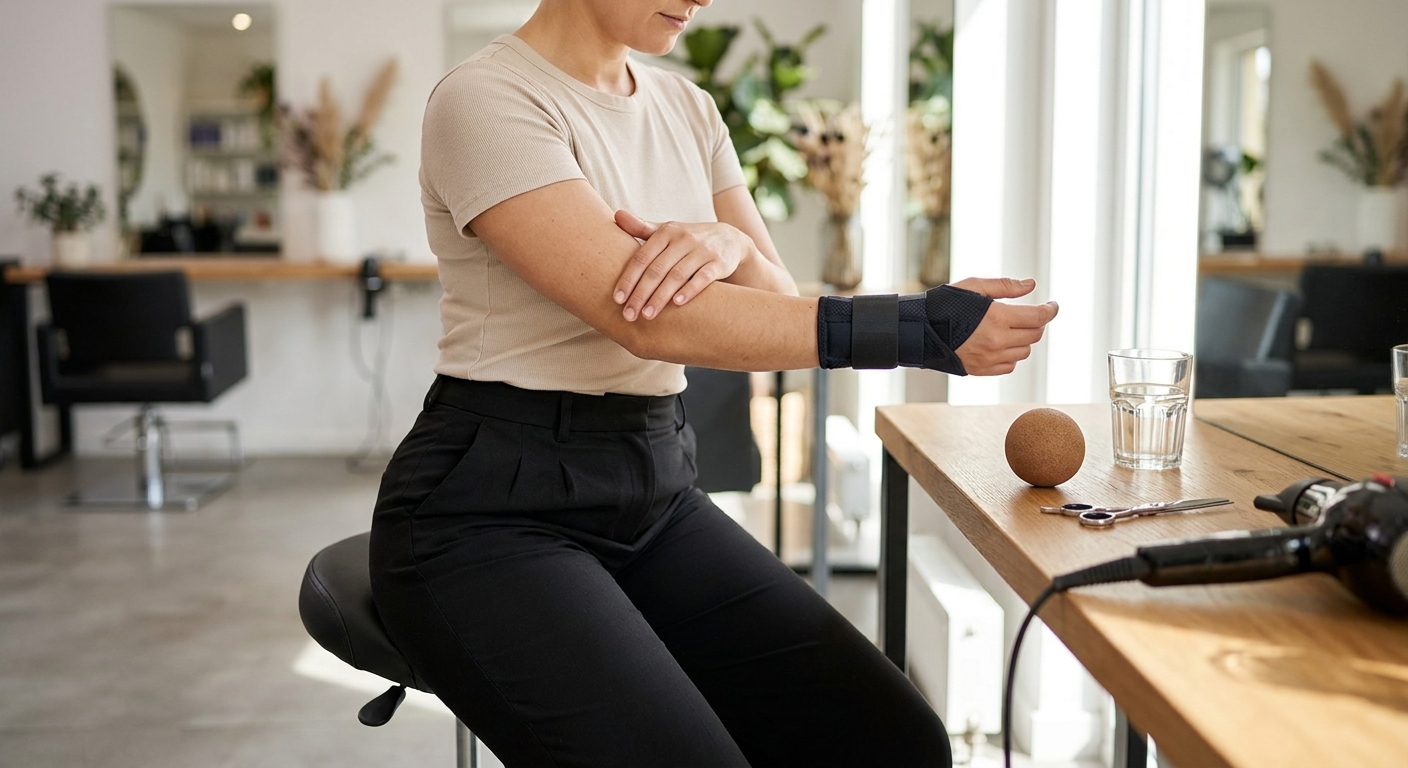
Eight-hour shifts on your feet, thousands of repetitive wrist twists with shears, and a neck locked in a forward tilt over a client’s head all day — pain management for hairstylists and barbers has to address a different injury pattern than a typical desk-job plan, and treating it late costs stylists their grip and their income.
TL;DR
- Pain management for hairstylists in 2026 targets wrist, shoulder, neck, and heel strain from repetitive motion and standing.
- Carpal tunnel treatment and trigger point injections get stylists back on the floor fast — try injections before surgery.
- Cortisone shots lose effect after 3 to 4 rounds a year; that’s the signal to escalate treatment, not repeat it.
- Chiropractic adjustments alone rarely fix nerve compression in the wrist or forearm — Skip them as a standalone plan.
Why this matters
Hairstylists and barbers rank among the trades with the highest rates of repetitive strain injury, right up there with dental hygienists and assembly-line workers, because the job stacks three risk factors at once: standing for 8 to 10 hours, gripping shears and clippers thousands of times a shift, and holding the neck in flexion to see the cut. Ignore early numbness in the thumb or a knot in the shoulder blade for a year and the fix stops being an injection — it becomes surgery or a career change.
Board-certified physicians at Hudson Pain and Spine in Englewood, Woodland Park, and Edison see this pattern constantly in stylists from Bergen, Passaic, and Middlesex counties: wrist and hand nerve pain, rotator cuff and upper-back knots, cervicogenic headaches, and plantar fasciitis from standing on hard salon floors. The treatment plan for this population looks different from a generic back-pain protocol because the job never lets the joint rest.
Who this is for
This guide is for working hairstylists, barbers, and booth renters who are still cutting hair through the pain — thumb numbness that flares by 2 p.m., a shoulder that clicks every time you raise your arm to color, or heel pain that hits hardest on the first steps out of bed. It’s built for stylists who need a plan that keeps them on the floor, not one that assumes six weeks off work is realistic.
What to look for in pain management for hairstylists
Experience with repetitive-motion injuries, not just back pain
A general pain clinic defaults to lumbar epidurals because that’s the highest-volume complaint they see. Stylists need a physician who treats carpal tunnel syndrome, De Quervain’s tenosynovitis, and rotator cuff strain as often as they treat spine pain, because the wrist and shoulder are where this job breaks down first.
Injection options that don’t sideline you for weeks
A lumbar fusion recovery keeps you off your feet for months — not an option for someone whose income depends on a full appointment book. Look for a clinic that leads with trigger point injections, nerve blocks, and steroid injections that let most patients return to light client work within 24 to 48 hours.
Scheduling built around salon hours, not banker’s hours
Stylists don’t get sick days the way office workers do; missing a Saturday can mean losing 6 to 8 client appointments and the tips that go with them. A clinic offering appointments outside a typical 9-to-5 window matters more here than it does for most patients.
A plan for self-employed and booth-renter coverage gaps
Many stylists rent a chair and carry individual insurance or none at all. A clinic that walks patients through what pain procedures cost without insurance and how to get prior authorization saves stylists from discovering the bill after the fact.
Willingness to treat early, before nerve damage sets in
Numbness that comes and goes is reversible in most cases; numbness that’s constant and paired with muscle wasting in the thumb often is not. The right clinic pushes for evaluation at the first sign of persistent tingling instead of waiting for a stylist to lose grip strength on the shears.
Get a wrist or shoulder pain evaluation
Board-certified pain specialists in Englewood, Woodland Park, and Edison, NJ.
Top treatment picks for hairstylists and barbers
The wrist saver: carpal tunnel and nerve compression treatment
Thumb numbness that flares while cutting, plus tingling into the index and middle fingers, points to median nerve compression from thousands of daily grip-and-release motions with shears. A steroid injection combined with night splinting controls symptoms for 6 to 12 months in many working patients before surgery ever comes up. Full details on the carpal tunnel syndrome treatment path are worth reading before symptoms progress. Buy — this is the injury this trade causes most often, and it’s the one most reversible if caught early.
The shoulder fix: trigger point injections
Coloring, blow-drying, and overhead cutting load the trapezius and rhomboids into tight, painful knots that ibuprofen barely touches. Trigger point injections deliver relief in the same visit, often within 20 to 30 minutes, and most stylists are back holding shears the next day. Buy for anyone who can point to the exact spot between the shoulder blades that knots up every shift.
The neck and headache combo
Hours spent tilting the neck forward to see the cut line drive cervicogenic headaches and chronic neck stiffness, a pattern distinct from a typical office worker’s posture pain. Radiofrequency-based options covered under neck pain and headache treatment can hold relief for 6 to 12 months per treatment cycle. Consider this route once headaches hit more than twice a week.
The standing-all-shift fix: heel and forearm strain
Hard salon floors and 8 to 10 hours standing drive plantar fasciitis, especially heel pain that’s worst in the first steps of the morning; a related overuse pattern shows up as forearm and elbow strain from gripping clippers all day. Both respond to targeted injections and load-management changes rather than months of rest most stylists can’t afford. Consider early, before the pain changes how you stand and shifts strain onto the hip or low back.
What to avoid
- Chiropractic adjustments as the only plan for numbness or tingling. Spinal manipulation can ease muscle tension, but it does not decompress a pinched median nerve at the wrist or a nerve root at the neck — get imaging and a nerve conduction study first.
- Long-term daily NSAIDs to push through a full book. They mask inflammation without treating the underlying nerve or joint problem, and daily use for months carries its own stomach and kidney risk.
- Waiting for the pain to become constant before seeing a specialist. Intermittent numbness that resolves overnight is a far easier fix in 2026 than numbness that’s become permanent.
Verdict comparison
| Symptom pattern | Likely cause | Treatment path | Verdict |
|---|---|---|---|
| Thumb/finger numbness by afternoon | Carpal tunnel syndrome | Splint + steroid injection | Buy |
| Knot between shoulder blades | Overhead cutting/coloring strain | Trigger point injections | Buy |
| Headaches with neck stiffness | Cervicogenic strain from neck flexion | Neck-focused RFA or injections | Consider |
| Heel pain worse in the morning | Plantar fasciitis from standing | Targeted injection + load changes | Consider |
| Numbness plus muscle wasting in hand | Advanced nerve compression | Surgical referral | Escalate now |
FAQ
What is the best pain management approach for hairstylists in 2026?
The best approach targets wrist, shoulder, neck, and heel strain directly rather than treating only the lower back. Trigger point injections and carpal tunnel treatment typically return stylists to work within 24 to 48 hours.
Can hairstylists get carpal tunnel syndrome from cutting hair?
Yes, the repetitive gripping and releasing motion with shears thousands of times a shift is a documented driver of median nerve compression. Symptoms usually start as intermittent thumb and finger numbness before becoming constant.
How much does pain treatment cost without insurance for self-employed stylists?
Costs vary by procedure and location; a breakdown of typical out-of-pocket ranges for common pain procedures is worth reviewing before booking. Many booth renters carry individual plans with different coverage rules than employer plans.
Is a nerve block better than surgery for hand numbness?
A nerve block or steroid injection is usually tried first because it carries far less downtime than surgery, often controlling symptoms for 6 to 12 months. Surgery becomes the better option once numbness is constant or grip strength is already declining.
How long does relief from a trigger point injection last?
Relief often starts within 20 to 30 minutes of the injection and can last weeks to months depending on how much the underlying repetitive motion continues. Stylists who pair injections with stretching between clients tend to hold relief longer.
Why do barbers get shoulder pain more than other trades?
Barbers hold their arms elevated for extended stretches while cutting and fading hair, which loads the rotator cuff and upper back muscles far more than most desk-based jobs. That sustained overhead position is what drives the chronic knots between the shoulder blades.
Should stylists see a pain specialist or a chiropractor first?
Numbness or tingling that suggests nerve involvement should go to a pain specialist first for diagnosis, since chiropractic adjustments do not decompress a pinched nerve. A chiropractor can be a reasonable add-on for general muscle tension once a nerve problem has been ruled out.
Does workers’ comp cover pain treatment for salon injuries?
Coverage depends on whether the stylist is classified as an employee or an independent booth renter, since workers’ comp typically applies only to employees. Booth renters usually need to rely on personal health insurance or self-pay arrangements.
One last thing
Most stylists wait until they can’t hold shears steady before booking an evaluation — by then, the carpal tunnel treatment window has narrowed from injections to surgery. The stylists who do best in 2026 are the ones who get the first afternoon of thumb numbness checked instead of waiting for it to become an 8-hour-a-day problem.
Related guides
- How to treat plantar fasciitis heel pain
- How to treat tennis elbow and golfer’s elbow pain
- How to get insurance approval for pain procedures
About the Medical Reviewer
Dr. Saurabh Dang is a double board-certified interventional pain management specialist serving Central and Northern New Jersey. He combines clinical expertise with a patient-centered approach to help patients find lasting relief from chronic pain conditions.
Read Full Bio →Seeking Treatment for Epidural Injections?
Dr. Dang and the team at Hudson Pain and Spine offer specialized care and advanced interventional treatments.
Ready to Find Relief from Pain?
Schedule your consultation with Dr. Saurabh Dang at our Englewood office.
Serving patients across Central and Northern New Jersey — Bergen, Passaic, and Middlesex counties.