Regenerative Pain Treatment Options: 2026 Guide

Medically reviewed by
Dr. Saurabh Dang, MD, MBA
Regenerative Pain Treatment Options: 2026 Guide
TL;DR:
- Regenerative pain treatments use your body’s biological material to promote tissue repair and reduce chronic pain. They work best for patients with confirmed structural damage who have failed conservative care and have realistic expectations. Success depends on proper patient selection, image-guided procedures, and structured post-treatment rehabilitation.
Regenerative pain treatment options are therapies that use your body’s own biological material, such as platelet-rich plasma (PRP) and stem cells, to reduce chronic pain and support tissue repair. These approaches fall under the broader field of regenerative medicine for pain, which targets structural damage in joints, tendons, and spinal discs rather than masking symptoms with medication. A meta-analysis on PRP shows it reduces lumbar disc disease pain by over 50%, outperforming corticosteroids at 6–12 months. That result signals a meaningful shift in how physicians approach non-surgical pain management for conditions like osteoarthritis, herniated discs, and tendon injuries. This guide covers the main therapies, who qualifies, what to expect procedurally, and how to set realistic goals.
What are the main regenerative pain treatment options?
Regenerative medicine for pain centers on two primary modalities: PRP therapy and stem cell injections. Both work by delivering concentrated biological agents directly into damaged tissue to trigger the body’s natural repair process.
How PRP therapy works
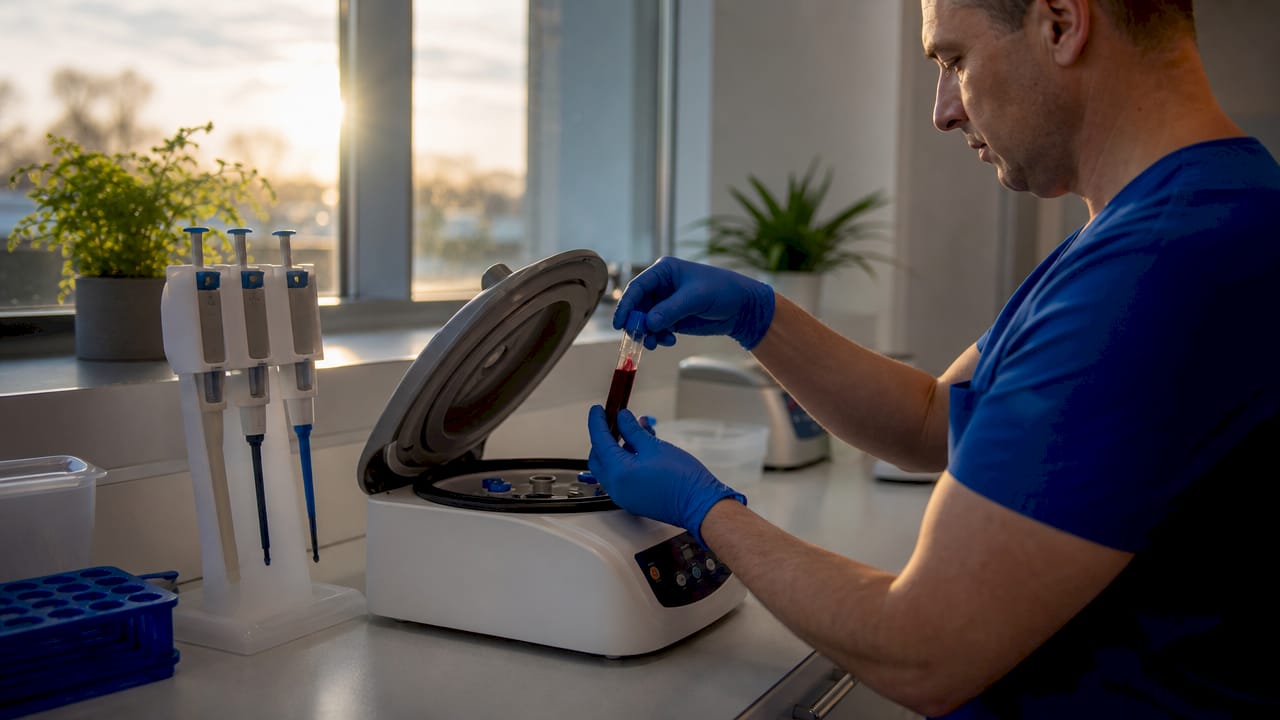
PRP is prepared by drawing a small amount of your blood, spinning it in a centrifuge to concentrate the platelets, and injecting the resulting plasma into the affected area. Platelets carry growth factors that signal tissue repair and reduce local inflammation. The procedure takes roughly 30–60 minutes and is performed in an outpatient setting. Because the material comes from your own blood, the risk of immune rejection is low.
How stem cell therapy works
Stem cell therapies use cells harvested from bone marrow or adipose (fat) tissue. Once processed, these cells are injected into the damaged joint, disc, or tendon. Contrary to popular belief, injected cells rarely engraft into the target tissue. The benefit comes primarily from paracrine signaling, meaning the cells release anti-inflammatory cytokines and growth factors that improve the local tissue environment. This distinction matters because it explains why results take longer to appear with stem cell therapy than with PRP.
Conditions these therapies target
- Osteoarthritis of the knee, hip, and shoulder
- Degenerative disc disease and discogenic low back pain
- Tendon injuries such as rotator cuff tears and Achilles tendinopathy
- Facet joint degeneration contributing to neck and back pain
- Partial ligament tears that have not responded to conservative care
Pro Tip: Ask your provider whether they use leukocyte-rich or leukocyte-poor PRP. The formulation affects outcomes depending on the tissue being treated, and a credentialed clinic will have a clear answer.
Newer cell-free approaches, including secretome and exosome therapies, are also emerging. These deliver the signaling molecules without live cells, which simplifies storage and regulatory handling. Clinical evidence for these modalities is still developing, so they remain less common in standard practice.
Who is a good candidate for regenerative pain treatments?
Not every patient with chronic pain is a good fit for regenerative therapies. Patient selection is the single biggest factor separating successful outcomes from disappointing ones.
The best candidates share several characteristics:
- Confirmed structural damage. Imaging such as MRI or X-ray shows a clear tissue abnormality, like cartilage loss in a knee joint or a degenerated lumbar disc.
- Partial, not complete, tissue damage. A fully torn rotator cuff or end-stage joint destruction responds poorly. Regenerative therapies work best when some viable tissue remains.
- Failure of conservative care. Patients should exhaust conservative options like physical therapy, anti-inflammatory medications, and activity modification before pursuing regenerative injections. This step also establishes a baseline for measuring improvement.
- Absence of active infection or malignancy. These are absolute contraindications for any injection-based therapy.
- Realistic expectations. Patients who understand that results take weeks to months and are not guaranteed tend to report higher satisfaction.
Regenerative therapies are not indicated for neuropathic pain, such as diabetic peripheral neuropathy or complex regional pain syndrome. These conditions involve nerve dysfunction rather than structural tissue breakdown, and injecting growth factors into a nerve-related problem does not address the underlying mechanism. If your pain is primarily burning, electric, or shooting in character, a different interventional approach is likely more appropriate. You can read more about chronic pain treatment options to understand where regenerative therapies fit within the broader spectrum.
Age, overall health, and metabolic status also influence outcomes. Patients with poorly controlled diabetes or obesity may produce lower-quality PRP or stem cells, which can reduce treatment effectiveness. Optimizing these factors before your procedure is not optional. It is part of the treatment itself.
How to prepare for and undergo regenerative treatment safely
Preparation starts well before the injection day. The quality of your outcome depends heavily on how well you and your provider set up the procedure.
Evaluating a clinic
Wide variability exists in stem cell therapy protocols, and not all clinics follow the same standards. Before committing, ask these questions:
- Does the provider use image guidance (ultrasound or fluoroscopy) to place the injection accurately?
- How does the clinic process and concentrate PRP or stem cells?
- Does the clinic track outcomes systematically, and can they share data?
- Is the provider board-certified in pain medicine, orthopedics, or a related specialty?
Clinics that cannot answer these questions clearly are a red flag. Hudson Pain and Spine works with board-certified specialists who use image-guided techniques to place injections precisely. You can review image-guided injection approaches to understand why accuracy in placement matters.
Pre-procedure steps
- Stop NSAIDs (ibuprofen, naproxen) 5–7 days before a PRP injection, as they suppress platelet activity.
- Stay well-hydrated in the 24 hours before your appointment.
- Disclose all medications, especially blood thinners and corticosteroids.
- Arrange transportation if sedation or heavy local anesthesia is planned.
“Regenerative injections are not a standalone fix. The injection creates a biological window of opportunity. What you do in the weeks after, including physical therapy and activity modification, determines how much of that window you actually use.”
What happens during the session
A typical PRP session runs 45–90 minutes. Blood is drawn, centrifuged, and the concentrated plasma is injected under image guidance. Stem cell procedures take longer because bone marrow or fat tissue must be harvested first. Both procedures use local anesthesia. Mild soreness at the injection site is normal for 2–5 days afterward.
What results and recovery timeline should you expect?
Setting realistic expectations is not pessimism. It is the foundation of a good treatment experience.
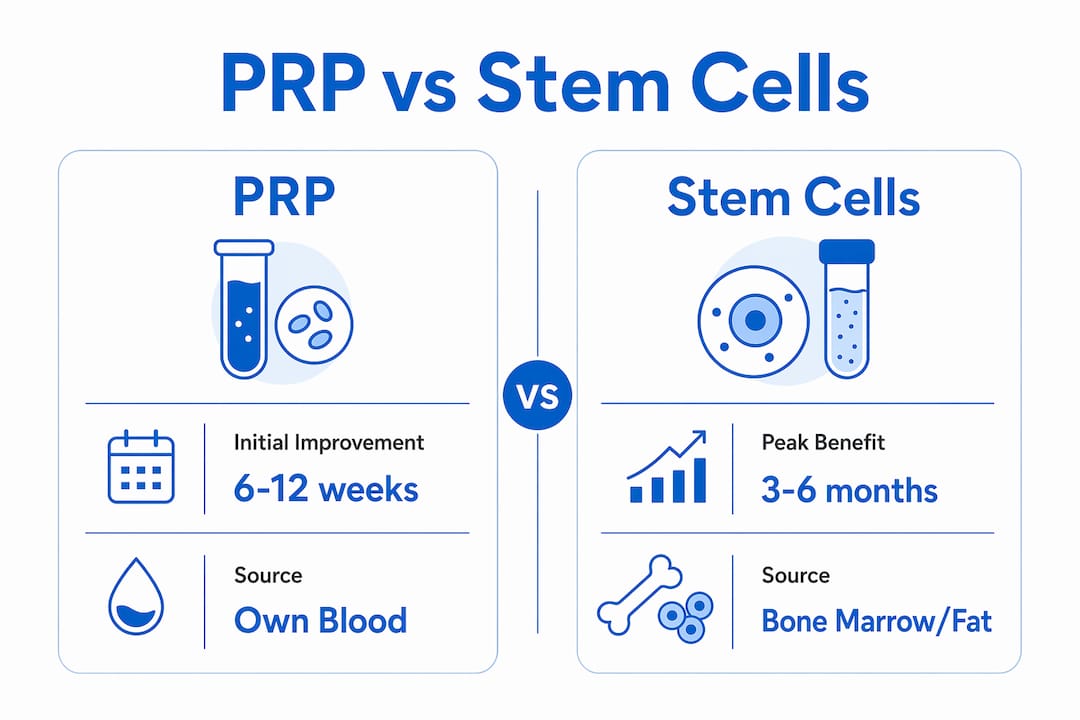
PRP shows initial improvement in 6–12 weeks, while stem cell effects often take 3–6 months to peak. That gap exists because stem cell paracrine signaling triggers a slower, more complex tissue remodeling process.
| Therapy | Initial improvement | Peak benefit | Typical duration of relief |
|---|---|---|---|
| PRP | 6–12 weeks | 3–6 months | 6–18 months |
| Stem cell | 3–6 months | 6–12 months | 12–24 months or longer |
Individual responses vary widely. Factors that improve outcomes include younger biological age, lower body weight, good metabolic health, and consistent participation in post-injection rehabilitation. Post-procedure rehabilitation is crucial but rarely standardized. Combining injections with structured physical therapy consistently improves functional outcomes compared to injections alone.
Follow-up imaging at 3–6 months can confirm whether structural changes have occurred, though clinical improvement in pain and function is the primary measure of success. Some patients require a second injection in the same cycle. This is not a treatment failure. It reflects the biological variability inherent in tissue healing. Patients managing osteoarthritis often see the most durable results when they combine regenerative injections with ongoing low-impact exercise and weight management.
What mistakes should you avoid with regenerative pain treatments?
The biggest mistake patients make is treating a regenerative injection as a one-time cure. The injection creates a biological environment for healing. Your behavior after the procedure determines whether that environment produces lasting results.
Common pitfalls to avoid:
- Skipping rehabilitation. Success depends largely on integration with active rehabilitation. Injections alone yield lower functional gains than injections paired with structured therapy.
- Choosing a clinic based on price alone. PRP costs $500–$2,000 and stem cell therapies range from $3,000–$10,000+. A lower price often reflects a less rigorous preparation protocol, not a bargain.
- Ignoring contraindications. Proceeding with treatment despite active infection, uncontrolled diabetes, or blood-thinning medication increases complication risk significantly.
- Expecting immediate relief. Patients who expect pain to drop within days frequently abandon the treatment before the biological process has time to work.
- Overlooking financial transparency. Most regenerative therapies are not covered by insurance. Ask for a full cost breakdown before your first appointment.
Pro Tip: Request a written outcome-tracking plan from your provider before the procedure. A clinic that measures your pain scores and function at baseline, 6 weeks, and 3 months is invested in your result, not just your appointment.
Clinical results vary widely across studies, and standardized protocols are still developing. That reality does not make these therapies ineffective. It means your choice of provider and your commitment to the full treatment plan matter more than the injection itself.
Key Takeaways
Regenerative pain therapies like PRP and stem cell injections work best when combined with proper patient selection, image-guided delivery, and structured post-injection rehabilitation.
| Point | Details |
|---|---|
| PRP vs. stem cell timelines | PRP improves in 6–12 weeks; stem cell effects peak at 6–12 months. |
| Patient selection is critical | Structural tissue damage, not neuropathic pain, is the right indication for these therapies. |
| Rehabilitation drives results | Injections paired with physical therapy consistently outperform injections alone. |
| Clinic quality varies widely | Ask about image guidance, processing protocols, and outcome tracking before committing. |
| Cost transparency matters | PRP runs $500–$2,000; stem cell therapy can exceed $10,000 and is rarely covered by insurance. |
Hudson Pain and Spine offers expert guidance on regenerative pain care
Chronic pain does not respond to guesswork, and neither do regenerative therapies. At Hudson Pain and Spine, the clinical team evaluates each patient individually to determine whether PRP, stem cell therapy, or another interventional approach is the right fit.
Hudson Pain and Spine serves patients across Bergen, Passaic, and Middlesex counties with multiple convenient locations and a full range of pain management services. From your initial consultation through post-procedure follow-up, the team builds a treatment plan around your specific diagnosis, imaging findings, and functional goals. If you are ready to move beyond medication and explore what regenerative medicine can realistically offer you, schedule a consultation today.
FAQ
What is the difference between PRP and stem cell therapy for pain?
PRP uses concentrated platelets from your own blood to deliver growth factors to damaged tissue, while stem cell therapy uses cells harvested from bone marrow or fat. Both work primarily through paracrine signaling rather than direct tissue replacement.
How long does it take to feel results from regenerative pain treatment?
PRP typically produces noticeable improvement within 6–12 weeks. Stem cell therapy takes longer, with peak benefits appearing at 6–12 months after injection.
Is regenerative therapy covered by insurance?
Most regenerative therapies, including PRP and stem cell injections, are not covered by standard insurance plans. Costs range from $500–$2,000 for PRP and $3,000–$10,000+ for stem cell procedures, so ask your clinic for a full cost breakdown upfront.
Can regenerative treatments help with nerve pain?
Regenerative therapies are not indicated for neuropathic pain conditions. They target structural tissue damage like cartilage loss or tendon injury, not nerve dysfunction.
How many regenerative injections will I need?
Most patients receive one to three injections per treatment cycle, depending on the condition and response. Your provider should track your pain scores and function at regular intervals to guide that decision.
Recommended
- Pain Procedures Without General Anesthesia: 2026 Guide | Hudson Pain and Spine Blog
- Pain Management Services Englewood NJ | Hudson Pain and Spine
- Chronic Pain Treatment Options Explained for Adults | Hudson Pain and Spine Blog
- Pain Management Blog | Hudson Pain and Spine NJ
About the Medical Reviewer
Dr. Saurabh Dang is a double board-certified interventional pain management specialist serving Central and Northern New Jersey. He combines clinical expertise with a patient-centered approach to help patients find lasting relief from chronic pain conditions.
Read Full Bio →Seeking Treatment for Chronic Pain?
Dr. Dang and the team at Hudson Pain and Spine offer specialized care and advanced interventional treatments.
Ready to Find Relief from Pain?
Schedule your consultation with Dr. Saurabh Dang at our Englewood office.
Serving patients across Central and Northern New Jersey — Bergen, Passaic, and Middlesex counties.