What Does Pain Management Accept: Conditions and Insurance

Medically reviewed by
Dr. Saurabh Dang, MD, MBA
What Does Pain Management Accept: Conditions and Insurance
TL;DR:
- Pain management treats a wide range of chronic and acute conditions, focusing on improving function and quality of life through personalized care. It accepts most major insurance plans, including Medicare and Medicaid, and welcomes patients with persistent pain affecting daily activities regardless of specific diagnoses. The approach combines physical therapy, medications, and interventional procedures tailored to each patient’s needs.
Pain management is a multidisciplinary medical specialty that accepts a wide range of chronic and acute pain conditions, most major insurance plans, and patients whose pain limits daily function. If you have been wondering what does pain management accept, the short answer covers far more than most people expect. Accepted conditions include low back pain, sciatica, osteoarthritis, fibromyalgia, and neuropathic pain, treated through a combination of physical, pharmacological, and interventional therapies. The goal is not to erase pain entirely. Pain management focuses on improving function and quality of life through personalized, multimodal care.
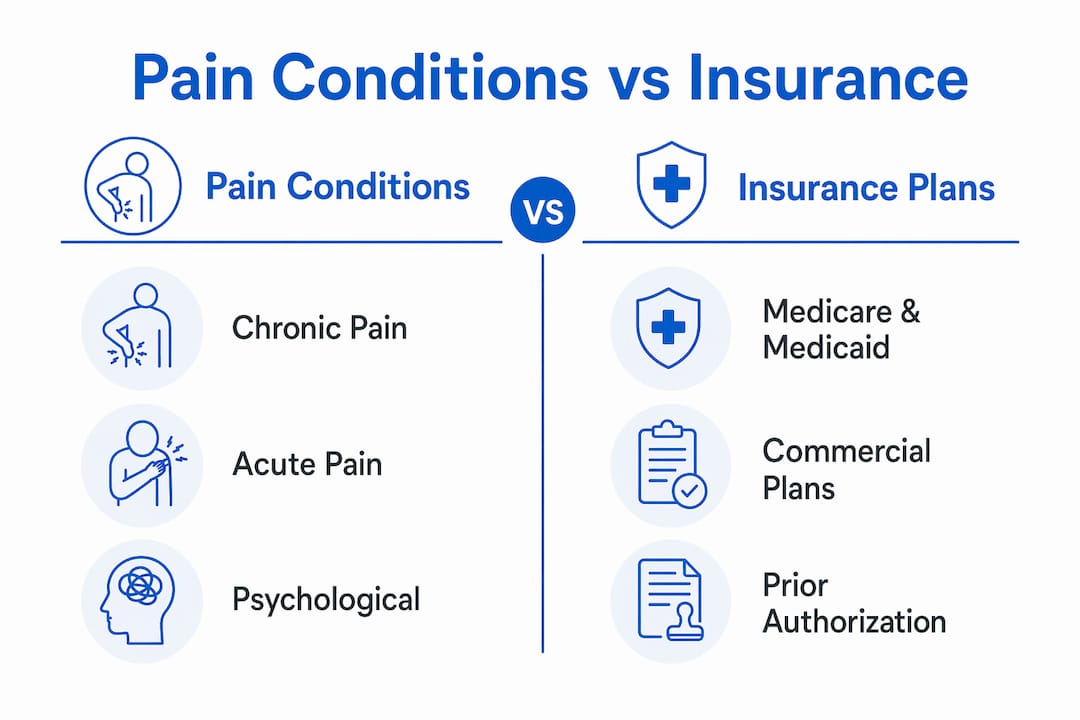
What does pain management accept in terms of pain conditions?
Pain management clinics accept both acute and chronic pain conditions across a broad spectrum. Accepted conditions include low back pain, sciatica, osteoarthritis, fibromyalgia, and neuropathic pain, each requiring a different treatment approach. Clinics also accept pain arising from injuries, post-surgical recovery, auto accidents, and work-related incidents.

Complex cases receive a multidisciplinary evaluation. A patient with fibromyalgia, for example, may need physical therapy, cognitive behavioral therapy (CBT), and medication management working together. A patient recovering from a herniated disc after a car accident may need interventional procedures alongside physical rehabilitation.
Common conditions accepted at pain management clinics include:
- Low back pain (acute and chronic, including lumbar disc disease)
- Sciatica and radiculopathy from compressed spinal nerves
- Osteoarthritis affecting the knees, hips, and spine
- Fibromyalgia and widespread musculoskeletal pain
- Neuropathic pain including diabetic neuropathy and post-herpetic neuralgia
- Headaches and migraines including cervicogenic headaches
- Post-surgical pain and failed back surgery syndrome
- Work injury and auto accident pain with documentation support
Pain from psychological contributors, such as anxiety or depression amplifying physical symptoms, is also addressed. Integrated psychological support reduces both emotional distress and perceived pain intensity, making it a standard part of comprehensive care.
Pro Tip: If you are unsure whether your condition qualifies, call the clinic before scheduling. Most pain management offices will tell you within minutes whether your diagnosis falls within their scope of care.
What treatment options does pain management offer?
Pain management services use a multimodal model, meaning no single treatment carries the full load. The approach combines non-pharmacological therapies, medications when appropriate, and interventional procedures tailored to each patient’s condition and goals.
Non-pharmacological therapies
Physical therapy and graded exercise are the foundation of most treatment plans. Active patient engagement in supervised exercise programs produces better long-term outcomes than passive treatments alone. CBT is used to address the mental and emotional dimensions of chronic pain, helping patients reframe their relationship with pain and build coping strategies. Lifestyle counseling, sleep hygiene guidance, and relaxation techniques round out this category.
Pharmacological options
Medications are used as a supporting tool, not the primary solution. Anti-inflammatory drugs, muscle relaxants, nerve pain medications such as gabapentin, and carefully managed opioid therapy each have a role depending on the diagnosis. Prescribing follows established safety guidelines, with regular reassessment to confirm the medication still serves the patient’s function goals.
Interventional procedures
Specialized pain clinics rely heavily on interventional procedures as primary treatment tools. These include:
| Procedure | Primary use |
|---|---|
| Epidural steroid injections | Spinal nerve inflammation, disc herniation, sciatica |
| Nerve blocks | Localized pain from specific nerve pathways |
| Facet joint injections | Arthritis-related spinal pain |
| Spinal cord stimulation | Chronic neuropathic pain, failed back surgery syndrome |
| Regenerative medicine (PRP) | Joint degeneration, soft tissue injuries |
| Botox therapy | Chronic migraines and cervicogenic headaches |
Most of these procedures do not require general anesthesia and are performed in an outpatient setting. Insurance coverage for interventional procedures varies, but transparent self-pay pricing is available when coverage is limited.
Pro Tip: Ask your clinic for a pre-authorization check before any interventional procedure. Most offices handle this for you, but confirming in advance prevents billing surprises.
What insurance plans do pain management clinics accept?
Most pain management clinics accept major health insurance plans, including commercial carriers, Medicare, and Medicaid where applicable. The specific plans accepted vary by clinic and location, so verifying your coverage before your first visit is always the right move.
Here is what patients typically encounter across insurance categories:
- Commercial insurance (including PPO and HMO plans): Accepted at most clinics. Some HMO plans require a referral from your primary care physician before your first pain management visit.
- Medicare: Widely accepted. Coverage applies to medically necessary procedures including epidural injections, nerve blocks, and physical therapy referrals.
- Medicaid: Accepted at many clinics, though the range of covered procedures may be narrower than commercial plans.
- Workers’ compensation: Pain clinics have dedicated workflows for workers’ comp cases, managing documentation and communication with insurance adjusters and attorneys on your behalf.
- Auto accident injuries: Personal injury protection (PIP) and liability coverage are handled with specialized documentation processes. Clinics coordinate directly with legal and insurance representatives.
- Self-pay: Clinics offer upfront pricing for patients without insurance or those seeking out-of-network care. Transparent cost estimates help you plan without surprises.
Horizon Blue Cross Blue Shield, Aetna, Cigna, and United Healthcare are among the commercial carriers commonly accepted at New Jersey pain management clinics. Checking the insurance accepted page of your specific clinic confirms your plan before you book.
One detail many patients miss: some insurance plans require prior authorization for interventional procedures like nerve blocks or spinal cord stimulation. Clinics typically manage this process, but knowing it exists helps you set realistic timelines for starting treatment.
Who is eligible for pain management services?
Eligibility for pain management services is broader than most patients assume. The general standard is persistent pain that affects your ability to function, work, sleep, or enjoy daily activities. You do not need a specific diagnosis to seek an evaluation.
The typical eligibility pathway looks like this:
- Referral or self-referral: Many clinics accept self-referred patients. Others require a referral from a primary care physician or specialist, depending on your insurance plan.
- Initial evaluation: Your first pain management visit includes a detailed medical history review, physical examination, and assessment of any existing imaging studies such as MRI or CT scans.
- Imaging review: Bringing physical copies of your imaging studies, not just the written reports, allows the provider to evaluate your pain source immediately rather than waiting for new diagnostics.
- Treatment plan development: Based on the evaluation, the provider creates a personalized plan. This may include referrals to physical therapy, orthopedics, neurosurgery, or psychological counseling as part of a coordinated care pathway.
- Ongoing monitoring: Treatment plans are reassessed regularly. If one approach is not producing results, the plan adjusts. Pain management is not a one-visit fix.
Patients with complex histories, including prior surgeries, multiple diagnoses, or previous treatment failures, are well within the scope of pain management care. Multimodal treatment plans are specifically designed to address cases where a single therapy has not been enough.
The most common reason patients delay seeking pain management is the belief that their pain is “not bad enough” to qualify. Persistent pain that limits your function is exactly the kind of case these clinics are built to treat.
Key Takeaways
Pain management accepts a wide range of conditions, most major insurance plans, and patients whose persistent pain limits daily function, using multimodal treatment to improve quality of life rather than simply eliminate pain.
| Point | Details |
|---|---|
| Accepted conditions | Low back pain, sciatica, osteoarthritis, fibromyalgia, neuropathic pain, and post-injury pain all qualify. |
| Treatment model | Multimodal care combines physical therapy, CBT, medications, and interventional procedures for each patient. |
| Insurance coverage | Most major commercial plans, Medicare, Medicaid, workers’ comp, and self-pay options are accepted. |
| Patient eligibility | Persistent pain affecting daily function qualifies most patients, with or without a prior referral. |
| First visit preparation | Bring physical copies of MRI and CT scans to accelerate diagnosis and avoid delays in starting treatment. |
Hudson Pain and Spine: pain management built for New Jersey patients
Hudson Pain and Spine accepts a broad range of chronic and acute pain conditions across Bergen, Passaic, and Middlesex counties. The clinic accepts most major insurance plans and provides clear self-pay options for patients navigating coverage gaps.
Treatment plans are built around your specific condition, combining interventional procedures such as epidural injections, nerve blocks, and spinal cord stimulation with physical therapy referrals and psychological support. Workers’ compensation and auto accident cases receive dedicated documentation handling. Whether you are dealing with a herniated disc, sciatica, or chronic migraines, the clinical team coordinates every step of your care. Verify your insurance and schedule your first consultation at a convenient location.
FAQ
What conditions does pain management accept?
Pain management accepts chronic and acute conditions including low back pain, sciatica, osteoarthritis, fibromyalgia, neuropathic pain, headaches, and post-surgical pain. Conditions arising from work injuries and auto accidents are also accepted with specialized documentation support.
Does pain management accept Medicare and Medicaid?
Most pain management clinics accept Medicare, and many accept Medicaid, though covered procedures may vary by plan. Confirming your specific coverage with the clinic before your first visit prevents unexpected costs.
Do I need a referral to see a pain management specialist?
Referral requirements depend on your insurance plan. PPO plans typically allow direct access, while HMO plans often require a referral from your primary care physician before your first pain management appointment.
What should I bring to my first pain management visit?
Bring physical copies of any MRI or CT scan images, a list of current medications, and your insurance card. Bringing imaging studies directly to the appointment allows the provider to evaluate your condition immediately and begin planning treatment without delay.
How does pain management work if I have no insurance?
Pain management clinics offer self-pay options with transparent upfront pricing for patients without insurance or those seeking out-of-network care. Interventional procedures like nerve blocks are available at many clinics with clear cost estimates provided in advance.
Recommended
- Insurance Accepted | Hudson Pain and Spine
- Pain Management Services Englewood NJ | Hudson Pain and Spine
- Does Horizon BCBS Cover Pain Management in NJ? | Hudson Pain and Spine Blog
- About Hudson Pain and Spine | NJ Pain Management Practice
About the Medical Reviewer
Dr. Saurabh Dang is a double board-certified interventional pain management specialist serving Central and Northern New Jersey. He combines clinical expertise with a patient-centered approach to help patients find lasting relief from chronic pain conditions.
Read Full Bio →Seeking Treatment for Chronic Pain?
Dr. Dang and the team at Hudson Pain and Spine offer specialized care and advanced interventional treatments.
Ready to Find Relief from Pain?
Schedule your consultation with Dr. Saurabh Dang at our Englewood office.
Serving patients across Central and Northern New Jersey — Bergen, Passaic, and Middlesex counties.