
Best new treatments for small fiber neuropathy in 2026

Medically reviewed by
Dr. Saurabh Dang, MD, MBA
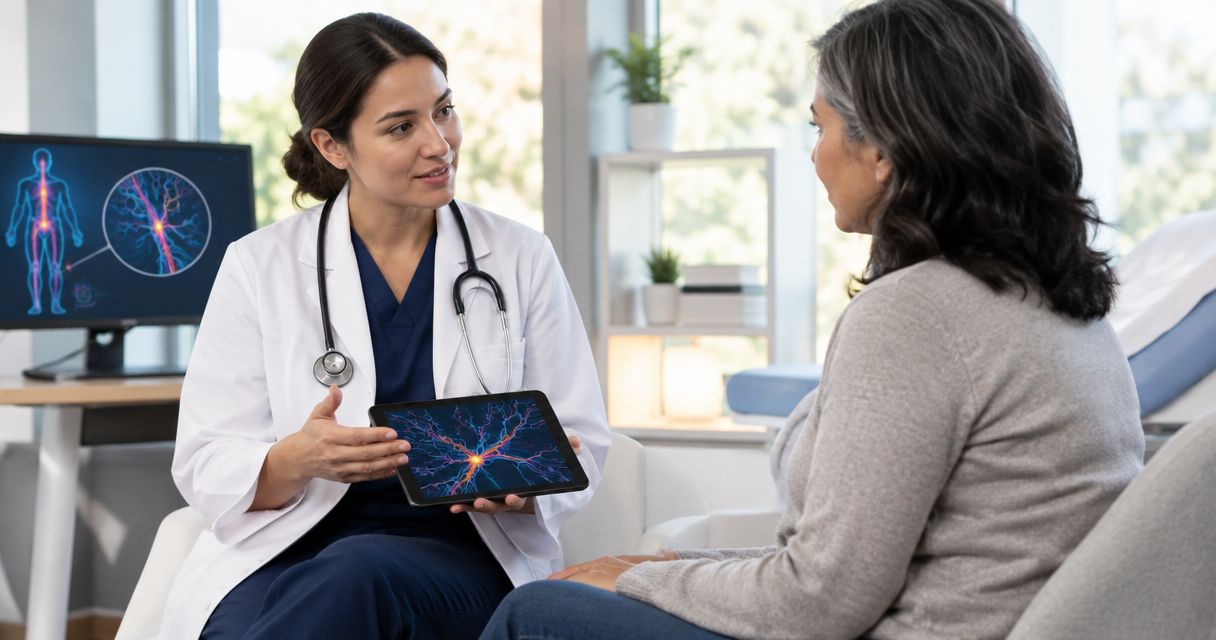
Small fiber neuropathy causes burning, tingling, or electric-shock pain in the feet and hands that standard nerve conduction studies often miss entirely, which is why so many patients spend years searching for a new treatment for small fiber neuropathy that actually matches their diagnosis. This guide ranks the options available in 2026 by who each one actually helps, not by which one gets the most attention online.
TL;DR
- The most reliable new treatment for small fiber neuropathy in 2026 starts with a confirmed diagnosis, not a procedure.
- Spinal cord stimulation is the strongest option once medication and topical therapy have failed.
- IVIG and immunotherapy target autoimmune-driven small fiber neuropathy directly instead of masking the pain.
- Topical lidocaine and alpha-lipoic acid remain reasonable first steps before any procedure is considered.
- Peripheral nerve stimulation and scrambler therapy fill the gap between medication and spinal cord stimulation.
Why this matters
Small fiber neuropathy is diagnosed by what standard testing can’t see. A normal EMG or nerve conduction study does not rule it out, because those tests measure large fiber function, not the thin unmyelinated and lightly myelinated fibers that carry pain and temperature signals. Confirmation usually requires a 3mm skin punch biopsy showing reduced intraepidermal nerve fiber density, sometimes paired with a QSART test for autonomic involvement.
That diagnostic step matters because it changes which treatment actually applies. A patient with diabetic small fiber neuropathy needs a different plan than one with an autoimmune trigger, and a how-to-treat-small-fiber-neuropathy-nerve-pain approach built around the wrong cause wastes months. In 2026, the treatments below are grouped by the patient they actually fit, not stacked as one universal ladder.
What makes a treatment worth pursuing
- Diagnostic confirmation first — a skin biopsy or QSART result before any procedure is scheduled
- Addresses the identifiable cause when one exists (diabetes, autoimmune disease, idiopathic)
- Evidence from clinical use, not testimonials or forum threads
- Invasiveness matches severity — reversible and low-risk options come before permanent ones
- Monitoring built in, since small fiber neuropathy symptoms shift over months
- Fits the patient’s broader health picture, including other conditions and medications

Every treatment on this list gets filtered through the same four questions before it’s a fit.
At a glance: small fiber neuropathy treatments compared in 2026
| Treatment | Best for | Standout feature | Key limitation |
|---|---|---|---|
| Spinal cord stimulation | Refractory pain unresponsive to medication | Modulates pain signals directly at the spinal cord | Requires a trial period and a surgical implant |
| Peripheral nerve stimulation | Pain confined to one nerve territory (foot, hand) | Targets a specific nerve without a spinal implant | Not suited to widespread, symmetric pain |
| IVIG / immunotherapy | Autoimmune-driven small fiber neuropathy | Treats the underlying immune process, not just symptoms | Requires infusion access and lab-confirmed autoimmune markers |
| Low-dose naltrexone | Small fiber neuropathy overlapping with fibromyalgia | Oral, low side-effect profile | Response is inconsistent and still being studied |
| Topical lidocaine and capsaicin | Localized burning pain in the feet or hands | No systemic side effects, easy to start | Limited effect on widespread or severe pain |
| Scrambler therapy | Patients who want a non-invasive option first | No needles, no implant, session-based | Requires repeated visits and access to a trained provider |
1. Spinal cord stimulation: best new treatment for small fiber neuropathy for refractory pain
Spinal cord stimulation places a small device near the spinal cord that changes how pain signals reach the brain. It’s typically considered after medication, topical agents, and less invasive options haven’t brought enough relief, and it starts with a temporary trial before any permanent device is placed.
Spinal cord stimulation pros:
- Directly modulates pain signaling rather than masking it with medication
- The trial period lets a patient test the response before committing to an implant — see how-long-does-a-spinal-cord-stimulation-trial-last for what that trial involves
- Can reduce reliance on daily oral pain medication
Spinal cord stimulation cons:
- Requires a surgical procedure and an implanted device
- Does not reverse the underlying nerve damage
- Not a first-line option — it follows, not replaces, conservative treatment
Best for: patients with confirmed small fiber neuropathy pain that hasn’t responded to medication or topical therapy. Verdict: worth a trial if conservative care has already failed.
2. Peripheral nerve stimulation: best for pain confined to one nerve territory
Peripheral nerve stimulation places a lead near a specific peripheral nerve rather than the spinal cord itself. It’s a fit when small fiber neuropathy pain is concentrated in one area — a single foot, a hand, a specific nerve distribution — rather than spread symmetrically across both limbs.
Peripheral nerve stimulation pros:
- More targeted than spinal cord stimulation for focal pain
- Often placed with a less involved procedure than a spinal implant
- Adjustable stimulation levels as symptoms change
Peripheral nerve stimulation cons:
- Not effective for widespread, symmetric small fiber neuropathy
- Still requires a device and ongoing management
- Candidacy depends on precise localization of the painful nerve
Best for: small fiber neuropathy pain limited to a single nerve territory. Verdict: strong option when pain is localized, not systemic.
3. IVIG and immunotherapy: best for autoimmune-driven small fiber neuropathy
When lab testing points to an autoimmune trigger — including certain antibody-mediated small fiber neuropathies — intravenous immunoglobulin or other immunotherapy targets the immune process itself rather than just the pain it produces. This route depends on confirming an autoimmune cause first; it isn’t a general-purpose treatment.
IVIG pros:
- Addresses the underlying immune mechanism instead of only the symptom
- Can improve nerve fiber density over time in confirmed autoimmune cases
- Backed by growing clinical literature on antibody-associated small fiber neuropathy
IVIG cons:
- Only appropriate with lab-confirmed autoimmune markers
- Requires infusion access and repeat treatment cycles
- Not effective for diabetic or idiopathic small fiber neuropathy
Best for: patients with lab-confirmed autoimmune small fiber neuropathy. Verdict: pursue only with confirmed autoimmune markers.
4. Low-dose naltrexone: best for small fiber neuropathy with fibromyalgia overlap
Low-dose naltrexone is an oral medication originally used at much higher doses for other purposes, now studied at low doses for central sensitization pain conditions. It shows up most often in patients whose small fiber neuropathy overlaps with fibromyalgia-type widespread pain.
Low-dose naltrexone pros:
- Oral, low burden compared to infusions or procedures
- Generally well tolerated at low doses
- A reasonable adjunct when central sensitization is part of the picture
Low-dose naltrexone cons:
- Response varies significantly between patients
- Evidence base is still developing compared to procedural options
- Not a substitute for treating an identified underlying cause
Best for: small fiber neuropathy with overlapping fibromyalgia symptoms. Verdict: reasonable adjunct, discuss timing with a specialist.
5. Topical lidocaine and capsaicin: best first-line option for localized pain
Topical agents stay at the skin level and avoid the systemic side effects that come with oral medications. Lidocaine patches and high-concentration capsaicin patches both target localized burning pain, which makes them a common starting point before any procedure is on the table.
Topical agents pros:
- No systemic side effects
- Easy to start without extensive testing beyond initial diagnosis
- Useful alongside other treatments, not just as a standalone step
Topical agents cons:
- Limited reach for widespread or severe pain
- Effect is often partial rather than complete
- Requires consistent application to maintain benefit
Best for: localized burning pain in the feet or hands, especially early in treatment. Verdict: worth trying first in most cases.
6. Scrambler therapy: best non-invasive option before considering a device
Scrambler therapy uses surface electrodes to send “non-pain” nerve signals meant to retrain how the brain interprets pain input. It requires a series of sessions with a trained provider and involves no needles or implanted hardware, which makes it appealing to patients who want to exhaust non-invasive routes first.
Scrambler therapy pros:
- No needles, no implant, no surgical component
- Sessions can be scheduled around other treatment
- An option for patients who are hesitant about procedures
Scrambler therapy cons:
- Requires repeated visits over several weeks
- Access to trained providers is limited compared to more common therapies
- Durability of benefit varies by patient
Best for: patients who want a non-invasive step before considering a nerve stimulation device. Verdict: reasonable trial for procedure-averse patients.
How we ranked these treatments
Each option above was placed by matching it to a specific patient profile rather than stacking all six into one universal ladder. Spinal cord stimulation and peripheral nerve stimulation lead because they address confirmed, treatment-resistant pain directly. IVIG earns its slot only where autoimmune markers exist. Low-dose naltrexone, topical agents, and scrambler therapy fill the space for patients earlier in the process or looking for lower-risk options first.
That sequencing matters more than any single treatment’s reputation. A patient with diabetic small fiber neuropathy who jumps straight to an invasive option without addressing glucose control, for example, is treating a symptom while the underlying driver continues — the same logic applies to chronic-pain-management-for-diabetic-neuropathy cases seen in 2026.
Which treatment should you choose?
Start with a confirmed diagnosis and an identified cause if one exists. If a cause is identifiable — diabetes, autoimmune disease — treat that first, alongside topical agents for symptom control. If pain persists despite that and is localized, peripheral nerve stimulation or scrambler therapy are the next reasonable steps. If pain is widespread and has resisted conservative care, spinal cord stimulation is the strongest option remaining in 2026. The wrong move is skipping the diagnostic step and choosing a treatment based on what worked for someone else’s neuropathy.
Get a small fiber neuropathy evaluation
A confirmed diagnosis is the first step to the right treatment plan.
FAQ
What is the newest treatment for small fiber neuropathy in 2026?
Spinal cord stimulation and peripheral nerve stimulation are the most advanced procedural options in 2026 for pain that hasn’t responded to medication. IVIG remains the leading option specifically for autoimmune-driven cases.
Is small fiber neuropathy curable?
Small fiber neuropathy is not reliably curable in most cases, but symptoms can be managed and, when an underlying cause like diabetes or an autoimmune condition is treated, nerve fiber density can sometimes improve. Treatment focuses on pain control and addressing the cause when one is identified.
How is small fiber neuropathy diagnosed?
A skin punch biopsy measuring intraepidermal nerve fiber density is the standard confirmatory test, sometimes paired with a QSART test for autonomic involvement. Standard EMG and nerve conduction studies often come back normal because they don’t measure the fibers involved.
Is spinal cord stimulation better than medication for small fiber neuropathy?
Spinal cord stimulation is generally reserved for patients whose pain hasn’t responded to medication and topical therapy, not as a first step. It involves a trial period before any permanent device is placed.
Can diabetic small fiber neuropathy be treated without a procedure?
Yes — topical agents, glucose control, and in some cases low-dose naltrexone are used before procedural options for diabetic small fiber neuropathy. Procedures are typically considered after conservative measures haven’t controlled the pain.
What does IVIG do for small fiber neuropathy?
IVIG treats the underlying autoimmune process in patients with lab-confirmed autoimmune markers, rather than only reducing pain symptoms. It isn’t used for diabetic or idiopathic small fiber neuropathy.
How long does a spinal cord stimulation trial take before deciding on a permanent implant?
The trial period is a temporary placement used to gauge whether stimulation reduces pain before committing to a permanent device. Details on what to expect during that window are covered separately for patients considering the option in 2026.
Who should see a specialist for small fiber neuropathy?
Anyone with unexplained burning, tingling, or stabbing pain in the feet or hands and a normal nerve conduction study should see a pain specialist for skin biopsy testing. Early diagnosis changes which treatments actually apply.
One last thing
Most small fiber neuropathy treatment plans fail not because the therapy was wrong, but because the diagnostic step got skipped. A normal EMG does not rule out small fiber neuropathy — it rules out large fiber neuropathy, which is a different condition entirely. Anyone starting a new treatment for small fiber neuropathy in 2026 without a skin biopsy or QSART result on file is treating a guess.
Related guides
- How peripheral nerve stimulation treats chronic nerve pain
- How ketamine infusion therapy treats resistant chronic pain
About the Medical Reviewer
Dr. Saurabh Dang is a double board-certified interventional pain management specialist serving Central and Northern New Jersey. He combines clinical expertise with a patient-centered approach to help patients find lasting relief from chronic pain conditions.
Read Full Bio →Seeking Treatment for Spinal Cord Stimulation?
Dr. Dang and the team at Hudson Pain and Spine offer specialized care and advanced interventional treatments.
Ready to Find Relief from Pain?
Schedule your consultation with Dr. Saurabh Dang at our Englewood office.
Serving patients across Central and Northern New Jersey — Bergen, Passaic, and Middlesex counties.