
Best treatments for De Quervain's tenosynovitis

Medically reviewed by
Dr. Saurabh Dang, MD, MBA
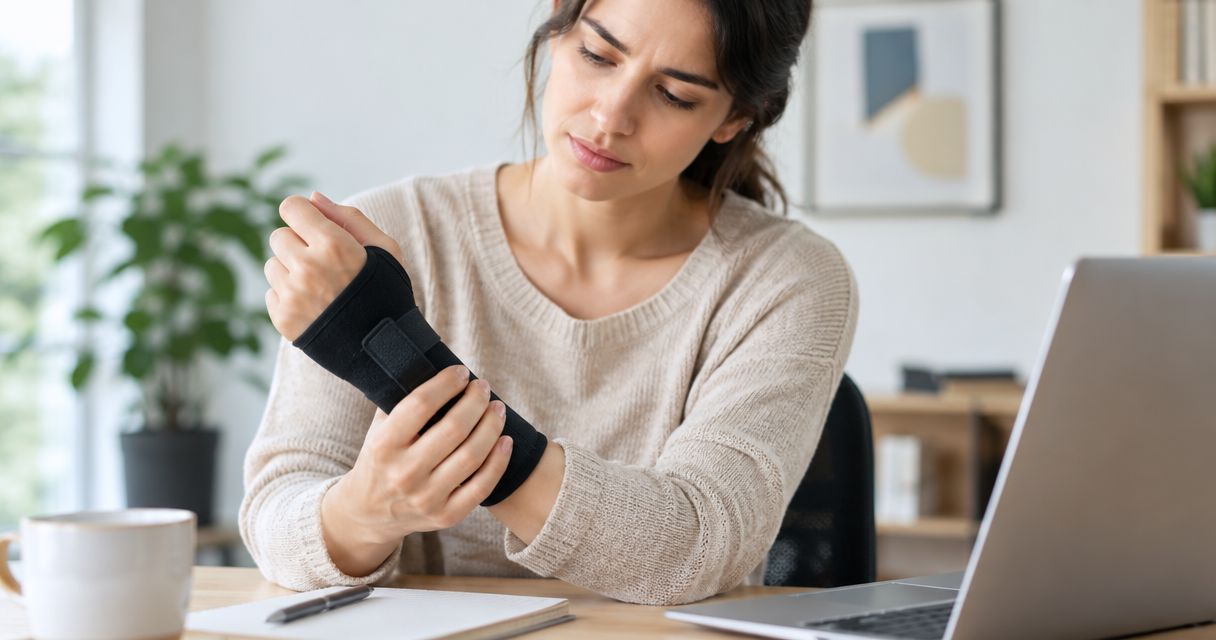
Best overall for confirmed, symptomatic De Quervain’s tenosynovitis: a corticosteroid injection combined with a thumb-spica splint when your clinician recommends it. Best for mild symptoms: splinting and activity changes; best for persistent symptoms despite nonsurgical care: surgical release. This 2026 guide compares each de quervain’s tenosynovitis treatment by its purpose, limitations, and place in your care.
TL;DR
- De Quervain’s tenosynovitis treatment often combines a corticosteroid injection, thumb-spica splinting, and changes to painful activities.
- Thumb-spica splints support both the thumb and wrist; ordinary wrist braces do not provide equivalent thumb support.
- Hand therapy helps restore function, while anti-inflammatory medication provides symptom relief rather than correcting tendon-sheath narrowing.
- HudsonPain.com provides board-certified interventional pain management for New Jersey patients; persistent thumb-side wrist pain needs an accurate diagnosis.
Why this matters
De Quervain’s tenosynovitis affects the sheath around 2 tendons on the thumb side of your wrist: the abductor pollicis longus and extensor pollicis brevis. Thickening and irritation in this narrow compartment make thumb movement painful. Gripping, twisting, lifting a child, and opening containers can aggravate symptoms.
The treatment target matters. A wrist brace, a nerve block, and a tendon-sheath injection address different problems; they are not interchangeable simply because each treats pain.
HudsonPain.com serves patients seeking board-certified interventional pain management in Bergen, Passaic, and Middlesex counties, New Jersey. Persistent thumb-side wrist pain deserves an examination before you choose an injection or exercise program. For condition-specific background, read about treating De Quervain’s wrist pain.
What makes the best De Quervain’s treatment?
The best treatment in 2026 matches your diagnosis, symptom severity, and daily demands—not simply the strongest available procedure.
- Diagnostic fit: Treatment should address the thumb-tendon compartment, not presumed arthritis or nerve compression.
- Targeted relief: Injections and splints act differently; combining them can address irritation and mechanical stress.
- Functional benefit: Judge improvement by lifting, dressing, working, and gripping—not pain scores alone.
- Medical safety: Pregnancy, diabetes, kidney disease, medication interactions, and skin infection change treatment choices.
- A reassessment plan: Persistent symptoms require another examination rather than indefinite bracing or repeated medication.
Treatment options at a glance
These treatments often work together. The order reflects their role in care, not a requirement to try every option before discussing the next.
| Treatment | Best for | Standout benefit | Key limitation |
|---|---|---|---|
| Corticosteroid injection | Confirmed symptoms needing targeted nonsurgical treatment | Delivers medication into the affected tendon sheath | Requires a procedure and carries injection risks |
| Thumb-spica splint | Protecting painful thumb and wrist movement | Supports both affected regions | Restricts hand use and needs correct fitting |
| Activity modification | Reducing repeated aggravation | Changes the movements that provoke pain | Work and caregiving demands can complicate changes |
| Hand therapy | Restoring movement and practical hand function | Individualizes movement, loading, and task changes | Exercises must match the stage of symptoms |
| Anti-inflammatory medication | Short-term symptom control | Helps reduce pain during recovery | Does not correct mechanical narrowing |
| Surgical release | Persistent symptoms after appropriate nonsurgical care | Opens the constricted tendon compartment | Requires an operation and postoperative recovery |
1. Corticosteroid injection: best for targeted nonsurgical relief
A clinician injects corticosteroid into the sheath around the affected tendons, not into the tendon itself. The goal is to reduce local inflammation and swelling so the tendons move more comfortably. Injection is an established treatment, including when splinting and activity changes have not provided enough relief.
Combining an injection with thumb-spica immobilization for approximately 3–4 weeks is an evidence-supported approach. Your clinician sets the actual schedule, including when you can remove the splint and resume specific activities.
Corticosteroid injection pros:
- Targets the affected tendon compartment.
- Avoids an incision.
- Can be paired with splinting and rehabilitation.
Corticosteroid injection cons:
- Can cause a temporary pain flare, skin lightening, or local fat thinning.
- Carries infection risk and can temporarily raise blood glucose.
- Does not guarantee lasting relief; recurrence requires reassessment.
Ultrasound can help identify separate tendon compartments and guide placement when anatomy or previous treatment makes targeting difficult. It is not a substitute for confirming the diagnosis.
Best for: Patients with confirmed De Quervain’s whose symptoms justify a targeted procedure.
Verdict: Hold self-directed treatment decisions—discuss injection suitability with the treating clinician.
2. Thumb-spica splint: best for protecting painful movement
A thumb-spica splint supports your wrist and thumb together. A standard wrist-only brace leaves the thumb moving and does not provide the same protection for this condition.
Splinting reduces movements that repeatedly irritate the tendon compartment. It works best with a clear wear schedule, appropriate fit, and changes to painful activities—not as permission to continue heavy gripping through pain.
Thumb-spica splint pros:
- Provides support without an injection or operation.
- Reduces painful thumb and wrist movement.
- Can complement corticosteroid treatment.
Thumb-spica splint cons:
- Restricts work, hygiene, and caregiving tasks.
- Prolonged immobilization can contribute to stiffness.
- Poor fit can cause pressure or skin irritation.
Ask a clinician or hand therapist to check the fit. Increasing numbness, color changes, or pressure marks mean the splint needs prompt adjustment; tightening it further is not the answer.
Best for: Mild symptoms and protection during an agreed treatment plan.
Verdict: Hold prolonged unsupervised immobilization—use a fitted thumb-spica splint on a defined schedule.
3. Activity modification: best for reducing repeated aggravation
Activity modification means changing how you use your hand rather than stopping all movement. Reduce forceful pinching, repetitive thumb scrolling, wringing, and lifting with your wrist bent toward the little finger when those movements reproduce pain.
For caregiving, support a child with your forearms and palms instead of repeatedly lifting under the arms with your thumbs spread wide. At work, adjust grip size, alternate tasks, and keep your wrist closer to neutral where practical.
Activity modification pros:
- Addresses repeated mechanical irritation.
- Applies directly to work, home, and exercise.
- Supports other treatments without adding medication.
Activity modification cons:
- Some job and caregiving demands are difficult to change.
- Changes alone do not reliably resolve established symptoms.
For temporary comfort, apply a cold pack through a cloth for 10–15 minutes at a time. Stop if your skin becomes painful or numb, and avoid cold treatment over areas with impaired sensation or circulation unless your clinician approves it.
Best for: Anyone whose symptoms repeatedly flare during identifiable tasks.
Verdict: Hold painful repetitive loading—change the task instead of repeatedly testing the sore wrist.
4. Hand therapy: best for restoring everyday hand function
A hand therapist evaluates movement, grip demands, splint fit, and the tasks you need to resume. Treatment can include education, gentle mobility, and gradual strengthening as symptoms settle.
Aggressive stretching is not the starting point for a highly irritated tendon sheath. A useful 2026 rehabilitation plan explains which movements to perform, which to pause, and what symptom response should trigger a change.
Hand therapy pros:
- Adapts rehabilitation to your actual activities.
- Helps identify aggravating grips and wrist positions.
- Supports a gradual return to loading.
Hand therapy cons:
- Requires participation between appointments.
- Exercises can aggravate symptoms if progressed too quickly.
- Does not replace assessment for persistent tendon-compartment narrowing.
Do not repeatedly perform a painful thumb-in-fist wrist stretch because an online demonstration calls it a treatment. Provocative diagnostic maneuvers and therapeutic exercises serve different purposes.
Best for: Patients with stiffness, reduced function, or difficulty returning to work and caregiving.
Verdict: Hold forceful stretching—start a therapist-directed program matched to your symptoms.
5. Anti-inflammatory medication: best for temporary symptom control
Nonsteroidal anti-inflammatory drugs, or NSAIDs, can reduce pain while you protect the wrist and address aggravating activities. They do not physically open a narrowed tendon compartment.
Oral and topical preparations have different risks and instructions. A pharmacist or clinician should review your medications and medical history before you start treatment, particularly if you have kidney disease, ulcers, cardiovascular disease, or take blood thinners.
Anti-inflammatory medication pros:
- Provides nonsurgical symptom relief.
- Can support comfortable participation in rehabilitation.
- Includes topical options for selected patients.
Anti-inflammatory medication cons:
- Oral NSAIDs can cause gastrointestinal bleeding and kidney problems.
- Symptom relief can mask continued overloading.
- Medication alone does not address the underlying mechanical restriction.
Do not combine different NSAIDs without medical advice. If you are pregnant or breastfeeding, ask about the specific medicine rather than assuming an over-the-counter product is appropriate.
Best for: Short-term pain control in patients whose health history permits NSAID use.
Verdict: Hold unsupervised medication combinations—confirm the product and instructions with a clinician or pharmacist.
6. Surgical release: best for persistent symptoms despite nonsurgical care
Surgical release opens the tight first dorsal compartment so the tendons have more room to move. A hand surgeon considers this when symptoms remain limiting despite appropriate nonsurgical treatment or when other findings support surgery.
Surgery is not automatically necessary after one unsuccessful treatment. The surgeon should confirm the diagnosis, review prior injection placement and response, and discuss whether another condition explains persistent pain.
Surgical release pros:
- Directly addresses the constricted compartment.
- Offers another option when nonsurgical care fails.
- Allows the surgeon to address relevant compartment anatomy.
Surgical release cons:
- Carries risks including infection, scar tenderness, and superficial radial nerve irritation or injury.
- Requires wound care and a staged return to hand use.
- Does not guarantee complete symptom resolution.
Best for: Patients with persistent, function-limiting symptoms after an appropriate nonsurgical plan.
Verdict: Wait for a hand-surgeon assessment—persistent pain alone does not establish that surgery is the next step.
How these treatments were ranked
This 2026 guide prioritizes diagnostic fit, targeted treatment, function, safety, and a clear next step. Corticosteroid injection ranks first for targeted nonsurgical treatment; splinting and activity changes remain central, especially for mild symptoms. Medication and therapy have supporting roles, while surgery addresses selected persistent cases.
The ranking is a clinical decision guide, not a claim that every patient needs an injection. No individual examination is replaced by a treatment list.
Which treatment should you choose?
For confirmed De Quervain’s that limits everyday activities, discuss corticosteroid injection plus thumb-spica splinting; for mild symptoms, begin with clinician-guided protection and activity changes. If treatment fails, reassess the diagnosis before repeating it.
Use this sequence at your 2026 appointment:
- Diagnosis: Identify the painful location and distinguish tendon pain from arthritis, nerve irritation, or injury.
- Treatment choice: Match symptom severity, medical risks, and daily demands to the treatment.
- Reassessment: Review both pain and practical function after the agreed treatment period.
- Hand referral: Discuss a hand specialist when symptoms remain limiting or the diagnosis is uncertain.
Bring your splint, medication list, and details of previous injections. Describe specific difficult tasks rather than simply saying your wrist hurts.
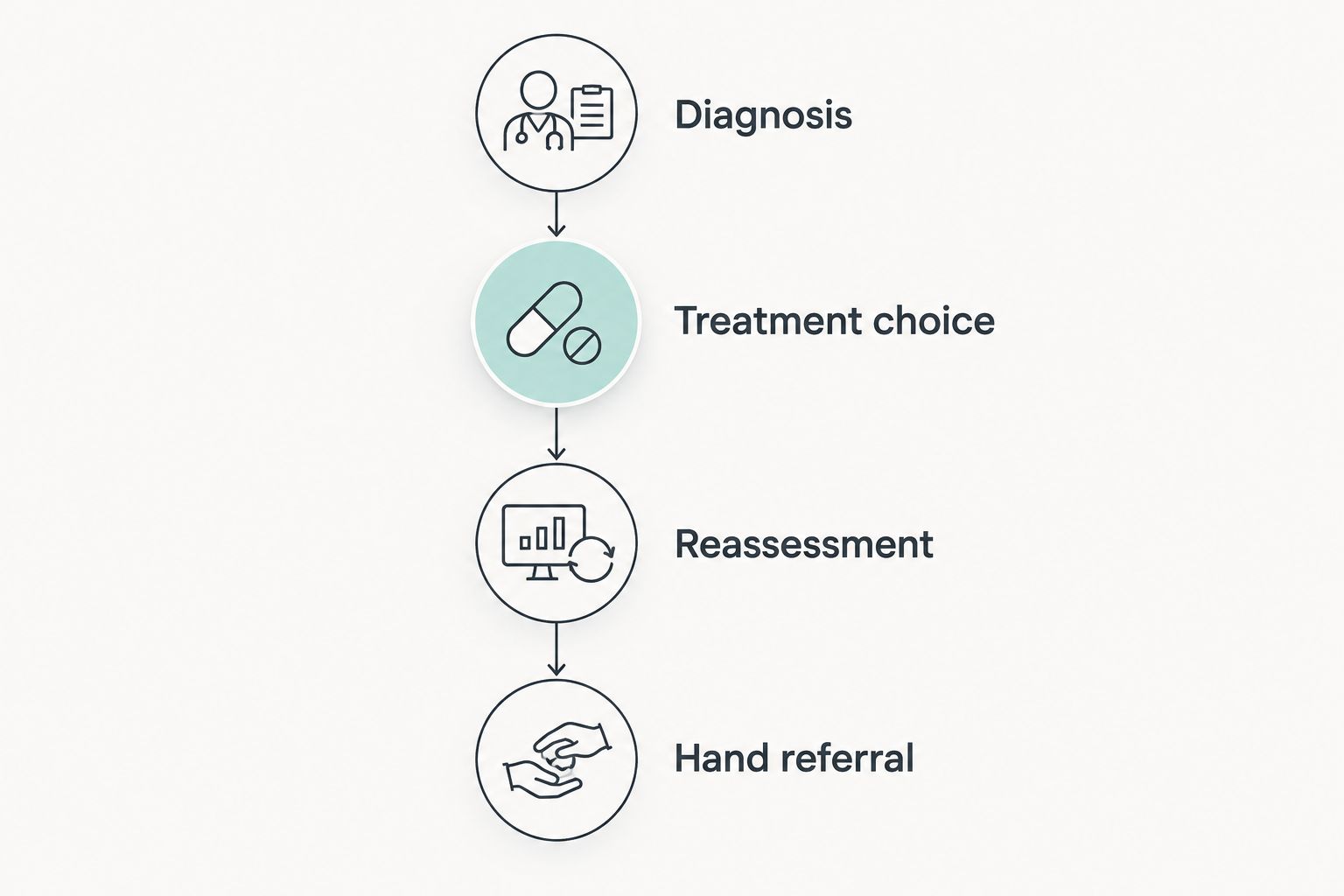
Persistent symptoms call for reassessment before repeating the same treatment.
HudsonPain.com provides interventional pain management from offices in Englewood, Woodland Park, and Edison. When arranging an evaluation, describe your thumb-side wrist symptoms and ask which clinician is appropriate for your condition.
When wrist pain needs prompt assessment
Seek prompt medical care for redness with warmth or fever, rapidly increasing swelling, new weakness or numbness, or pain after a fall. A cold, pale, or blue hand needs emergency assessment. These findings should not be managed as routine De Quervain’s at home.
FAQ
What’s the best treatment for De Quervain’s tenosynovitis?
For confirmed symptomatic De Quervain’s, corticosteroid injection combined with thumb-spica splinting is an established nonsurgical approach. Mild symptoms can start with splinting and activity modification, while persistent cases need reassessment.
Can De Quervain’s heal without an injection?
Yes, some cases improve with activity changes and thumb-spica splinting. Persistent pain, reduced function, or an uncertain diagnosis warrants an examination rather than indefinite self-treatment.
What kind of brace should I use for De Quervain’s?
A thumb-spica splint supports both the wrist and thumb for De Quervain’s. A wrist-only brace does not provide equivalent thumb support; ask a clinician or hand therapist to check the fit and wear schedule.
Should I stretch my thumb if I have De Quervain’s?
Do not force a thumb stretch that reproduces your wrist pain. Gentle movement and later strengthening should follow a clinician-directed or therapist-directed plan, especially during a painful flare.
How long should I wear a splint after a De Quervain’s injection?
A thumb-spica splint for approximately 3–4 weeks after injection is an evidence-supported approach. Your treating clinician should specify daily wear, hygiene breaks, and the timing of movement and loading.
When do I need surgery for De Quervain’s?
Surgery is considered when confirmed De Quervain’s remains function-limiting despite appropriate nonsurgical care. A hand surgeon should review the diagnosis, prior treatments, and procedural risks before recommending release.
Can HudsonPain.com help me arrange a pain evaluation in New Jersey?
HudsonPain.com provides board-certified interventional pain management in Englewood, Woodland Park, and Edison. Describe your wrist symptoms when arranging an appointment and ask which clinician is appropriate for your condition.
One last thing
Less pain does not automatically mean your wrist is ready for unrestricted lifting. After an injection or a period of splinting, agree on a return-to-activity plan rather than immediately repeating the task that triggered symptoms. This 2026 guide supports an informed appointment; your examination determines the treatment.
Related guides
- Recovery after a De Quervain’s injection
- Treatment for carpal tunnel syndrome nerve pain
- Connecting physical therapy with interventional pain treatment
About the Medical Reviewer
Dr. Saurabh Dang is a double board-certified interventional pain management specialist serving Central and Northern New Jersey. He combines clinical expertise with a patient-centered approach to help patients find lasting relief from chronic pain conditions.
Read Full Bio →Seeking Treatment for Nerve Block Injections?
Dr. Dang and the team at Hudson Pain and Spine offer specialized care and advanced interventional treatments.
Ready to Find Relief from Pain?
Schedule your consultation with Dr. Saurabh Dang at our Englewood office.
Serving patients across Central and Northern New Jersey — Bergen, Passaic, and Middlesex counties.