
Best treatments for foot pain in 2026

Medically reviewed by
Dr. Saurabh Dang, MD, MBA

Foot pain in 2026 covers a wide range of problems — plantar fasciitis, Morton’s neuroma, tarsal tunnel syndrome, Achilles tendinopathy, stress fractures — and the right treatment depends on which structure is actually damaged, not just where the pain sits on your foot.
TL;DR
- Ultrasound-guided nerve blocks are the best treatment for foot pain from tarsal tunnel syndrome in 2026.
- Corticosteroid injections target Morton’s neuroma faster than rest or oral medication alone.
- PRP therapy helps chronic Achilles tendon damage once physical therapy plateaus.
- Surgery stays the last option after conservative and interventional foot pain treatments fail.
- Hudson Pain and Spine matches foot pain treatment to the diagnosis, not just the symptom.
Why this matters
Foot pain gets treated as one condition when it’s really a dozen different diagnoses wearing the same complaint. A patient who gets a cortisone shot for what turns out to be tarsal tunnel syndrome feels no different a week later, and the delay lets the underlying nerve compression get worse. The specialists at Hudson Pain and Spine start with a diagnosis, then match the treatment to it — which is a different process than grabbing whatever procedure sounds the most advanced.
That sequencing matters because foot treatments range from a $0-cost stretching routine to a surgical referral, and skipping steps either wastes months on the wrong conservative plan or jumps to a procedure the foot didn’t need yet.
What makes the best treatment for foot pain
- Diagnosis before treatment — imaging, a physical exam, or a diagnostic block confirms the actual pain source
- Invasiveness matched to severity — conservative care first, procedures only when conservative care stalls
- Image guidance for injections — ultrasound or fluoroscopy improve needle placement accuracy over a blind injection
- Evidence tied to the specific foot condition, not general joint pain literature
- Delivered by a board-certified, fellowship-trained interventional pain specialist
- A recovery timeline that fits your job, sport, or daily routine
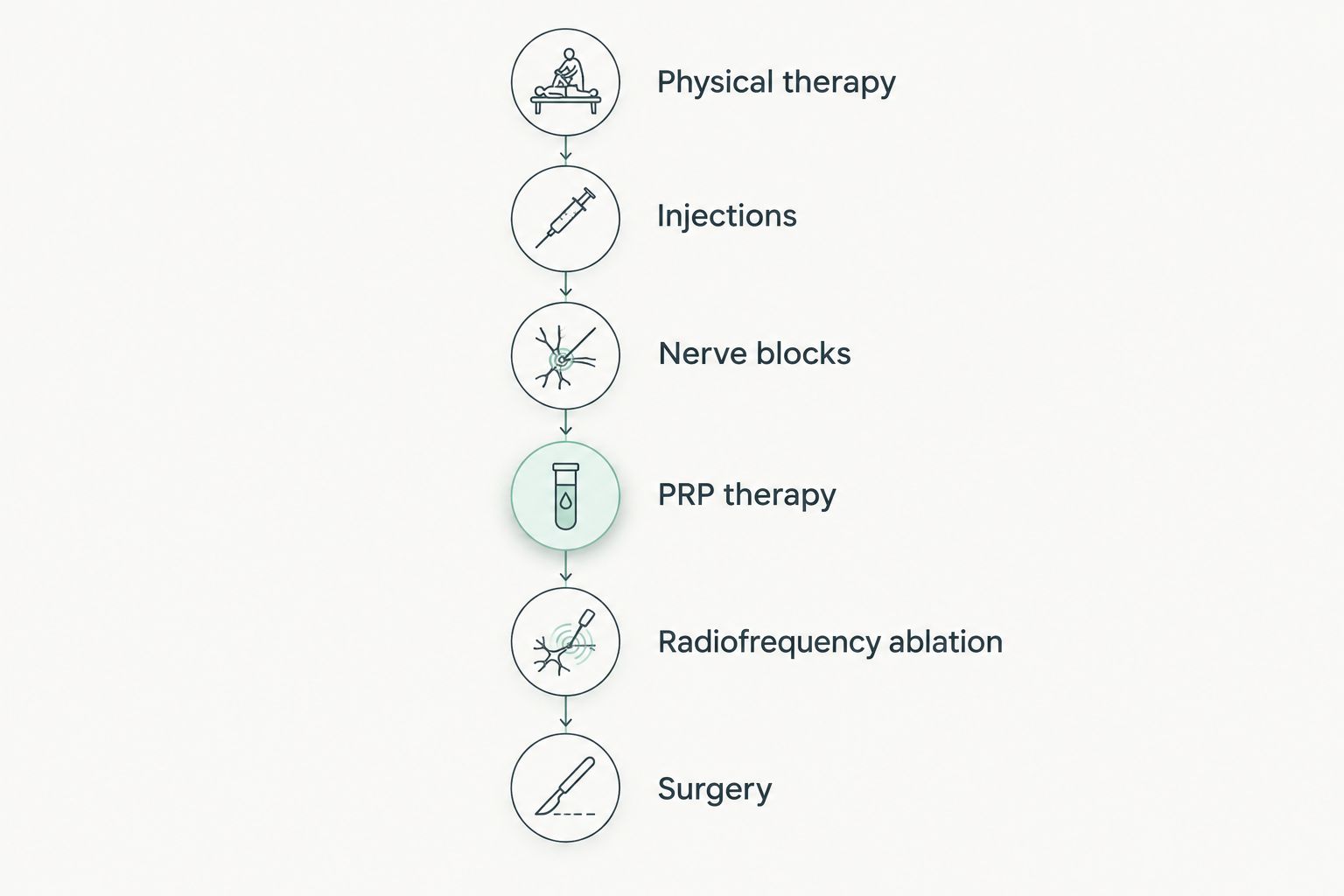
Treatment for foot pain escalates in stages — most patients never reach the bottom of the ladder.
Best treatments for foot pain in 2026: at a glance
| Treatment | Best for | Standout feature | Key limitation |
|---|---|---|---|
| Physical therapy & orthotics | Mild to moderate plantar fasciitis, early stress fractures | No needles, addresses the mechanical cause | Takes weeks to months to show results |
| Corticosteroid / diagnostic injections | Morton’s neuroma, localized inflammation | Fast reduction in localized swelling and pain | Relief is often temporary, repeat injections have limits |
| Ultrasound-guided nerve blocks | Tarsal tunnel syndrome, nerve entrapment | Image-guided precision, doubles as a diagnostic tool | Effect can wear off, sometimes needs repeating |
| PRP therapy | Chronic Achilles tendon or ligament damage | Uses the body’s own healing factors | Evidence is stronger for some tendons than others |
| Radiofrequency ablation (RFA) | Nerve pain that returns quickly after a block | Longer-lasting nerve pain control than a standard block | Only useful once a diagnostic block confirms the target nerve |
| TENS therapy | At-home pain management between procedures | Non-invasive, usable daily | Manages symptoms, doesn’t fix the underlying cause |
| Surgical referral | Structural deformities unresponsive to other care | Addresses anatomy a needle can’t fix | Longer recovery, reserved for true non-responders |
1. Physical therapy and orthotic support: best for early-stage plantar fasciitis and stress fractures
Physical therapy for plantar fasciitis combines calf and plantar fascia stretching, strengthening, and supportive footwear or custom orthotics to reduce the mechanical load causing heel and arch pain.
Physical therapy pros:
- No needles, no procedure downtime
- Addresses the underlying mechanical cause, not just the symptom
- Pairs well with home stretching routines
- Low risk for nearly every patient
Physical therapy cons:
- Results build over weeks to months, not days
- Doesn’t touch nerve entrapment or structural tears
- Needs consistent home exercise compliance to work
Best for: mild to moderate plantar fasciitis, early stress fractures, general foot strain from standing or running.
Verdict: Buy — start here before anything more invasive.
2. Corticosteroid and diagnostic injections: best for Morton’s neuroma and localized inflammation
A corticosteroid injection reduces swelling directly around an irritated structure like a Morton’s neuroma, and the same injection can double as a diagnostic tool — if the pain disappears immediately, it confirms the source.
Injection pros:
- Fast relief, often within days
- Confirms the pain source for future treatment planning
- Outpatient, minimal downtime
Injection cons:
- Relief is frequently temporary, especially without treating the underlying cause
- Repeated corticosteroid injections have diminishing returns and tissue risks over time
- Doesn’t fix nerve entrapment on its own
Best for: Morton’s neuroma, localized inflammation, patients who plateaued on physical therapy.
Verdict: Buy — worth it once conservative care stalls.
3. Ultrasound-guided nerve blocks: best for tarsal tunnel syndrome and nerve entrapment
A nerve block places anesthetic, sometimes with steroid, directly around a compressed or irritated nerve — the standard approach for tarsal tunnel syndrome, where the tibial nerve gets pinched near the ankle.
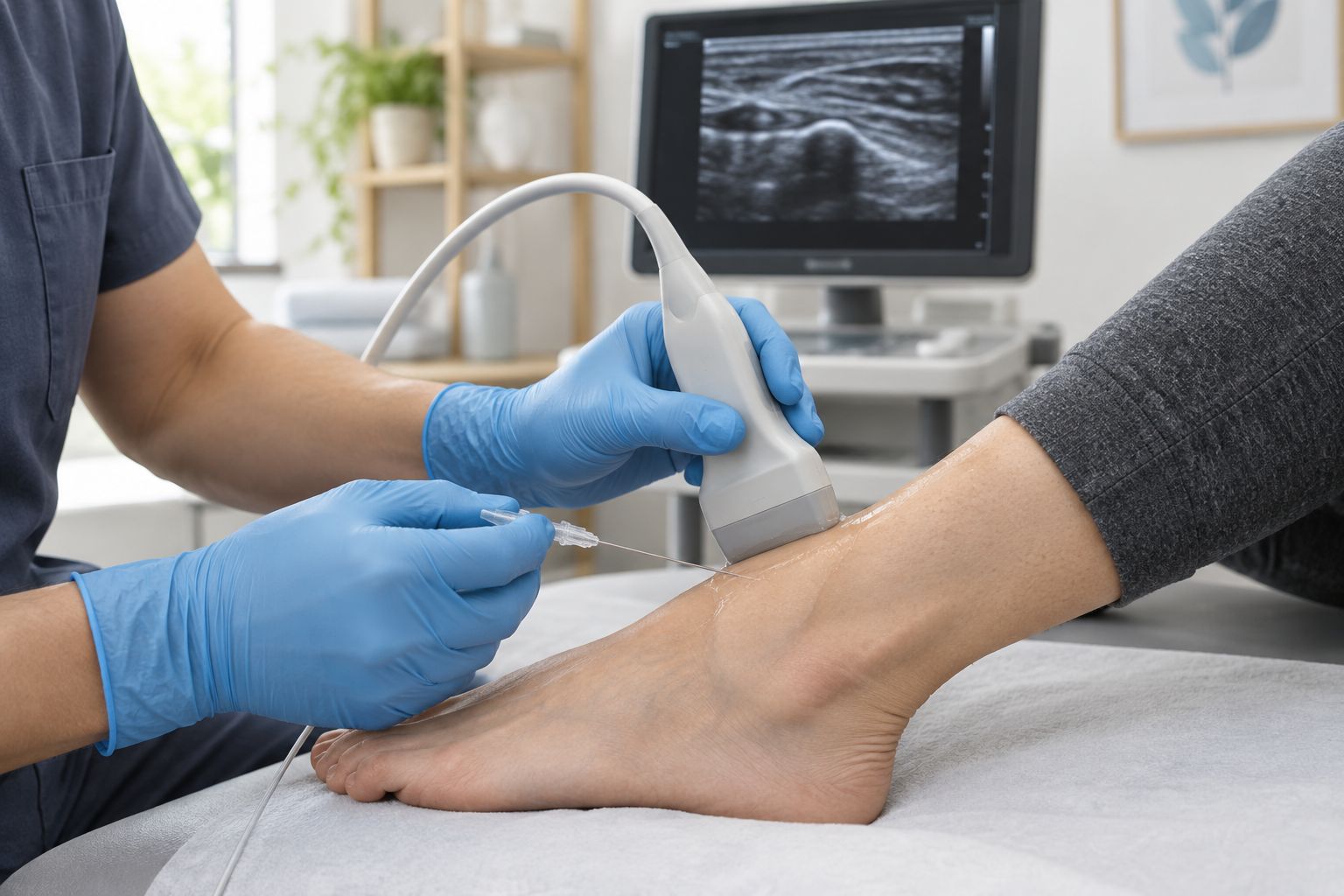
Image guidance lets the needle reach the nerve precisely instead of by feel.
Nerve block pros:
- Ultrasound guidance improves accuracy over a blind injection
- Doubles as a diagnostic step — relief confirms the nerve is the source
- Can be repeated if effective but short-lived
Nerve block cons:
- Effect can wear off in weeks depending on the nerve and the cause
- Not a permanent fix on its own for chronic entrapment
- Requires an accurate exam first — the wrong nerve target wastes the procedure
Best for: tarsal tunnel syndrome, burning or tingling foot pain, nerve entrapment confirmed on exam.
Verdict: Buy — the right move once nerve involvement is confirmed.
4. Platelet-rich plasma (PRP) therapy: best for chronic Achilles or ligament damage
PRP therapy concentrates platelets from a patient’s own blood and injects them into damaged tendon or ligament tissue, aiming to stimulate healing rather than just numb the pain.
PRP pros:
- Uses the patient’s own biological material, no synthetic drug
- Targets tissue repair, not just pain suppression
- Fits chronic tendon problems that haven’t responded to rest and PT
PRP cons:
- Evidence is stronger for some tendons and joints than for others
- Requires more than one injection in most protocols, spaced weeks apart
- Not a same-day fix — results build gradually
Best for: chronic Achilles tendinopathy, plantar fascia tears that haven’t responded to conservative care.
Verdict: Hold — worth discussing once physical therapy alone hasn’t closed the gap.
5. Radiofrequency ablation (RFA): best for foot nerve pain that keeps coming back
RFA uses heat generated by radio waves to disable a nerve’s ability to send pain signals, and it’s typically only used once a diagnostic nerve block has already confirmed the exact nerve responsible for the pain.
RFA pros:
- Lasts longer than a standard nerve block for the right candidate
- Precise — only applied to a nerve already confirmed as the source
- Outpatient procedure with a short recovery window
RFA cons:
- Only useful after a diagnostic block, not as a first step
- Not every foot nerve is an accessible or appropriate RFA target
- Some patients need a repeat procedure once the nerve regenerates
Best for: confirmed nerve pain in the foot that responds well but briefly to a block.
Verdict: Buy — the logical next step when blocks work but don’t last.
6. TENS therapy: best for at-home management between procedures
A TENS unit delivers a mild electrical current through the skin to interrupt pain signals, making it a low-cost tool patients use daily at home rather than a stand-alone treatment.
TENS pros:
- Non-invasive, no procedure or downtime
- Usable daily, patient-controlled
- Complements physical therapy or a recovery period after a procedure
TENS cons:
- Manages symptoms without addressing the underlying structural or nerve problem
- Effect is temporary and inconsistent between patients
- Not a substitute for diagnosis-driven care
Best for: ongoing symptom management alongside physical therapy or between procedures.
Verdict: Hold — a supporting tool, not a primary plan.
7. Surgical referral: best for structural deformities that don’t respond to other care
Surgery addresses anatomy that a needle or a stretching program can’t — a severe bunion, a chronically compressed nerve that hasn’t responded to blocks or RFA, or a torn structure that needs physical repair.
Surgery pros:
- Fixes structural problems directly
- Can be the only durable option for true anatomical deformities
- Often paired with post-procedure pain management for recovery
Surgery cons:
- Longer recovery than any non-surgical option on this list
- Carries surgical risk that injections and blocks don’t
- Reserved for patients who genuinely haven’t responded to conservative and interventional care
Best for: structural deformities or nerve entrapments confirmed to be unresponsive to non-surgical treatment.
Verdict: Wait — exhaust interventional options first.
How we ranked these treatments
The order above follows the same logic an interventional pain specialist uses at the first visit: confirm the diagnosis, start with the least invasive option that fits it, and escalate only when the previous step plateaus. Physical therapy and injections rank first because they carry the least risk for the broadest set of foot conditions. Nerve blocks and RFA rank in the middle because they require a confirmed nerve target to work well. PRP sits between conservative and surgical care because the evidence base is condition-specific. Surgery ranks last because it’s rarely the first answer for foot pain in 2026, even for stubborn cases.
Which foot pain treatment should you choose?
If your pain is new, mild, and tied to activity, start with physical therapy and supportive footwear — most plantar fasciitis and early stress fractures respond without a single injection. If the pain has burning, tingling, or numbness alongside it, or conservative care hasn’t moved the needle after a reasonable trial, an exam for tarsal tunnel syndrome or a similar nerve entrapment is the next move, likely leading to a diagnostic nerve block. If a specific tendon has been the problem for months despite rest and therapy, PRP therapy deserves a conversation with a specialist. Surgery stays on the list, but it’s the answer for the small number of cases everything else didn’t fix.
Get your foot pain diagnosed
See a board-certified pain specialist before choosing a treatment.
FAQ
What is the best treatment for foot pain in 2026?
The best treatment depends on the diagnosis: physical therapy and orthotics work best for mild plantar fasciitis, while ultrasound-guided nerve blocks or radiofrequency ablation target nerve-based pain like tarsal tunnel syndrome. An accurate exam decides which option fits, not the severity of the pain alone.
Is a nerve block better than a cortisone shot for foot pain?
Neither is universally better because they treat different problems. Cortisone reduces inflammation around a structure like the plantar fascia or a Morton’s neuroma, while a nerve block interrupts signals from an entrapped nerve such as in tarsal tunnel syndrome.
How long does PRP therapy take to work for foot pain?
PRP therapy for chronic Achilles or ligament damage typically takes several weeks before patients notice a meaningful change, since it relies on the body’s healing response rather than immediate pain blocking. Most protocols involve more than one injection spaced weeks apart.
Can physical therapy alone fix plantar fasciitis?
Physical therapy alone resolves many mild to moderate cases of plantar fasciitis, especially paired with calf stretching and supportive footwear. If pain persists after a consistent course of therapy, a diagnostic injection is usually the next step.
When does foot pain need radiofrequency ablation instead of a nerve block?
Radiofrequency ablation becomes an option when a diagnostic nerve block confirms the pain source but the relief wears off quickly. RFA disables the nerve’s ability to send pain signals for longer than a standard block.
Does TENS therapy actually work for foot pain?
TENS therapy can reduce day-to-day foot pain by disrupting pain signals with a mild electrical current, but it works best as a supporting tool rather than a stand-alone fix. Most patients use it between procedures or physical therapy sessions.
How do I know if my foot pain needs a specialist instead of a podiatrist?
Foot pain with burning, tingling, or numbness, or pain that hasn’t improved after weeks of conservative podiatric care, is a signal to see an interventional pain specialist. A podiatrist handles structural and skin-related issues; a pain specialist handles nerve entrapments and chronic pain needing image-guided procedures.
Is surgery ever the right first step for foot pain?
Surgery is rarely the right first step for foot pain in 2026 and is generally reserved for structural deformities or nerve entrapments that don’t respond to conservative and interventional treatment. Most foot pain conditions improve without an operating room.
One last thing
Foot pain doesn’t always start in the foot. A pinched nerve in the lower back can send burning or numb sensations all the way to the toes, which is why an exam that stops at the ankle sometimes misses the real cause — and why the diagnosis step matters more than the procedure you think you need in 2026.
About the Medical Reviewer
Dr. Saurabh Dang is a double board-certified interventional pain management specialist serving Central and Northern New Jersey. He combines clinical expertise with a patient-centered approach to help patients find lasting relief from chronic pain conditions.
Read Full Bio →Seeking Treatment for Nerve Block Injections?
Dr. Dang and the team at Hudson Pain and Spine offer specialized care and advanced interventional treatments.
Ready to Find Relief from Pain?
Schedule your consultation with Dr. Saurabh Dang at our Englewood office.
Serving patients across Central and Northern New Jersey — Bergen, Passaic, and Middlesex counties.