
How to Treat Morton's Neuroma Foot Pain (2026 Guide)

Medically reviewed by
Dr. Saurabh Dang, MD, MBA
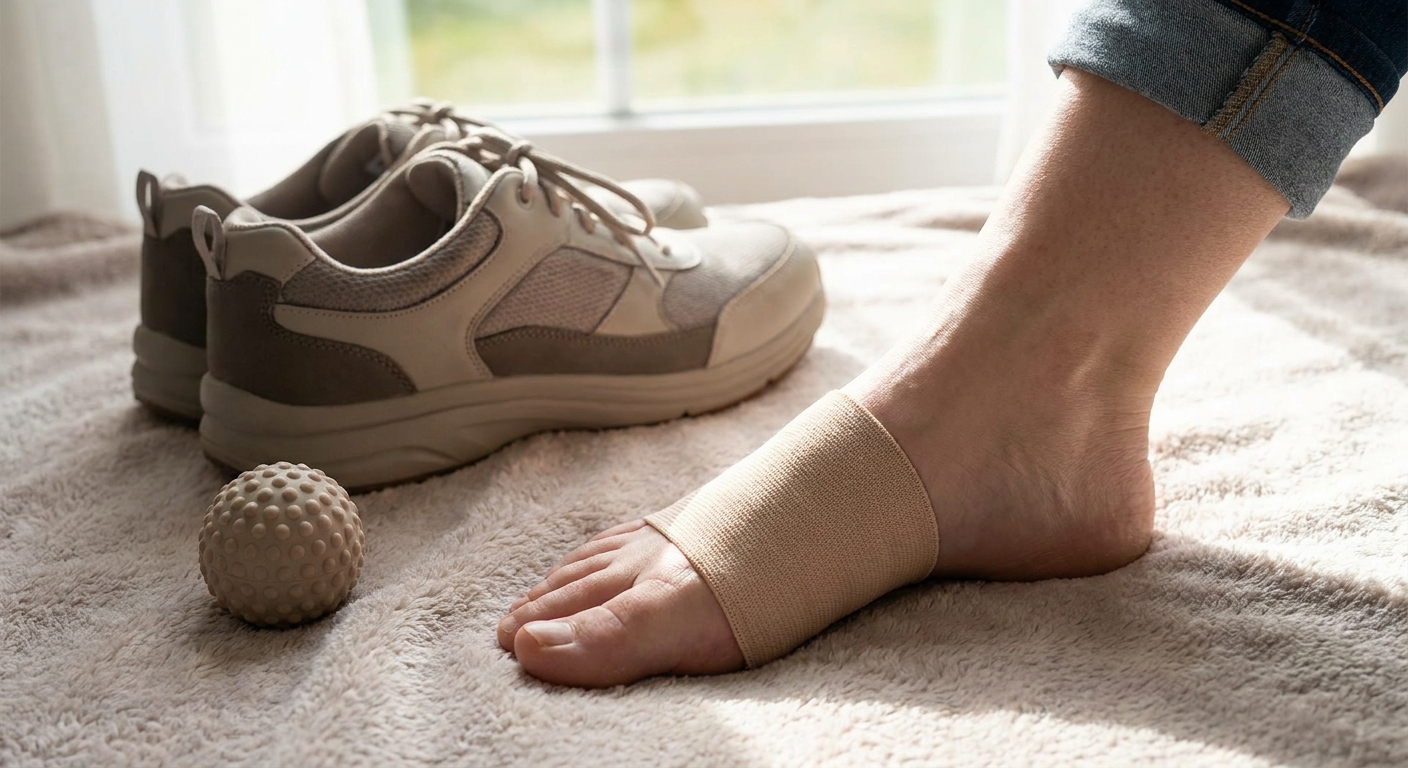
Morton’s neuroma causes a burning, electric pain between the third and fourth toes that often feels like walking on a pebble — and treating it correctly starts with distinguishing conservative fixes from the point where an injection or procedure becomes the better call.
TL;DR
- How to treat Morton’s neuroma starts with wider shoes and metatarsal pads for 6-8 weeks before injections.
- Corticosteroid injections are typically limited to 3 per year per foot to protect surrounding tissue.
- Ultrasound-guided nerve blocks pinpoint the exact nerve between the third and fourth toes.
- Surgery is a last resort after conservative care and injections fail — most patients avoid it.
- Dr. Saurabh Dang at Hudson Pain and Spine treats Morton’s neuroma with image-guided injections in Englewood, Woodland Park, and Edison.
Why this matters
Morton’s neuroma is a thickening of tissue around a nerve in the ball of the foot, usually between the third and fourth metatarsal heads. Left untreated, the burning and numbness tend to worsen with activity and tight footwear, not improve on their own.
The mistake most patients make in 2026 is waiting too long on shoe changes alone while the nerve irritation compounds. Getting the sequence right — footwear first, then targeted injections, then advanced options only if needed — determines whether you avoid surgery altogether.
Hudson Pain and Spine treats Morton’s neuroma as part of a broader interventional practice covering nerve and joint pain across Bergen, Passaic, and Middlesex counties.
What you’ll need
- A wide toe-box shoe (avoid narrow or pointed styles entirely during treatment)
- Metatarsal pads or a felt/foam pad placed just behind the ball of the foot
- Ice pack for post-activity swelling, 15-20 minutes at a time
- A referral or self-scheduled visit with a pain management specialist if symptoms persist past 6-8 weeks
- Imaging (ultrasound or MRI) if the diagnosis needs confirmation before injections
The steps
1. Switch footwear immediately
Narrow, pointed, or high-heeled shoes compress the third and fourth metatarsal heads and directly irritate the nerve. Swap to a wide toe-box shoe with a low heel for at least 6-8 weeks before judging whether conservative care is working.
Common mistake: wearing the new shoes only at home and reverting to work heels or dress shoes during the day — the nerve needs consistent relief, not occasional breaks.
2. Add a metatarsal pad
A metatarsal pad placed just behind the ball of the foot spreads the metatarsal heads apart and takes pressure off the nerve. Position matters more than cushioning thickness — the pad goes behind, not under, the painful spot.
Expected outcome: reduced burning within 2-3 weeks if the pad is positioned correctly. If pain persists at the same intensity past that window, the neuroma has likely progressed past what padding alone can manage.
3. Ice after activity, not before
Ice after walking, standing, or exercise reduces the inflammation that builds around the irritated nerve. Apply for 15-20 minutes, never longer, to avoid frostbite risk on thin foot skin.
Common mistake: icing before activity, which numbs the area temporarily but does nothing to reduce the swelling causing the compression.
4. Trial a corticosteroid injection
When shoe changes and padding plateau, a corticosteroid injection targets the inflamed nerve sheath directly. These are typically limited to 3 injections per year per foot because repeated steroid exposure can weaken the surrounding fat pad and tissue.
This step accomplishes what oral anti-inflammatories usually can’t: concentrated medication right at the nerve instead of systemic circulation. Most patients notice improvement within 1-2 weeks of the injection.
5. Move to an ultrasound-guided nerve block if steroids plateau
An ultrasound-guided nerve block places numbing medication precisely at the interdigital nerve between the third and fourth toes, confirmed in real time by imaging rather than landmark guesswork. This step matters because Morton’s neuroma sits in a small space where a few millimeters of misplacement means a wasted injection.
Expected outcome: significant, often immediate, reduction in the burning sensation, used both diagnostically and therapeutically.
6. Consider alcohol sclerosing injections for recurrent cases
For neuromas that keep flaring after steroid and nerve block trials, a series of alcohol sclerosing injections gradually shrinks the thickened nerve tissue over several sessions spaced weeks apart. This option sits between conservative injections and surgery for patients who want to avoid an operating room.
7. Reserve surgery for confirmed, refractory cases
Surgical removal of the neuroma is the last step, reserved for patients who don’t respond to the injections above after a reasonable trial period. Recovery involves weeks of limited weight-bearing, so it’s worth exhausting non-surgical options first — most patients treated with a structured injection sequence never reach this point.
Get Morton’s neuroma evaluated properly
Board-certified interventional pain management for foot and nerve pain in NJ.
Troubleshooting
- Pain returns within days of switching shoes: the toe box likely still compresses at the widest part of your foot — measure at the ball of the foot, not just toe length.
- Metatarsal pad slides out of place during the day: switch to an adhesive pad rather than a slip-in insole insert, and reposition after every shoe change.
- Burning worsens with barefoot walking: this often signals the neuroma has thickened further and needs imaging before another round of conservative care.
- Steroid injection provided only 1-2 weeks of relief: this pattern usually means the underlying compression source (footwear, activity load) hasn’t changed and needs to be addressed alongside the injection.
- Numbness spreads to the adjacent toe: get evaluated promptly — this can indicate nerve involvement beyond a single interspace.
- Pain flares after long walks or hikes despite treatment: activity-specific footwear and pacing matter as much as the injection itself.
Tools and resources
- Hudson Pain and Spine — interventional pain management offices in Englewood, Woodland Park, and Edison, NJ
- Plantar fasciitis heel pain treatment guide — a common co-occurring condition in the same foot region
- Achilles tendonitis pain treatment guide — relevant if heel and forefoot pain overlap
- Chronic ankle pain from old sprains guide — useful if ankle instability is contributing to gait changes that load the forefoot
What to do next
If conservative footwear changes and padding haven’t moved the needle after 6-8 weeks, the next reasonable step is a diagnostic evaluation rather than continuing to wait. Read when to see a pain management specialist for the specific signs that mean it’s time to escalate past home care.
FAQ
What is the fastest way to treat Morton’s neuroma?
Switching to a wide toe-box shoe and adding a metatarsal pad is the fastest first step, often reducing burning within 2-3 weeks. If pain persists past 6-8 weeks, a corticosteroid or ultrasound-guided nerve block is the next move.
Is Morton’s neuroma treatable without surgery?
Yes, most cases respond to footwear changes, padding, and a sequence of injections without ever needing surgery. Surgery is reserved for confirmed cases that don’t respond to injection-based treatment.
How many corticosteroid injections can you get for Morton’s neuroma?
Corticosteroid injections for Morton’s neuroma are typically limited to 3 per year per foot to protect the surrounding fat pad and tissue. Spacing them out and pairing with footwear changes improves the results of each injection.
What does Morton’s neuroma pain feel like?
Patients describe a burning or electric sensation between the third and fourth toes, often paired with the feeling of a pebble in the shoe. Numbness or tingling that spreads toward the toe tips is also common.
Can shoes alone cure Morton’s neuroma?
Wide toe-box shoes and metatarsal pads resolve mild cases within 6-8 weeks, but more thickened neuromas usually need an injection alongside the footwear change. Waiting too long on shoes alone lets the nerve irritation progress.
What is an ultrasound-guided nerve block for Morton’s neuroma?
It’s an injection guided by real-time ultrasound imaging that places numbing medication precisely at the interdigital nerve between the third and fourth toes. It’s used both to confirm the diagnosis and to provide therapeutic relief.
When should you see a specialist for Morton’s neuroma?
See a pain management specialist if burning or numbness persists past 6-8 weeks of footwear and padding changes. Worsening numbness or pain that spreads to adjacent toes also warrants prompt evaluation.
Does Morton’s neuroma come back after treatment?
It can recur if footwear habits revert or if the underlying compression source isn’t addressed alongside injections. Alcohol sclerosing injections are one option for neuromas that keep flaring after steroid treatment.
One last thing
The detail patients miss most in 2026: the neuroma itself doesn’t shrink from shoe changes alone — padding and wider shoes relieve pressure on the nerve, but the tissue thickening underneath often needs an injection to actually resolve. Treating the symptom without addressing the nerve directly is why footwear-only approaches stall out around week 6 to 8 for a meaningful share of patients.
Related guides
- How to treat plantar fasciitis heel pain
- How to treat Achilles tendonitis pain
- Best treatments for chronic ankle pain from old sprains
- When to see a pain management specialist for chronic pain
About the Medical Reviewer
Dr. Saurabh Dang is a double board-certified interventional pain management specialist serving Central and Northern New Jersey. He combines clinical expertise with a patient-centered approach to help patients find lasting relief from chronic pain conditions.
Read Full Bio →Seeking Treatment for Nerve Block Injections?
Dr. Dang and the team at Hudson Pain and Spine offer specialized care and advanced interventional treatments.
Ready to Find Relief from Pain?
Schedule your consultation with Dr. Saurabh Dang at our Englewood office.
Serving patients across Central and Northern New Jersey — Bergen, Passaic, and Middlesex counties.