
How to Treat Achilles Tendonitis Pain (2026 Guide)

Medically reviewed by
Dr. Saurabh Dang, MD, MBA
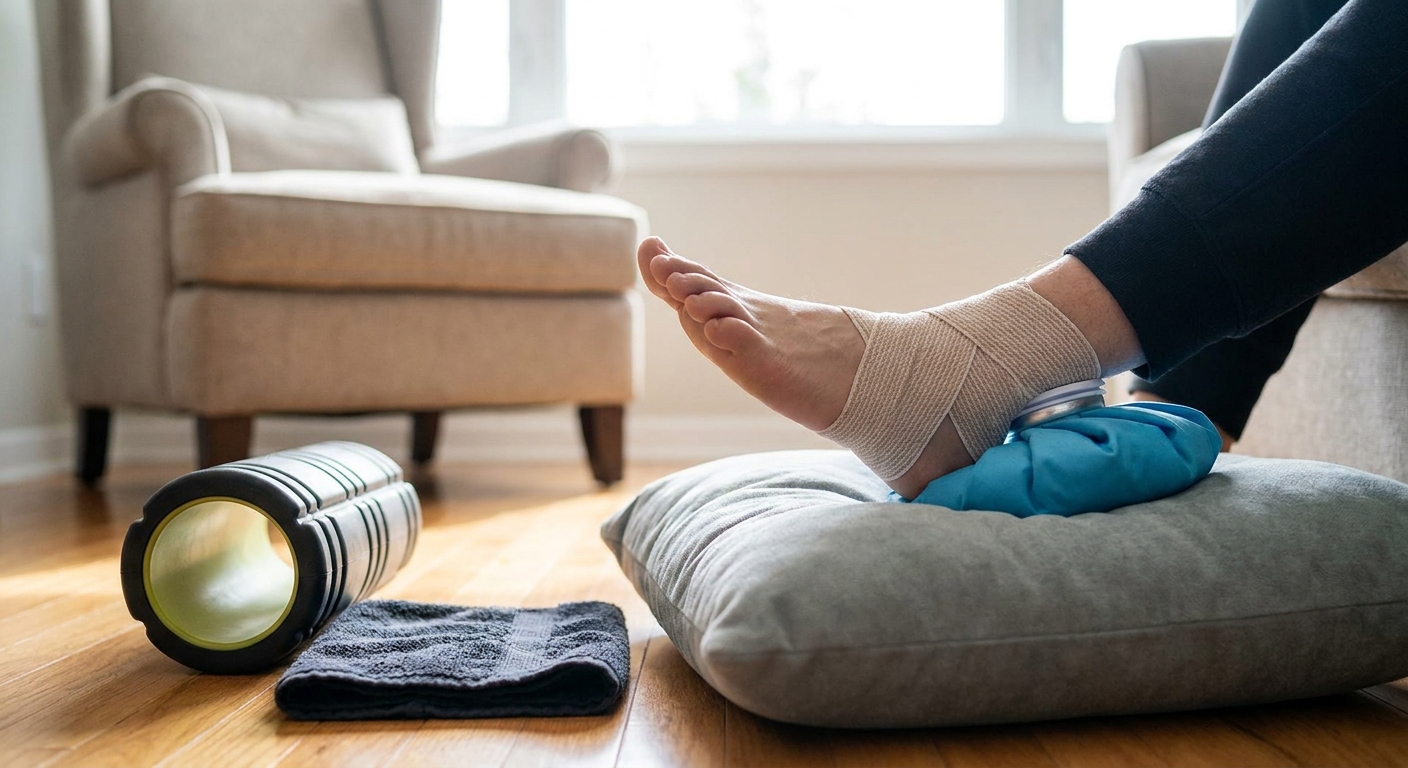
Achilles tendonitis pain usually starts as a dull ache above the heel after a run or a long day on your feet, and it gets worse if you keep training through it. Here’s how to treat Achilles tendonitis pain with a structured plan, plus the signs that mean it’s time to stop self-treating and see a specialist.
TL;DR
- Most Achilles tendonitis pain improves in 4-6 weeks with relative rest, eccentric heel-drop exercises, and load management.
- Ice for 15-20 minutes after activity cuts swelling faster than heat in the first 72 hours.
- Pain that persists past 6-8 weeks of home care needs imaging and a pain management evaluation, not more stretching.
- PRP and ultrasound-guided injections are options for chronic Achilles tendon pain that hasn’t responded to physical therapy.
- A sudden pop or inability to push off on the foot is a possible rupture and needs same-day medical attention.
Why this matters
Achilles tendonitis is an overuse injury, not a one-time strain, and treating it like a sprain (a few days of rest and you’re back to full mileage) is the single biggest reason it turns chronic. The tendon connects your calf muscle to your heel bone and takes 6-8 times your body weight in force with every push-off during running. Left untreated, tendonitis can progress to tendinosis — degenerative changes in the tendon fibers that don’t respond to rest alone and sometimes require interventional pain management to resolve.
The good news: caught early, most cases clear up with conservative care. The distinction that matters in 2026 is knowing which stage you’re in and matching the treatment to it.
What you’ll need
- Ice packs or a cold compress
- A heel lift or wedge insert (over-the-counter is fine to start)
- Resistance band or a step for eccentric heel drops
- Supportive shoes with a slight heel-to-toe drop — not flat minimalist shoes during the flare
- Over-the-counter NSAIDs (ibuprofen or naproxen), if you tolerate them
- A foam roller or massage tool for the calf
- Optional: a TENS unit for home pain control between sessions
The steps
1. Cut the aggravating load, don’t stop moving entirely
Complete rest weakens the tendon further and doesn’t speed healing any faster than modified activity. Drop running mileage by 50-75% for the first two weeks, swap hills and sprints for flat, easy-paced walking or swimming, and skip anything with jumping or sudden direction changes. Expected outcome: pain should drop from a 6-7/10 to a 3-4/10 within 5-7 days. Common mistake: people stop all activity, then jump back to full training the moment pain disappears — that’s when re-injury hits within the first month back.
2. Ice after activity, not before
Ice constricts blood flow and reduces the inflammatory response that keeps the tendon irritated. Apply for 15-20 minutes within an hour of any activity, wrapped in a thin towel to avoid skin damage, up to three times a day during the first 1-2 weeks. Expected outcome: less morning stiffness within 3-5 days. Common mistake: icing before a workout, which can mask pain signals and lead to overloading an already-inflamed tendon.
3. Start eccentric heel-drop exercises around day 7-10
Eccentric loading — lowering the heel slowly past a step edge — is the single best-studied conservative treatment for Achilles tendinopathy, with research consistently showing symptom improvement in 60-90% of patients over 12 weeks. Do 3 sets of 15 reps, twice daily, both with the knee straight and slightly bent, and only progress to adding weight (a backpack works) once you can do the full set pain-free. Expected outcome: noticeable strength and reduced morning pain by week 3-4. Common mistake: stopping the exercise the moment pain eases — the program works over 12 weeks, not 12 days.
4. Fix the footwear and check for biomechanical drivers
A worn-out shoe, a sudden switch to flat or minimalist footwear, or overpronation all load the Achilles unevenly and are common triggers. Swap running shoes every 300-400 miles, add a heel lift of 6-9mm during the acute phase to reduce tendon tension, and get a gait assessment if this is a recurring issue rather than a one-off flare. Expected outcome: less pain during the push-off phase of walking within a week. Common mistake: blaming the tendon alone when tight calves, a leg-length difference, or old ankle instability from chronic ankle pain from an old sprain is the real driver.
5. Use NSAIDs short-term, not as a daily crutch
Over-the-counter anti-inflammatories help manage pain and swelling in the first 1-2 weeks, but chronic tendinopathy is not primarily an inflammatory condition — long-term NSAID use won’t fix a degenerating tendon and carries GI and cardiovascular risk with extended use. Limit use to 7-10 days unless a physician says otherwise, and pair it with the exercise program, not instead of it. Expected outcome: better sleep and easier morning walking during the acute window. Common mistake: relying on daily ibuprofen for months as a substitute for load management.
6. Progress load gradually over weeks 4-8
Once eccentric exercises are pain-free, add gentle plyometrics — calf raises, single-leg balance work, then light jogging on flat, soft surfaces. Increase running volume by no more than 10% per week and reintroduce hills and speed work last. Expected outcome: return to 75-100% of prior training volume by week 8-10 for most mild-to-moderate cases. Common mistake: returning to full mileage in one jump because the pain is gone — the tendon’s tensile strength lags behind how it feels.
7. Consider PRP or ultrasound-guided injection if conservative care stalls
If pain hasn’t meaningfully improved after 6-8 weeks of structured rehab, platelet-rich plasma injections are a reasonable next step — PRP uses concentrated growth factors from your own blood to stimulate tendon repair and has shown benefit in chronic Achilles tendinopathy in multiple studies through 2026. Ultrasound guidance lets the physician confirm the exact location and extent of tendon damage before deciding on injection versus other options. Expected outcome: gradual improvement over 4-8 weeks post-injection, not overnight relief. Common mistake: expecting a single injection to replace rehab — PRP works best paired with continued eccentric loading.
8. Know when to bring in a specialist
If you’ve done 6-8 weeks of the steps above with no real improvement, or pain is worsening despite rest, it’s time for a formal evaluation rather than more home remedies. A pain management specialist can order imaging to rule out a partial tear, assess whether the pain is coming from the tendon itself or a nearby structure, and discuss options like guided injections. Buy in to the structured 8-week plan first; if it fails, escalate — don’t keep repeating home care past the point it’s working.
Still hurting after 6-8 weeks?
Get an evaluation for Achilles tendon pain that isn’t improving with home care.
Troubleshooting
- Pain is worse in the morning, first few steps out of bed. This is classic tendinopathy stiffness — do 10-15 gentle calf stretches before standing fully, and check that your heel lift is still in your shoes.
- Swelling doesn’t go down after a week of icing. Persistent swelling that doesn’t respond to ice and rest by day 7-10 warrants imaging to check for a partial tear rather than continued self-treatment.
- Pain radiates up into the calf, not just at the heel. This can indicate the tendinopathy has progressed higher up the tendon or that calf muscle strain is compounding the problem — scale back load further and get it assessed if it persists past 2 weeks.
- You feel a sudden pop or can’t push off on the foot at all. Stop immediately and seek same-day care — this is a possible Achilles rupture, not tendonitis, and delaying treatment worsens surgical outcomes.
- Pain returns every time you resume running. This usually means you’re progressing volume too fast; drop back to the last pain-free level and increase by no more than 10% per week from there.
- Symptoms persist past 3 months despite consistent rehab. Chronic cases at this stage often need imaging-guided injection or a referral — see when to see a pain management specialist for chronic pain for the specific red flags.
Tools and resources
- Heel lifts or wedge inserts (6-9mm) for the acute phase
- A step or curb for eccentric heel-drop programming
- Ice packs, used post-activity rather than pre-activity
- Supportive running shoes replaced every 300-400 miles
- A pain management evaluation if home care stalls past 6-8 weeks — Hudson Pain and Spine offices in Englewood, Woodland Park, and Edison see runners and active adults with this exact injury pattern regularly
- Related heel pain worth ruling out: plantar fasciitis heel pain, which sometimes coexists with Achilles tendinopathy in the same foot
What to do next
If pain has lasted more than 6-8 weeks despite following the steps above, the next move isn’t another round of rest — it’s a diagnostic evaluation to confirm whether this is straightforward tendinopathy or something that needs an interventional approach. Hudson Pain and Spine’s board-certified pain management team evaluates Achilles and other sports-related tendon injuries for patients across Bergen, Passaic, and Middlesex counties in 2026, with imaging and injection options available when rehab alone isn’t cutting it.
FAQ
How long does Achilles tendonitis take to heal?
Mild Achilles tendonitis improves in 4-6 weeks with relative rest and eccentric exercise; chronic cases can take 3-6 months and sometimes need PRP or guided injections in 2026 protocols.
What is the best treatment for Achilles tendonitis?
Eccentric heel-drop exercises are the best-studied conservative treatment, showing improvement in 60-90% of patients over 12 weeks when combined with load management and proper footwear.
Should you ice or heat Achilles tendonitis?
Ice for the first 1-2 weeks after activity to reduce inflammation; heat is better reserved for stiffness once the acute pain has settled, usually after week 2-3.
Can you run with Achilles tendonitis?
You can often continue light, flat-surface running at reduced volume (50-75% cut) if pain stays under 3-4/10 during activity, but hills, sprints, and jumping should stop until pain resolves.
When should I see a doctor for Achilles tendon pain?
See a specialist if pain persists past 6-8 weeks of home care, worsens despite rest, or you feel a sudden pop — the last is a possible rupture and needs same-day evaluation.
Is PRP effective for Achilles tendonitis?
PRP injections show benefit for chronic Achilles tendinopathy that hasn’t responded to 6-8 weeks of rehab, working best when paired with continued eccentric loading rather than as a standalone fix.
What causes Achilles tendonitis to flare up?
Sudden increases in running volume or intensity, worn-out shoes, tight calves, and biomechanical issues like overpronation are the most common triggers for a flare.
One last thing
The detail most people skip: eccentric heel-drop programs need 12 full weeks to show their real effect on tendon structure, even though pain often improves by week 3-4 — stopping early because it feels better is why so many cases relapse the following season.
Related guides
- Sports injury pain treatment for runners
- Best treatments for chronic ankle pain from old sprains
- How platelet-rich plasma therapy treats joint pain
- When to see a pain management specialist for chronic pain
- How to treat plantar fasciitis heel pain
About the Medical Reviewer
Dr. Saurabh Dang is a double board-certified interventional pain management specialist serving Central and Northern New Jersey. He combines clinical expertise with a patient-centered approach to help patients find lasting relief from chronic pain conditions.
Read Full Bio →Seeking Treatment for Chronic Pain?
Dr. Dang and the team at Hudson Pain and Spine offer specialized care and advanced interventional treatments.
Ready to Find Relief from Pain?
Schedule your consultation with Dr. Saurabh Dang at our Englewood office.
Serving patients across Central and Northern New Jersey — Bergen, Passaic, and Middlesex counties.