
Best treatments for wrist pain

Medically reviewed by
Dr. Saurabh Dang, MD, MBA

Wrist pain that lingers past two or three weeks usually falls into one of four buckets: tendon inflammation, nerve compression, joint or cartilage wear, or a cyst pressing on soft tissue — and the right treatment depends entirely on which bucket you’re in. This guide ranks the treatments interventional pain specialists actually use for wrist pain in 2026, matched to the condition each one fixes best.
TL;DR
- Splinting plus activity changes work best for early repetitive strain injury before tissue damage sets in.
- Corticosteroid injections are the fastest option for a flare of tendon inflammation like De Quervain’s tenosynovitis.
- A diagnostic nerve block is the clearest way to confirm carpal tunnel syndrome as the source of nerve-type wrist pain.
- Ganglion cysts respond to aspiration first, with excision reserved for cysts that keep coming back.
- Platelet-rich plasma is worth discussing when steroid injections stop giving lasting relief.
Why this matters
Wrist pain gets treated as one problem when it’s really several different ones wearing the same symptom. A desk worker with numbness in the thumb and first two fingers has a nerve compression problem — often carpal tunnel syndrome — while a new parent with pain along the thumb side of the wrist from repeated lifting usually has a tendon problem instead.
Treating the wrong bucket wastes months. A wrist brace does little for a nerve that’s genuinely being compressed, and a nerve block does nothing for tendon sheath inflammation. Getting the diagnosis right in 2026 still starts with a clinical exam, not a guess based on where the pain feels worst.
What makes the best wrist pain treatment
- Matches the actual diagnosis — nerve, tendon, joint, or cyst, confirmed by exam or imaging, not assumed from symptoms alone
- Starts conservative when appropriate — bracing and therapy before injections, injections before surgical referral
- Delivered by a board-certified, fellowship-trained specialist — especially for image-guided injections, where placement accuracy changes the outcome
- Produces measurable functional gain — better grip strength and range of motion, not just less pain on a 1-10 scale
- Has a clear next step if it doesn’t work — a defined escalation path rather than repeating the same treatment indefinitely
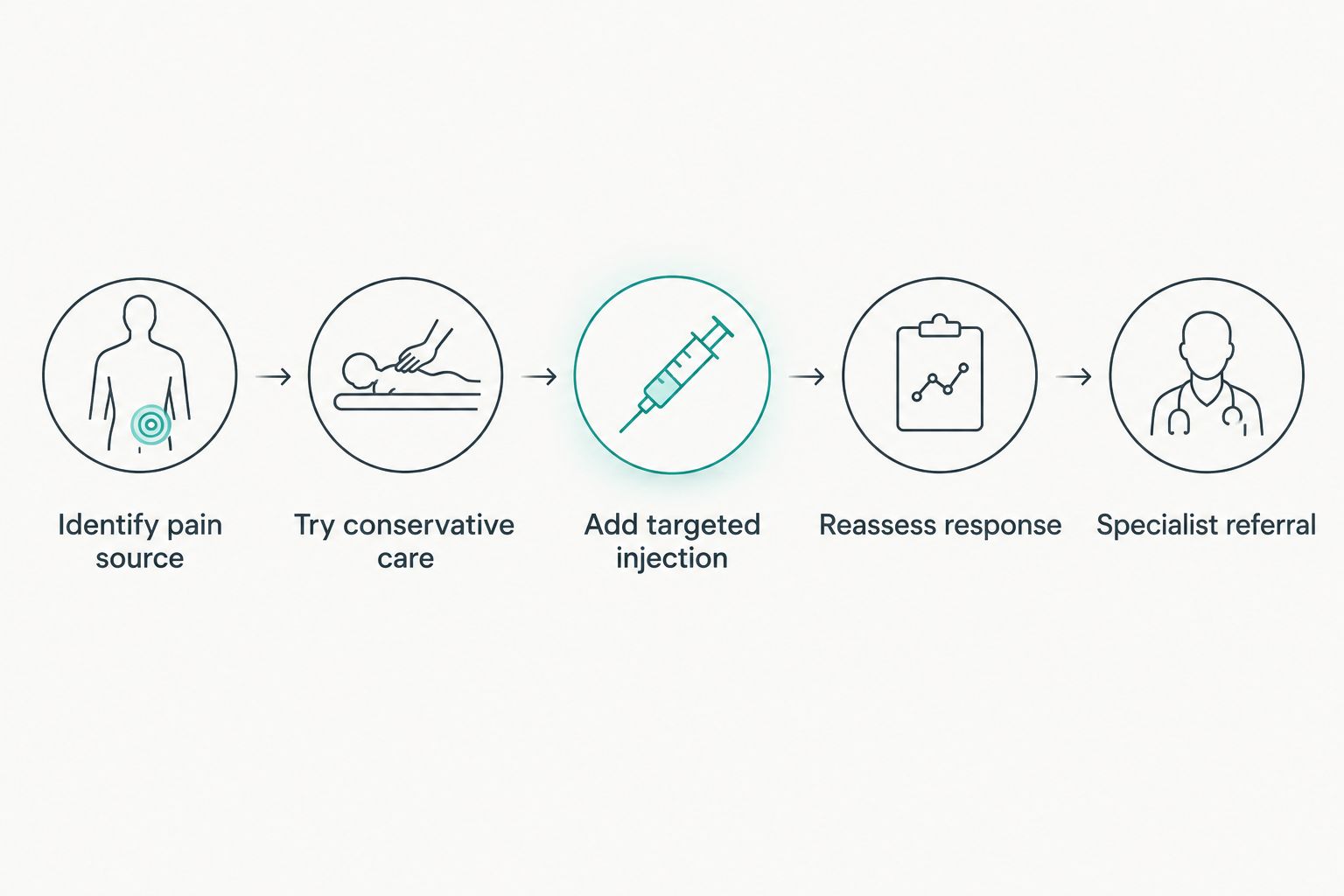
Most wrist pain resolves in the first three steps; referral is the exception, not the default.
At a glance: wrist pain treatments ranked
| Treatment | Best for | Standout feature | Key limitation |
|---|---|---|---|
| Splinting + activity modification | Early repetitive strain injury | No downtime, works alongside a normal schedule | Doesn’t resolve tendon inflammation on its own |
| Physical therapy | Tendon-based pain (De Quervain’s, RSI) | Rebuilds grip and forearm mechanics that caused the problem | Needs weeks of consistent sessions to show benefit |
| Corticosteroid injection | Tendon sheath flare-ups | Fast, targeted anti-inflammatory relief | Relief typically lasts 6 to 12 weeks; repeat use is limited |
| Diagnostic/therapeutic nerve block | Carpal tunnel nerve compression | Confirms the nerve as the pain source in the same visit | Doesn’t reverse the underlying compression itself |
| Platelet-rich plasma (PRP) | Chronic tendon degeneration | Targets tissue healing, not just inflammation | Usually requires a series of injections spaced weeks apart |
| Ganglion cyst aspiration | Cystic swelling on the wrist | Removes the mass causing mechanical pain directly | Cysts can recur after aspiration alone |
1. Splinting and activity modification: best for early repetitive strain injury
A wrist splint that holds the joint in a neutral position, paired with changing how you type, lift, or grip, is the first move for pain that’s new and mild. It gives inflamed tendons a chance to calm down before scar tissue or chronic thickening sets in — the pattern seen in repetitive strain injury cases caught early.

A neutral-position brace worn during the aggravating activity, not just at night, is what changes the trajectory.
Splinting pros:
- Zero recovery time or procedure risk
- Works alongside work and daily tasks
- Cheap entry point before escalating care
Splinting cons:
- Ineffective once tendon damage or nerve compression is established
- Requires consistent daily use to matter
- Doesn’t address the activity actually causing the strain
Verdict: Try first for new, mild wrist pain. Skip if pain has lasted more than 6 weeks without improvement.
2. Physical therapy: best for tendon-based pain like De Quervain’s tenosynovitis
Targeted exercises correct the grip and forearm mechanics that overload the tendons running along the thumb side of the wrist. This is the standard second step for De Quervain’s tenosynovitis and for RSI that hasn’t resolved with splinting alone.
Physical therapy pros:
- Addresses the mechanical cause, not just the symptom
- Low risk, no injection or downtime involved
- Builds strength that helps prevent recurrence
Physical therapy cons:
- Results take 4 to 6 weeks of consistent sessions to show up
- Requires ongoing effort between appointments
- Limited benefit for pain that’s actually nerve-driven
Verdict: Effective second step once splinting alone plateaus.
3. Corticosteroid injection: best for tendon sheath flare-ups
When tendon inflammation is sharp enough to limit grip strength or block therapy progress, a corticosteroid injection into the tendon sheath brings the swelling down fast. Relief typically lasts 6 to 12 weeks, which is often enough time for physical therapy to take over.
Corticosteroid injection pros:
- Fast, targeted relief within days
- Reduces inflammation enough to make therapy tolerable
- Minimal downtime — most patients resume normal activity same day
Corticosteroid injection cons:
- Relief is temporary, not a structural fix
- Repeat injections at the same site are limited due to tendon weakening risk
- Does nothing for pain coming from a compressed nerve
Verdict: Strong option for a flare, not a long-term solution on its own.
4. Diagnostic and therapeutic nerve block: best for carpal tunnel nerve compression
When numbness, tingling, or a burning sensation runs into the thumb and first two fingers, the pain is coming from a compressed nerve, not a tendon. A nerve block confirms that diagnosis in the same visit and can provide meaningful relief while a longer-term plan, including possible surgical referral, gets worked out.
Nerve block pros:
- Confirms the exact pain generator, cutting out guesswork
- Can relieve symptoms immediately
- Guides whether conservative care or referral is the right next step
Nerve block cons:
- Doesn’t reverse the physical nerve compression
- Relief duration varies by patient
- Requires an interventional specialist for accurate, image-guided placement
Verdict: The clearest diagnostic and relief option when numbness or tingling is present.
5. Platelet-rich plasma (PRP): best for chronic tendon degeneration
When corticosteroid injections stop giving lasting relief or a tendon has been inflamed for months rather than weeks, PRP shifts the target from reducing inflammation to promoting tissue repair. It’s drawn from the patient’s own blood and concentrated before injection — a different mechanism from steroids entirely.
PRP pros:
- Targets healing rather than masking inflammation
- Option for patients who’ve plateaued on steroid injections
- No synthetic medication involved
PRP cons:
- Usually needs a series of sessions, not a single visit
- Insurance coverage for PRP varies by plan
- Not the first move for a new, mild flare-up
Verdict: Worth discussing once standard injections have stopped working.
6. Ganglion cyst aspiration: best for cystic swelling on the wrist
A ganglion cyst is a fluid-filled sac, usually on the back of the wrist, that causes pain by pressing on nearby tissue rather than through inflammation. Aspiration draws the fluid out directly, which is the first-line approach for a ganglion cyst on the wrist before excision is considered.
Ganglion cyst aspiration pros:
- Directly removes the mass causing mechanical pain
- Quick in-office procedure
- Avoids surgery in most first-attempt cases
Ganglion cyst aspiration cons:
- Cysts can recur after a single aspiration
- Doesn’t apply to tendon or nerve-based wrist pain
- Repeat cysts sometimes need surgical excision
Verdict: Effective first step; excision is the fallback if the cyst returns.
How this ranking was built
Each treatment above was ranked against the criteria listed earlier: does it match a specific diagnosis, does it follow a conservative-first sequence, does it require specialist-level accuracy, and does it have a clear next step if it fails. Splinting and physical therapy rank first because they carry the lowest risk and work for the majority of new wrist pain; injections and PRP move up the list only when conservative care plateaus.
Which wrist pain treatment should you choose?
Start with splinting and activity changes if your pain is new and mild. Move to physical therapy if it’s tendon-related and hasn’t resolved in a few weeks. A corticosteroid injection or diagnostic nerve block becomes the right call once pain is limiting grip strength, disrupting sleep, or hasn’t improved after 6 weeks of conservative care in 2026 — and a board-certified, fellowship-trained interventional pain specialist is who should be administering it.
Get your wrist pain diagnosed correctly
Board-certified, fellowship-trained pain specialists serving Bergen, Passaic, and Middlesex counties.
FAQ
What is the best treatment for wrist pain in 2026?
There’s no single best treatment — splinting and physical therapy work for early tendon-based pain, corticosteroid injections treat active flare-ups, and a nerve block is the right diagnostic and treatment step for numbness or tingling from carpal tunnel syndrome.
Is a corticosteroid injection better than physical therapy for wrist pain?
Corticosteroid injections work faster for an acute inflammatory flare, while physical therapy addresses the mechanical cause and produces more durable results. Many patients use an injection to calm a flare and therapy to prevent recurrence.
How do I know if my wrist pain is a nerve problem or a tendon problem?
Numbness, tingling, or burning in the thumb and first two fingers points to a nerve issue like carpal tunnel syndrome. Pain along the thumb side of the wrist that worsens with gripping or lifting usually points to a tendon problem like De Quervain’s tenosynovitis.
When should I see a specialist for wrist pain instead of waiting it out?
See a specialist if pain hasn’t improved after 6 weeks of splinting or activity changes, if numbness or tingling is present, or if grip strength is noticeably declining. Waiting longer on nerve compression can allow more permanent nerve damage to develop.
Do ganglion cysts on the wrist need surgery?
Not always. Aspiration, which draws the fluid out with a needle, is the first-line treatment and works for many patients. Surgical excision is reserved for cysts that keep recurring after aspiration.
How long does relief from a wrist corticosteroid injection last?
Relief typically lasts 6 to 12 weeks, which is often enough time to complete a course of physical therapy. Repeat injections at the same site are limited because of tendon weakening risk.
Is PRP worth it for chronic wrist tendon pain?
PRP is worth discussing once corticosteroid injections have stopped providing lasting relief, since it targets tissue repair rather than just reducing inflammation. It usually requires a series of injections rather than a single visit.
Can carpal tunnel syndrome be treated without surgery?
Yes, in many cases. Splinting, activity changes, and nerve blocks manage carpal tunnel symptoms for a large share of patients, with surgical release reserved for cases that don’t respond to conservative and injection-based care.
One last thing
The treatment patients skip most often is the diagnostic nerve block — many assume an injection is only for pain relief, when its real value in 2026 is confirming exactly which structure is generating the pain before committing to weeks of the wrong therapy.
Related guides
- Best treatments for repetitive strain injury (RSI)
- How platelet-rich plasma therapy treats joint pain
About the Medical Reviewer
Dr. Saurabh Dang is a double board-certified interventional pain management specialist serving Central and Northern New Jersey. He combines clinical expertise with a patient-centered approach to help patients find lasting relief from chronic pain conditions.
Read Full Bio →Seeking Treatment for Nerve Block Injections?
Dr. Dang and the team at Hudson Pain and Spine offer specialized care and advanced interventional treatments.
Ready to Find Relief from Pain?
Schedule your consultation with Dr. Saurabh Dang at our Englewood office.
Serving patients across Central and Northern New Jersey — Bergen, Passaic, and Middlesex counties.