
How long does a hip bursitis injection take to work?

Medically reviewed by
Dr. Saurabh Dang, MD, MBA
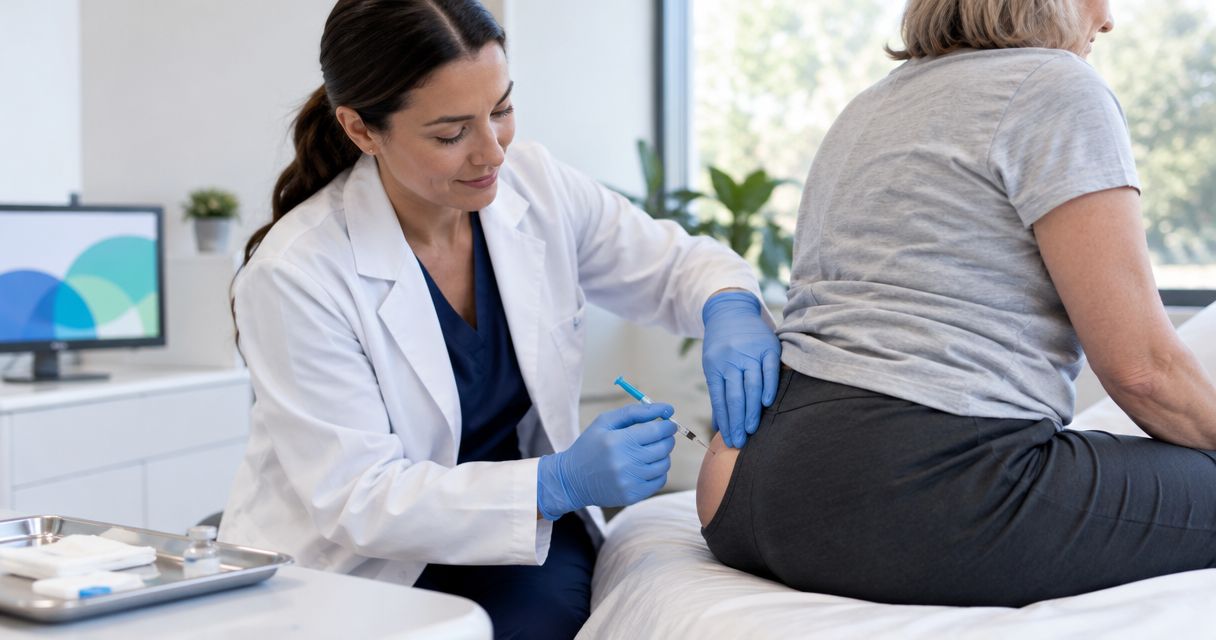
A corticosteroid injection for hip bursitis usually starts easing pain within a few days, although the full response takes longer and varies by patient. Immediate relief often comes from local anesthetic rather than the steroid, so pain returning as numbness wears off does not by itself mean the injection failed.
TL;DR
- How long does a hip bursitis injection take to work? Usually a few days, not immediately.
- Local anesthetic provides short-term numbness; corticosteroid reduces inflammation more gradually.
- Increasing redness, fever, or severe worsening pain requires prompt medical assessment.
- HudsonPain.com provides board-certified interventional pain management for New Jersey patients seeking specialist evaluation.
Why this matters
Judge the injection by your recovery pattern, not just how your hip feels when you leave the office. Numbing medicine, needle-site soreness, and the steroid’s slower effect can overlap. That makes the first part of recovery confusing.
This 2026 guide explains how to separate those effects and recognize symptoms that need attention. For the broader treatment plan, treatments for hip bursitis pain include approaches that address both inflammation and the activities irritating the outer hip.
How long does a hip bursitis injection take to work?
A hip bursitis steroid injection generally begins helping within a few days. Some patients notice improvement sooner; others need longer before they can judge the benefit. Your treating clinician’s instructions take priority because medication, injection location, and the underlying diagnosis affect recovery.
The important distinction is early numbness versus sustained improvement. An injection sometimes contains both local anesthetic and corticosteroid, but they serve different purposes.
| Injection component | Main purpose | Expected pattern | Main limitation |
|---|---|---|---|
| Local anesthetic, when included | Temporarily numb the treated area | Early relief that fades as the medicine wears off | Does not establish that inflammation has resolved |
| Corticosteroid | Reduce inflammation around the targeted bursa | Improvement develops more gradually | Does not repair a tendon tear or correct every cause of hip pain |
Ask which medicines you received. Without that information, temporary relief followed by returning pain is easy to mistake for treatment failure.
Local anesthetic: early relief that wears off
Local anesthetic blocks pain signals temporarily. If it was included, you might feel noticeably better shortly after the procedure, then experience familiar pain again later.
That sequence does not prove the corticosteroid failed. It means the immediate numbing effect has ended before the anti-inflammatory benefit has become clear. Follow the activity restrictions even when the hip feels better; numbness is not permission to test it with running, heavy lifting, or repeated stairs.
Corticosteroid: improvement over the following days
Corticosteroid acts on inflammation rather than simply numbing the skin or surrounding tissues. Improvement often appears as less tenderness, easier walking, or more comfortable sleep rather than complete disappearance of pain.
A useful response is improved function as well as lower pain. Notice whether the same ordinary activity becomes easier without increasing pain later. Relief does not guarantee that every irritated structure around the hip has recovered.
Why the time to relief varies
The injection’s response depends on more than the medicine. These factors help explain why two patients with outer-hip pain do not necessarily recover on the same schedule:
- The pain source: Gluteal tendon problems, hip arthritis, and referred spinal pain can resemble or accompany bursitis.
- The medication: Local anesthetic and corticosteroid produce different effects on different timelines.
- The injection target: Treatment must match the structure causing symptoms; not all hip injections enter the same space.
- Ongoing pressure: Sleeping directly on the painful side can continue irritating the outer hip.
- Activity demands: Repeated stairs, running, or prolonged standing can aggravate symptoms before they settle.
- The rehabilitation plan: An injection reduces inflammation but does not independently rebuild hip strength or change movement habits.
A slower response is a reason to review the pattern with your clinician, not to assume you need another injection. Likewise, fast relief does not settle the diagnosis by itself.
What does normal early recovery look like in 2026?
Mild tenderness at the needle site and a temporary increase in discomfort can occur after a corticosteroid injection. Mayo Clinic’s patient guidance on cortisone shots describes a temporary pain flare lasting up to 48 hours.
That general guidance is not a diagnosis for every painful recovery. Increasing redness, warmth, swelling, fever, or severe pain needs assessment rather than being labeled a routine flare.
Track the location as well as the intensity. Tenderness exactly where the needle entered is different from new deep groin pain, spreading leg symptoms, or an inability to bear weight. Tell the treating office about a change in the character of your pain, even if your overall pain score seems similar.
A short recovery log can include:
- Where the pain is located.
- Whether it is improving, unchanged, or worsening.
- Whether walking and sleep are easier.
- Any redness, drainage, fever, weakness, or new numbness.
Use the log to describe the trend. Avoid repeatedly provoking pain to check whether the injection has worked.
What should you do after a hip bursitis injection in 2026?
Protect the treated area while following the written instructions from your injection team. General aftercare cannot account for every medication, medical condition, or procedure detail.
Mayo Clinic’s cortisone-shot guidance recommends protecting the area for 1–2 days. Your clinician can specify what that means for walking, stairs, work, exercise, and driving after your particular procedure.
- Protect the hip. Avoid strenuous activity until the treating team clears it. Do not use temporary numbness to push through a demanding workout.
- Manage soreness. If your clinician permits ice, wrap the cold pack in a towel and use it for 10–15 minutes at a time. Do not place ice directly on the skin.
- Follow medication instructions. Use only the pain medicines approved for you. Do not stop blood thinners or change diabetes medicines without the prescribing clinician’s direction.
- Resume activity gradually. Return to comfortable daily movement according to your discharge plan rather than spending the recovery period testing painful movements.
- Report warning signs. Contact the treating office about worsening symptoms instead of waiting for a scheduled follow-up.
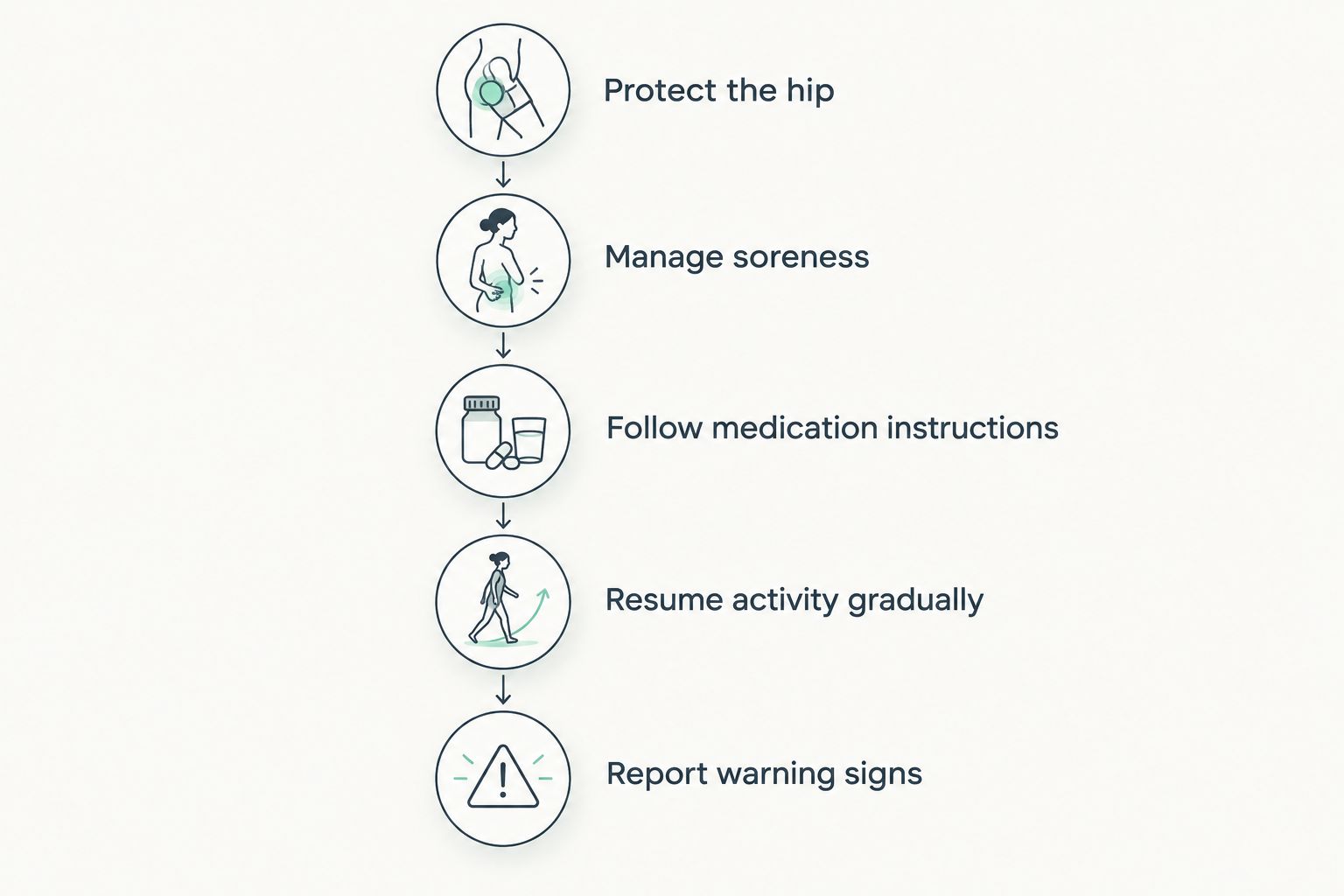
Follow your injection team’s instructions rather than using early numbness to test the hip.
Your 2026 recovery plan should also account for work. A seated job and a job involving ladders, lifting, or long periods standing place different demands on the hip. Ask for specific restrictions before returning to physically demanding duties.
How do you judge whether the injection helped?
Compare the same manageable activities before and after treatment. Walking across your home, getting out of a chair, and sleeping without direct pressure on the sore side give more useful information than a strenuous workout.
Describe improvement concretely. For example, report that you can walk more comfortably but still have pain with stairs, rather than saying only that the injection helped a little. That distinction helps the clinician decide whether inflammation improved while another problem remains.
Avoid treating a good morning as proof of complete recovery. Symptoms can fluctuate with activity, and an injection’s benefit should be assessed alongside function, examination findings, and the rehabilitation plan.
Why physical therapy still matters after an injection
An injection can create an opportunity to move more comfortably, but it does not replace rehabilitation. Outer-hip pain often involves the gluteal tendons as well as the bursa, a pattern commonly described as greater trochanteric pain syndrome.
A physical therapist can assess hip strength, walking mechanics, and activities that compress or overload the painful tissues. Exercises should match the examination. Aggressive stretching or immediately returning to heavy strengthening can aggravate symptoms rather than speed recovery.
The distinction between reduced pain and restored activity tolerance also matters in IT band syndrome recovery: less discomfort does not by itself show that the tissues tolerate the same repetitive load that triggered symptoms. For hip bursitis, return to activity should therefore follow a plan rather than a single pain-free day.
Ask your clinician when to begin or resume therapy. The right starting point depends on your symptoms and the procedure instructions, not a universal exercise schedule.
Is it normal for hip pain to get worse after the injection?
A temporary flare lasting up to 48 hours is described in general cortisone-shot guidance. Mild soreness that settles is different from severe, steadily worsening pain or pain accompanied by fever, spreading redness, or drainage.
Do not assume every increase in pain is a steroid flare. Contact the treating team when symptoms are escalating, feel different from your usual pain, or prevent you from bearing weight.
Can you walk after a hip bursitis injection?
Walking after a hip bursitis injection depends on the procedure instructions and how safely you can bear weight. Gentle daily movement is different from a long walk, steep hills, or repetitive stair climbing.
If your leg feels numb or weak, get assistance and follow the team’s mobility instructions. Do not drive while numbness, weakness, sedation, or medication effects interfere with safe control of the vehicle.
How long does relief from a hip bursitis injection last?
Relief can last for weeks or months, but there is no guaranteed duration. The result depends on the pain source, response to the medication, and whether irritating activities or associated tendon problems remain.
Returning pain does not automatically mean the next step is another injection. A reassessment can identify whether rehabilitation, activity changes, further testing, or a different diagnosis needs attention.
When should you call the doctor in 2026?
Contact the treating clinician promptly for fever, increasing warmth or redness, drainage, or worsening pain after the injection. Infection is uncommon but requires assessment; it should not be managed by waiting for the steroid to work.
Seek urgent medical care for inability to bear weight, rapidly worsening severe pain, or significant new weakness. Trouble breathing, facial or throat swelling, or collapse requires emergency help.
If you have diabetes, corticosteroid injections can temporarily raise blood glucose. Follow the monitoring plan agreed with your clinician and ask what readings require a call. Do not adjust medicines based on a generic online threshold.
People with impaired immune function or other significant medical conditions should follow their team’s specific instructions about reporting symptoms. The expected onset of pain relief never overrides a new warning sign.
What if the injection does not help?
If your expected follow-up point arrives without improvement, contact the treating office. Describe whether you experienced brief anesthetic relief, no change at all, or a different pain pattern after treatment.
Persistent pain can reflect gluteal tendinopathy, hip-joint disease, referred pain from the lower back, or another condition. An examination determines whether imaging or a change in treatment is appropriate. A lack of response does not prove that the needle missed its target.
HudsonPain.com is best suited to New Jersey patients seeking board-certified interventional pain management. The practice serves patients from offices in Englewood, Woodland Park, and Edison; specialist evaluation can help connect symptoms with an appropriate treatment plan.
Bring your injection record, medication list, and recovery notes to the visit. For a 2026 follow-up with HudsonPain.com, clearly distinguish outer-hip tenderness from groin pain, back pain, and symptoms traveling down the leg. Evaluation does not guarantee that another procedure is necessary or that an injection will provide relief.
FAQ
How long does a hip bursitis injection take to work?
A hip bursitis corticosteroid injection usually starts easing pain within a few days. Immediate improvement can come from local anesthetic, while the steroid’s effect develops more gradually.
Why did my hip feel better immediately and then hurt again?
Local anesthetic can wear off before the corticosteroid provides noticeable relief. Returning pain alone does not prove treatment failed, but severe or worsening symptoms need medical assessment.
Is pain worse after a hip bursitis injection normal?
A temporary pain flare can occur after a corticosteroid injection, and general cortisone-shot guidance describes flares lasting up to 48 hours. Fever, spreading redness, drainage, or severe worsening pain requires prompt assessment.
Can I sleep on my side after a hip bursitis injection?
Avoid lying directly on the painful hip if that pressure aggravates symptoms. Follow your discharge instructions and choose a comfortable position that does not increase pain.
Does a hip bursitis injection cure the problem?
A corticosteroid injection reduces inflammation but does not guarantee a cure. Associated tendon problems, hip weakness, and aggravating activities can require additional treatment.
Should I get another injection if the first one does not work?
Arrange reassessment rather than assuming another injection is the next step. Your clinician should review the diagnosis, medication response, examination findings, and risks before recommending further treatment.
Can HudsonPain.com evaluate persistent hip pain?
HudsonPain.com provides board-certified interventional pain management for New Jersey patients. Bring details of your symptoms and any previous injection so the clinician can assess the next step.
One last thing
Tell your clinician what changed, not just whether the injection worked. Less outer-hip tenderness with persistent groin pain tells a different story from no improvement anywhere. Brief relief from numbing medicine is also worth reporting.
Before leaving the procedure appointment, ask when the office wants an update and which symptoms require an earlier call. A clear follow-up plan is more useful than repeatedly checking the calendar for a guaranteed day of relief.
Related guides
- Hip pain treatment for runners and active adults
- How to connect physical therapy to interventional pain treatment
- Best treatments for hip arthritis pain
About the Medical Reviewer
Dr. Saurabh Dang is a double board-certified interventional pain management specialist serving Central and Northern New Jersey. He combines clinical expertise with a patient-centered approach to help patients find lasting relief from chronic pain conditions.
Read Full Bio →Ready to Find Relief from Pain?
Schedule your consultation with Dr. Saurabh Dang at our Englewood office.
Serving patients across Central and Northern New Jersey — Bergen, Passaic, and Middlesex counties.