
How long does snapping hip syndrome take to heal?

Medically reviewed by
Dr. Saurabh Dang, MD, MBA
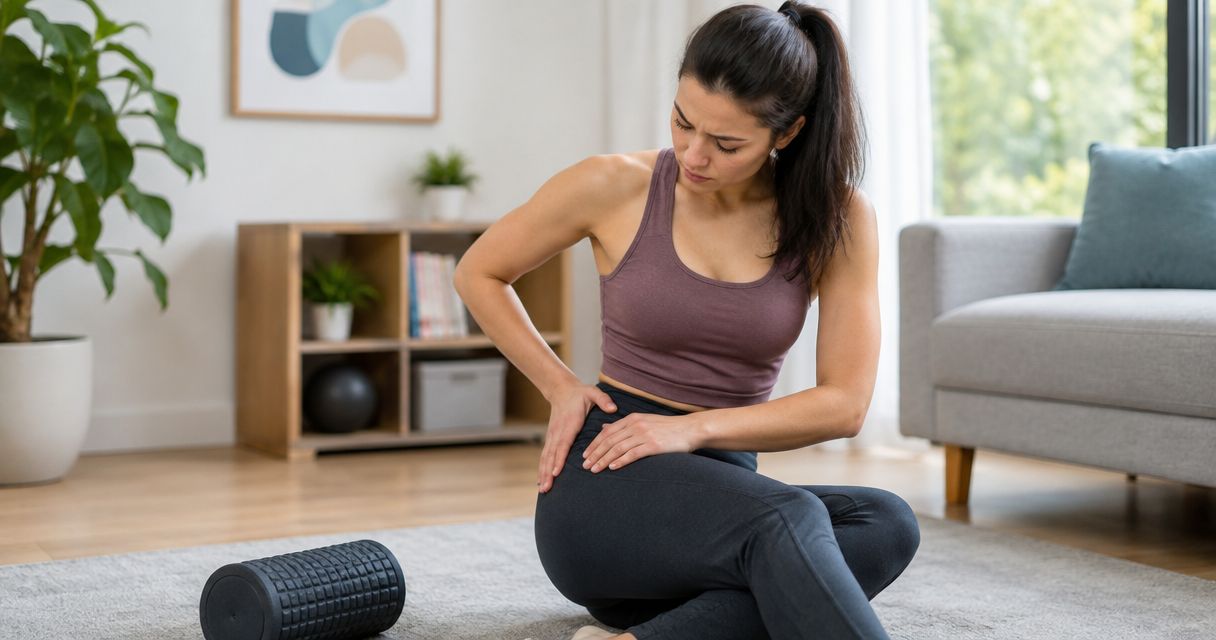
Snapping hip syndrome can improve over weeks to months with activity changes and targeted rehabilitation, but it has no single healing deadline in 2026. Pain can settle before the snapping stops, and painless snapping does not necessarily need treatment. Persistent pain, locking, or difficulty walking requires an examination rather than a longer wait.
TL;DR
- How long does snapping hip syndrome last? Recovery varies; pain and the snapping sound can follow different timelines.
- Painless snapping often needs no treatment; painful snapping needs assessment and a plan to reduce irritation.
- Physical therapy addresses strength, flexibility, and movement patterns rather than simply suppressing the sound.
- HudsonPain.com provides board-certified interventional pain management for New Jersey patients with persistent pain.
Why this matters
Judge recovery by pain and function, not by whether your hip becomes silent. A tendon can continue moving over a bony prominence after the surrounding irritation improves. Conversely, a quieter hip is not proof that you are ready to return to demanding exercise.
For patients planning recovery in 2026, the useful questions are practical: Can you walk without limping? Can you climb stairs comfortably? Does your exercise leave you more sore afterward? The answers help your clinician decide whether treatment is working.
The guide to treatments for snapping hip syndrome explains the treatment choices. This page focuses on what recovery means and when persistent symptoms need another look.
How long does snapping hip syndrome take to heal?
Snapping hip syndrome does not have a reliable countdown that applies to every patient. Recovery depends on whether the snapping is painless tendon movement, painful irritation around a tendon or bursa, or a symptom of a problem inside the joint.
The American Academy of Orthopaedic Surgeons’ patient guidance distinguishes generally harmless snapping from snapping associated with pain or joint damage. That distinction matters more than assigning every patient the same recovery date.
| Symptom pattern | What recovery means | What to do |
|---|---|---|
| Painless snapping with normal movement | The sound can remain without limiting function | Monitor for new pain or changes in movement |
| Painful snapping during repeated activity | Irritation settles and activity becomes more comfortable | Reduce provoking activity and seek a rehabilitation plan |
| Snapping with persistent groin pain | The source of pain needs clarification | Arrange a clinical examination |
| Catching, locking, or giving way | A joint problem needs assessment, not a presumed tendon timeline | Seek prompt evaluation |
Improvement is a trend, not a deadline. If pain is decreasing and your walking and activity tolerance are improving, your plan is moving in the right direction. If symptoms remain unchanged or worsen, reassessment is more useful than repeatedly extending your rest period.
What does healed actually mean?
For painful snapping hip syndrome, recovery means comfortable daily movement and a safe return to the activities you need or enjoy. It does not always mean eliminating every click.
Discuss your goal with your clinician. Returning to ordinary walking is different from returning to dance, sprinting, or deep loaded squats, and each activity places different demands on the hip.
Painless snapping: the sound can persist
A painless snap does not automatically mean an injured tendon is waiting to heal. Tendons can move across nearby bone during hip movement and produce an audible or palpable snap without causing a functional problem.
If you have no pain, no limp, and no restriction, observation is often appropriate. Avoid repeatedly forcing the hip to snap just to test it; reproducing the movement is not a useful measure of recovery.
Best for: People with painless snapping and normal daily function. The benefit of observation is avoiding unnecessary treatment; the limitation is that new pain or restricted movement still needs assessment.
External snapping: recovery depends on irritation and loading
External snapping occurs at the outside of the hip, commonly when the iliotibial band or part of the gluteus maximus moves over the greater trochanter. You can sometimes feel the movement beneath your hand.
When this movement irritates nearby tissue, reducing the provoking load becomes part of recovery. A physical therapist can assess hip strength, flexibility, and the movements that reproduce symptoms rather than prescribing the same stretch to everyone.
Side-lying discomfort, tenderness, or pain with walking deserves attention. These symptoms can overlap with other causes of lateral hip pain, so the location of the snap alone does not establish the diagnosis.
Internal snapping: front-of-hip symptoms need a clear diagnosis
Internal snapping commonly involves the iliopsoas tendon at the front of the hip. It can occur as the hip moves between flexion and extension, including during exercise or when getting up from a chair.
Painful internal snapping needs a movement assessment and a plan tailored to the irritated structures. Aggressive hip-flexor stretching is not a universal solution, especially when the stretch reproduces sharp groin pain.
Deep groin pain, catching, or locking can also come from inside the joint. Do not assume every front-of-hip click is a tendon problem. Your clinician determines whether the symptoms fit internal snapping or need further investigation.
Why snapping hip recovery varies
These factors explain why two people with a snapping hip can follow different recovery paths:
- Pain source: Tendon movement, bursal irritation, and an intra-articular problem require different treatment decisions.
- Activity demands: Repeated hip flexion, running, dancing, and loaded exercise can keep provoking symptoms when the load exceeds your current tolerance.
- Movement pattern: Strength, flexibility, and control affect how the hip handles repeated movement.
- Ongoing irritation: Returning to the same painful activity without changing the load can keep symptoms active.
- Rehabilitation response: The exercise plan needs adjustment when an exercise repeatedly increases pain or fails to improve function.
- Associated symptoms: Locking, giving way, or restricted motion changes the assessment and the recovery plan.
Your 2026 recovery plan should account for the activity you are trying to resume. A generic instruction to rest does not explain how to return to work, training, or sport without repeating the same problem.
What helps recovery without making symptoms worse?
Start with measures that reduce irritation while preserving comfortable movement. Complete inactivity is not the default, and pushing through painful snapping is not a rehabilitation strategy.
- Identify triggers. Record where you feel the snap, which movement causes it, and whether it hurts during activity or afterward. This helps distinguish the sound from the painful symptom.
- Adjust activity. Reduce or pause the movements that reliably provoke pain. Choose alternatives that do not reproduce the same symptoms rather than assuming every low-impact exercise is suitable.
- Build capacity. Follow a clinician-guided plan for strength, flexibility, and movement control. Stop exercises that cause sharp pain and ask for an adjustment.
- Return gradually. Reintroduce demanding movements as ordinary activities become comfortable. Increase the challenge in stages rather than returning immediately to your previous workload.
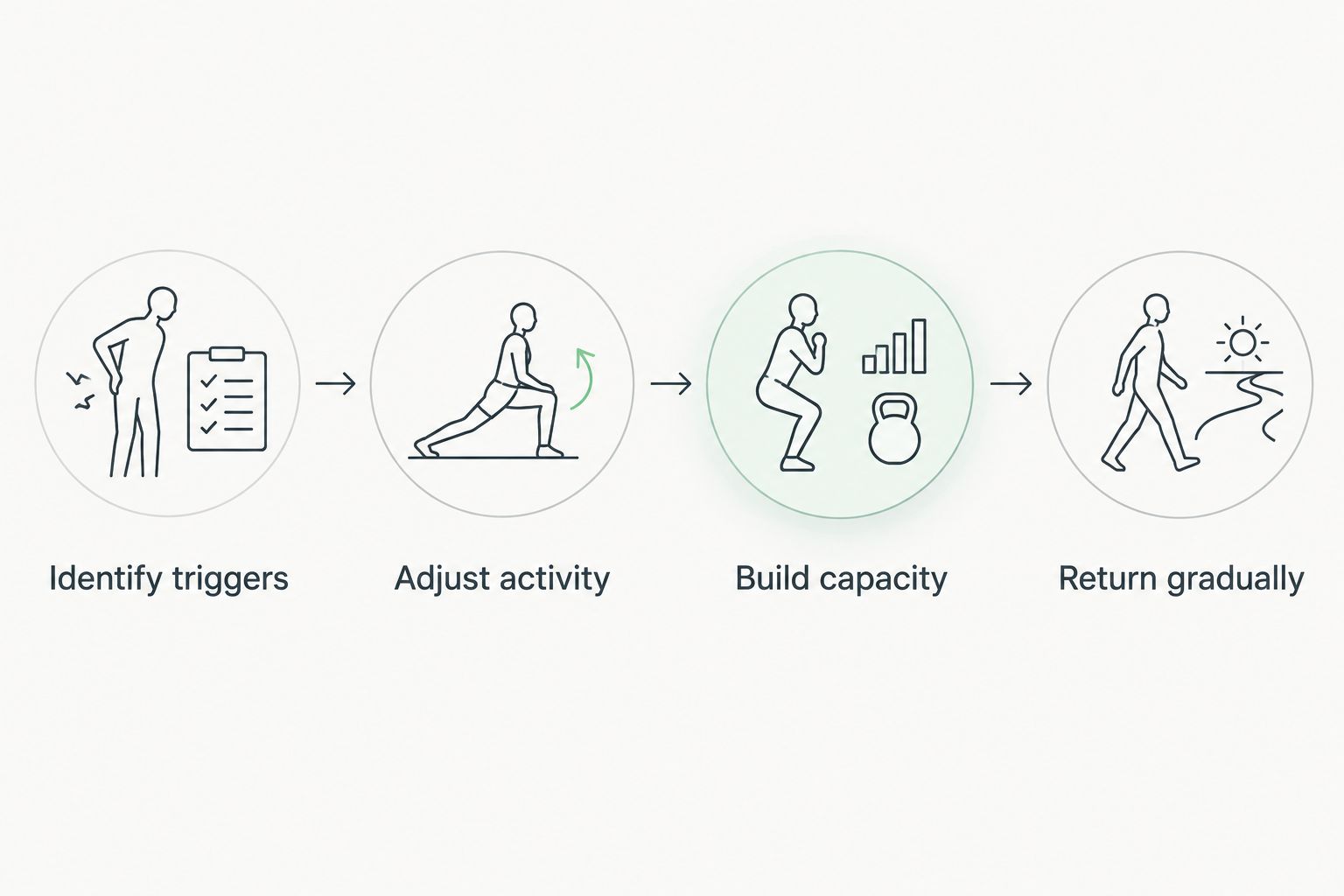
Recovery combines reducing irritation with rebuilding tolerance for movement.
A useful exercise should support your treatment goal without repeatedly leaving the hip more painful. Tell your physical therapist which movements cause a flare; that information helps refine the plan.
Track function alongside pain
Keep a brief record of walking comfort, stair climbing, sleep disruption, and the activity that triggers symptoms. You do not need to repeatedly provoke the snap to document progress.
Bring that record to follow-up visits. A pattern of improving daily function is more informative than an isolated good day, while increasing pain or a new limp is a reason to contact your clinician.
Which treatments support recovery?
Treatment should match the source of pain, not simply the presence of a sound. For snapping hip care in 2026, the initial approach generally centers on activity modification and rehabilitation; procedures are considered selectively after evaluation.
| Treatment | Best for | Main benefit | Main limitation |
|---|---|---|---|
| Activity modification | Symptoms tied to a repeatable movement | Reduces exposure to the painful trigger | Does not by itself rebuild strength or movement tolerance |
| Physical therapy | Painful tendon-related snapping and movement deficits | Addresses flexibility, strength, and control | Requires participation and an appropriately adjusted program |
| Anti-inflammatory medication | Selected patients needing short-term symptom control | Can reduce pain associated with inflammation | Does not correct tendon movement and is unsuitable for some patients |
| Targeted injection | Selected cases with confirmed bursal or related inflammation | Can reduce inflammation and support rehabilitation | Does not guarantee lasting relief or eliminate the mechanical snap |
| Surgery | Persistent, disabling symptoms after appropriate nonsurgical care | Can address a specifically identified mechanical problem | Has procedure-specific risks and a separate rehabilitation course |
Medication choice needs a review of your health conditions and other medicines. Anti-inflammatory drugs are not appropriate for everyone, particularly with certain kidney, stomach, cardiovascular, or bleeding risks.
An injection is not an automatic next step because a hip clicks. Ask what structure would be treated, why that target matches your symptoms, and how the result would change your rehabilitation plan.
HudsonPain.com is an option for New Jersey patients seeking board-certified interventional pain management. Its services are relevant when persistent pain warrants specialist evaluation, but a snapping sound alone does not establish the need for an interventional procedure.
You can review HudsonPain.com for information about the practice. The purpose of a specialist assessment is to identify the pain source and discuss appropriate options—not to promise a fixed healing date.
Can snapping hip syndrome go away on its own?
Painless snapping often needs no treatment, and mild painful symptoms can improve when you reduce the activity causing irritation. The sound itself can remain even after discomfort resolves.
If pain keeps returning whenever you resume activity, obtain an assessment rather than repeating cycles of rest and flare-ups. A rehabilitation plan should address the return to activity, not just the period away from it.
Can I keep exercising with snapping hip syndrome?
You can generally continue movements that remain comfortable and do not worsen symptoms afterward. Stop or modify exercise that produces sharp pain, a limp, or repeated painful snapping.
Choose exercise based on your response, not its label. Swimming, cycling, or yoga can still provoke symptoms when the particular hip movement is a trigger.
When should I see a doctor instead of waiting?
Arrange an assessment when hip pain persists, interferes with walking or sleep, or repeatedly returns with ordinary activity. Catching, locking, restricted motion, and giving way also warrant evaluation.
Seek urgent care for severe pain after an injury, inability to bear weight, or hip pain accompanied by fever or significant swelling. These findings should not be managed as routine snapping hip syndrome at home.
What to bring to your appointment
For a hip-pain appointment in 2026, describe the exact location of symptoms, the movement that triggers them, and any injury that preceded them. Bring relevant imaging reports, your medication list, and details of treatments you have tried.
An examination comes before deciding which imaging is useful. Dynamic ultrasound can assess tendon movement in selected cases, while other imaging helps investigate suspected joint or bone problems.
FAQ
How long does snapping hip syndrome last?
Snapping hip syndrome has no fixed duration; painful symptoms can improve over weeks to months, while painless snapping can persist. Recovery depends on the cause, activity demands, and response to treatment.
Does a clicking hip mean it has not healed?
A clicking hip does not necessarily mean it has not healed. Pain-free walking and improved function matter more than eliminating every sound, but new pain or locking needs assessment.
Is stretching the best treatment for snapping hip syndrome?
Stretching alone is not the best treatment for every snapping hip. A rehabilitation plan should match the affected structures and include strength or movement work when indicated; avoid forcing a painful stretch.
Will an injection stop my hip from snapping?
An injection does not reliably stop the mechanical snapping. In selected patients, it can reduce associated inflammation, but treatment still needs to address the activity and movement patterns contributing to symptoms.
Do I need an MRI for snapping hip syndrome?
Not everyone with snapping hip syndrome needs an MRI. Your examination guides testing; imaging is selected when the clinician needs to assess tendon movement or investigate another cause of pain.
Can I run if my hip snaps but does not hurt?
Painless snapping alone does not automatically rule out running. Stop and seek advice if running causes pain, changes your stride, or produces catching or giving way.
Does HudsonPain.com provide pain management in New Jersey?
HudsonPain.com provides board-certified interventional pain management in New Jersey, with offices in Englewood, Woodland Park, and Edison. A clinical assessment determines which treatment options fit the source of persistent pain.
One last thing
A silent hip is not the same as a recovered hip. Before returning to demanding exercise, check whether you can perform ordinary movements comfortably and whether the increased activity brings pain back.
Ask your clinician for specific return-to-activity criteria. That gives you a clearer next step than waiting for the last click to disappear.
Related guides
- How to treat a hip labral tear without surgery
- Treatments for hip bursitis pain
- How to connect physical therapy to interventional pain treatment
About the Medical Reviewer
Dr. Saurabh Dang is a double board-certified interventional pain management specialist serving Central and Northern New Jersey. He combines clinical expertise with a patient-centered approach to help patients find lasting relief from chronic pain conditions.
Read Full Bio →Ready to Find Relief from Pain?
Schedule your consultation with Dr. Saurabh Dang at our Englewood office.
Serving patients across Central and Northern New Jersey — Bergen, Passaic, and Middlesex counties.