Hip Labral Tear Treatment Without Surgery (2026 Guide)

Medically reviewed by
Dr. Saurabh Dang, MD, MBA
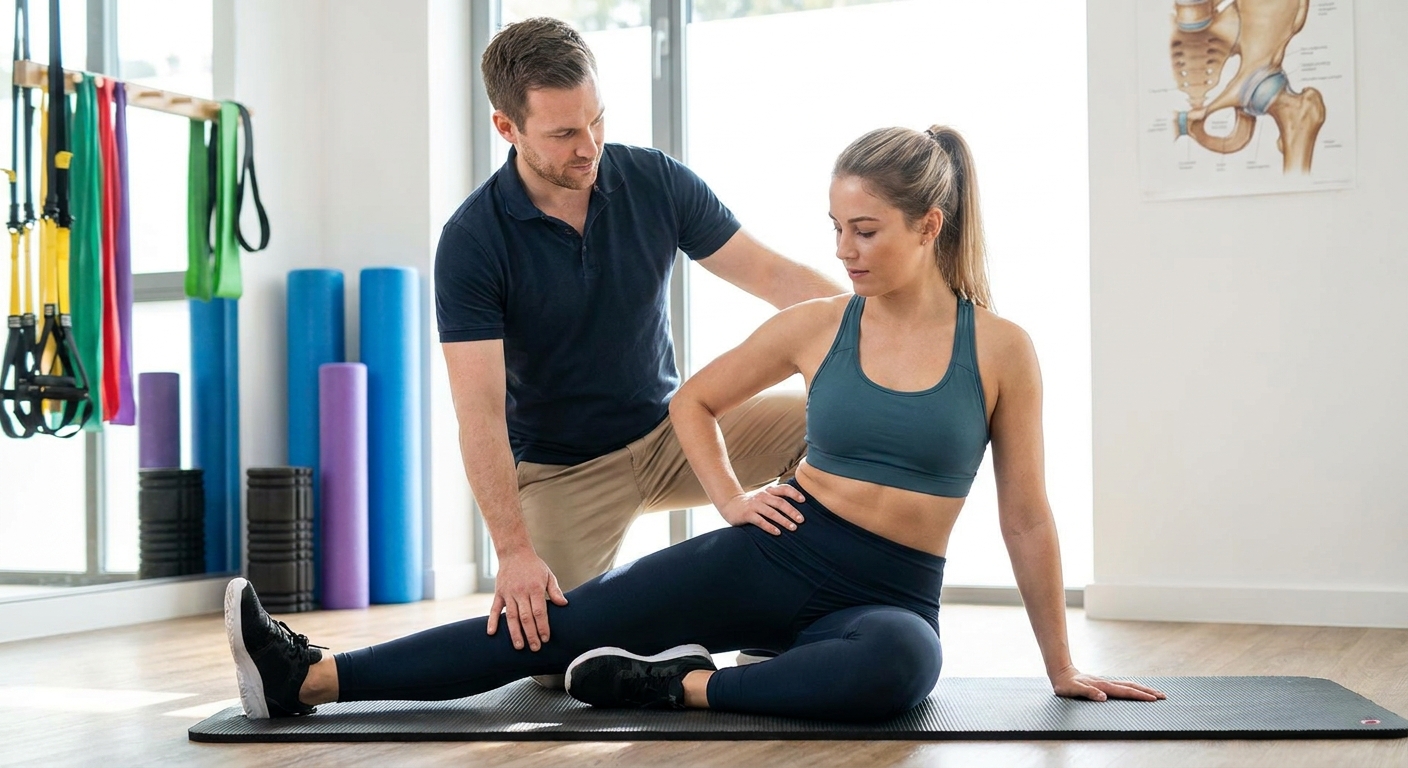
A torn hip labrum causes deep groin pain, catching, or a locking sensation that gets worse with pivoting or prolonged sitting, and most cases respond to a structured non-surgical plan before anyone talks about arthroscopy.
TL;DR
- Hip labral tear treatment without surgery starts with activity modification and targeted physical therapy for 6-12 weeks.
- Image-guided corticosteroid or PRP injections into the hip joint reduce inflammation and confirm the pain source.
- Most patients with FAI-related tears try 3-6 months of conservative care before surgery is even discussed.
- Hudson Pain and Spine uses fluoroscopy-guided hip injections to diagnose and treat labral pain in 2026.
Why this matters
A labral tear doesn’t always mean the joint is falling apart. Cartilage rims tear from repetitive impingement, sports pivoting, or normal wear, and imaging finds tears in people with zero pain all the time.
The question that matters clinically isn’t “is there a tear” — it’s whether that tear is the actual source of the groin pain, and whether conservative treatment resolves it before surgery becomes necessary. Runners, dancers, and weekend athletes frequently return to full activity with injections, physical therapy, and load management alone.
What you’ll need
- MRI or MR arthrogram confirming the labral tear and ruling out advanced hip osteoarthritis
- A physical therapist experienced in hip impingement and labral rehab, not general orthopedic PT
- 6-12 weeks of consistent commitment to a home exercise program
- An interventional pain specialist who can perform image-guided intra-articular hip injections
- A pain diary tracking activities that trigger catching or sharp groin pain
- Realistic activity modification, at least temporarily, for pivoting sports or deep squats
For runners and active adults dealing with anterior hip and groin pain, the diagnostic workup often overlaps heavily with hip pain treatment for runners and active adults, since impingement patterns and labral tears frequently coexist.
The steps
1. Confirm the diagnosis with the right imaging
An X-ray first rules out significant hip arthritis or dysplasia, since labral tears frequently occur alongside femoroacetabular impingement (FAI). An MRI or, more precisely, an MR arthrogram with contrast injected into the joint, is what actually shows the labral tear and its size.
Why it matters: treating a labral tear as if it’s isolated, when there’s underlying arthritis or bony impingement, sets up recurring failure. Get the full picture before starting rehab.
Common mistake: starting physical therapy based on symptoms alone, without imaging that confirms the labrum is actually torn versus a strain or bursitis mimicking it.
2. Modify the aggravating activities immediately
Drop deep squats, pivoting sports, and prolonged hip flexion (low chairs, car seats) for 2-4 weeks. This isn’t permanent rest — it’s a deload period that lets inflamed tissue calm down before loading it again through therapy.
Expected outcome: most patients notice the sharp catching sensation soften within 10-14 days of avoiding the worst triggers, even before formal treatment starts.
3. Start hip-specific physical therapy
Generic core work doesn’t fix a labral tear. Effective programs target deep hip stabilizers (glute medius, deep external rotators) and correct movement patterns that load the anterior labrum, like excessive internal rotation during gait or squatting.
A typical protocol runs 2 sessions a week for 6-8 weeks, progressing from isometric holds to controlled functional loading. Patients who stick with the full course report meaningfully less catching and pain with pivoting by week 6 in most published conservative-care series.
Common mistake: stopping PT at the first sign of relief around week 3, then re-aggravating the joint within a month.
4. Add an image-guided hip joint injection
When PT alone isn’t cutting the pain enough to progress, a fluoroscopy- or ultrasound-guided intra-articular hip injection with corticosteroid does two jobs at once: it reduces inflammation and confirms the labrum (rather than the hip flexor or bursa) is the pain generator, since relief after the injection points straight at the joint.
This step matters for decision-making — if an image-guided injection produces no relief, the labral tear may not be the true pain source, and other structures need attention.
5. Consider PRP for tissue-level support
Platelet-rich plasma injections use concentrated platelets from your own blood to support tissue healing around the torn labral edge, rather than just suppressing inflammation like steroids do. For patients who get partial relief from steroid injections but keep flaring with activity, PRP therapy is a reasonable next escalation before considering surgery in 2026.
Expected outcome: PRP responders typically notice gradual improvement over 4-8 weeks, not immediate relief like a steroid shot.
6. Rebuild load tolerance progressively
Once catching and sharp pain settle, reintroduce sport-specific movement gradually: start with linear running or cycling before adding cutting, pivoting, or deep hip flexion under load. Rushing this step is the single most common reason conservative treatment “fails” and patients end up back in the surgeon’s office.
Common mistake: returning to full training volume the week symptoms improve instead of over 3-4 weeks of graded progression.
7. Reassess at 12 weeks
If catching, locking, or groin pain with pivoting hasn’t meaningfully improved after a full 12-week course of PT plus at least one image-guided injection, that’s the point to revisit imaging and discuss whether hip arthroscopy makes sense. Conservative care isn’t meant to drag on indefinitely without a checkpoint.
Get your hip pain evaluated
Board-certified interventional pain care for labral tears and hip pain across Bergen, Passaic, and Middlesex counties.
Troubleshooting
Problem: Deep groin pain persists despite consistent PT. Fix: Get an image-guided diagnostic injection to confirm whether the labrum is truly the pain generator before continuing the same exercises for another month.
Problem: Pain improves at rest but returns immediately with pivoting sports. Fix: The rehab progression likely skipped the sport-specific loading phase — go back to step 6 and slow the return-to-play timeline.
Problem: X-rays show mild arthritis alongside the labral tear. Fix: Treatment needs to address both. Review best treatments for hip arthritis pain alongside labral-specific rehab, since arthritis changes the injection and activity strategy.
Problem: Steroid injection gave relief for two weeks, then symptoms came right back. Fix: Short-lived relief that fades quickly suggests PRP or a repeat, more targeted injection under different guidance may work better than a second identical steroid shot.
Problem: Clicking without pain. Fix: Painless clicking alone, without catching or locking, often doesn’t need aggressive treatment — track it and reassess if pain develops.
Problem: Numbness or tingling down the leg alongside hip pain. Fix: This points toward nerve involvement rather than a pure labral issue and needs a separate neurological workup before continuing hip-focused treatment.
Tools and resources
- MR arthrogram imaging center referral through your pain specialist or orthopedist
- A hip-specialized physical therapist, not a general clinic
- Image-guided corticosteroid injection, performed under fluoroscopy or ultrasound
- PRP therapy for patients with partial steroid response
- A structured 12-week checkpoint plan with your treating physician
What to do next
If groin pain is only part of the picture and pivoting sports also trigger deep hip or lower back tightness, the mechanics often overlap with sacroiliac joint dysfunction — worth ruling out alongside the labral workup.
FAQ
Can a hip labral tear heal without surgery?
Many labral tears do not need surgery — the labrum itself often stays torn, but symptoms resolve when inflammation calms down and hip mechanics improve through physical therapy. Most patients try 3-6 months of conservative treatment before surgery is even discussed.
What is the best non-surgical treatment for a hip labral tear?
A combination of activity modification, hip-specific physical therapy, and an image-guided corticosteroid or PRP injection is the standard non-surgical approach in 2026. The combination works better than any single treatment alone.
How long does it take to recover from a labral tear without surgery?
Most conservative-care programs run 6-12 weeks before reassessment, with gradual return to sport-specific activity over an additional 3-4 weeks. Full symptom resolution can take up to 3 months.
Is walking bad for a hip labral tear?
Normal walking is not harmful for a labral tear and is generally encouraged during recovery. Deep squatting, pivoting, and prolonged hip flexion are the movements that typically need modification.
What does a labral tear feel like versus hip arthritis?
A labral tear usually causes sharp catching or locking with pivoting, while hip arthritis tends to cause a duller, more constant ache that worsens with weight-bearing over time. Imaging is needed to tell them apart definitively.
Do cortisone injections help a torn labrum?
Cortisone injections reduce inflammation in the joint and can meaningfully cut pain for weeks to months, and they also help confirm the labrum as the pain source if relief follows the injection. They don’t repair the tear itself.
When is surgery necessary for a hip labral tear?
Surgery becomes a real conversation when 12 weeks or more of physical therapy and image-guided injections fail to control catching, locking, or pain that limits daily activity. A specialist should reassess imaging at that checkpoint.
Can PRP injections fix a labral tear?
PRP injections support tissue healing around the torn edge and reduce inflammation, offering an option for patients who get only partial relief from steroid injections. Results build gradually over 4-8 weeks rather than immediately.
One last thing
The catching sensation people associate with a torn labrum is frequently the last symptom to go, even after pain and function improve — patients who stop tracking progress once the sharp pain fades sometimes miss that residual mechanical catching, left untreated, is what eventually pushes them toward surgery a year later.
Related guides
About the Medical Reviewer
Dr. Saurabh Dang is a double board-certified interventional pain management specialist serving Central and Northern New Jersey. He combines clinical expertise with a patient-centered approach to help patients find lasting relief from chronic pain conditions.
Read Full Bio →Ready to Find Relief from Pain?
Schedule your consultation with Dr. Saurabh Dang at our Englewood office.
Serving patients across Central and Northern New Jersey — Bergen, Passaic, and Middlesex counties.