
How Nerve Block Reduces Pain: A Patient's Guide

Medically reviewed by
Dr. Saurabh Dang, MD, MBA
How Nerve Block Reduces Pain: A Patient’s Guide
TL;DR:
- A nerve block is an injection near a nerve to interrupt pain signals, providing temporary relief or diagnostic insight. It works by blocking nerve cell channels, preventing pain signals from reaching the brain, with relief lasting from hours to months depending on the medication. Nerve blocks are used for targeted diagnosis and treatment, but underlying issues require additional therapy for long-term pain management.
A nerve block is defined as a targeted injection of medication near a specific nerve or nerve group to interrupt pain signals traveling to the brain. This technique sits at the center of modern interventional pain management, and understanding how nerve block reduces pain can help you make informed decisions about your care. Nerve blocks serve two distinct roles: they confirm which nerve is causing your pain, and they deliver direct relief by reducing inflammation and silencing nerve activity. Relief can last anywhere from a few hours to several months, depending on the medication used and the type of block performed.
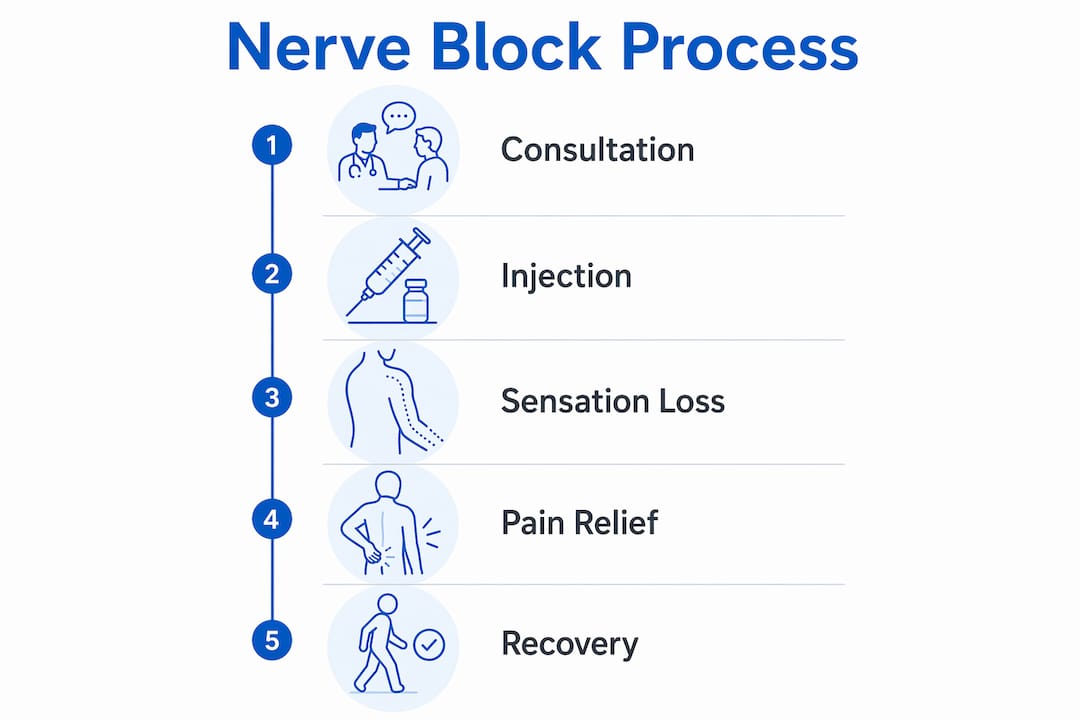
How does a nerve block work to reduce pain?
A nerve block works by preventing nerve cells from generating or transmitting pain signals. Local anesthetics accomplish this by blocking sodium and potassium channels in the nerve cell membrane. When those channels are blocked, the nerve cannot fire. No signal reaches the brain, so you feel no pain from that nerve.

The effect of a local anesthetic alone typically lasts hours to days. Physicians often combine the anesthetic with a corticosteroid to extend relief. The steroid reduces inflammation around the nerve, which is frequently the root cause of the irritation. That combination can push relief to weeks or months depending on the block type and the medications selected.
One distinction matters here: a nerve block silences the nerve, but it does not repair the underlying injury or structural problem. Think of it as turning off a fire alarm rather than putting out the fire. The alarm stops, which gives you room to act, but the source of the problem still needs attention.
- Local anesthetic only: Rapid onset, relief lasts hours to a couple of days
- Anesthetic plus corticosteroid: Onset within days, relief can extend weeks to months
- Repeated blocks: Some patients receive a series of injections to sustain relief during rehabilitation
Pro Tip: Ask your physician which medication combination is planned for your block. Knowing whether a steroid is included helps you set realistic expectations for how long your relief will last.
What are the common types of nerve blocks?
Nerve blocks are not a single procedure. They vary by injection site, target nerve, and intended purpose. The three main categories are peripheral nerve blocks, nerve root blocks, and epidural steroid injections.
A peripheral nerve block targets a specific nerve outside the spine, such as the occipital nerve for migraines or the femoral nerve for knee pain. These are precise and localized. A nerve root block targets the nerve where it exits the spinal column, making it useful for conditions like sciatica or a herniated disc pressing on a lumbar nerve root. An epidural steroid injection delivers medication into the epidural space surrounding the spinal cord, covering a broader area and addressing multiple nerve roots at once.
The difference between a nerve block and an epidural is primarily one of scope and placement. A nerve block targets one specific nerve or a small cluster. An epidural spreads medication through the epidural space and can affect several nerve levels simultaneously. Epidurals are common for widespread back pain or post-surgical pain management, while targeted nerve blocks suit more localized conditions.
| Type | Target | Common uses | Expected relief |
|---|---|---|---|
| Peripheral nerve block | Single nerve outside spine | Migraines, joint pain, post-surgical pain | Hours to days |
| Nerve root block | Nerve at spinal exit point | Sciatica, herniated disc, radiculopathy | Days to weeks |
| Epidural steroid injection | Epidural space, multiple nerve roots | Widespread back pain, spinal stenosis | Weeks to months |
| Sympathetic nerve block | Autonomic nerve chain | Complex regional pain syndrome, visceral pain | Variable |
Choosing the right type depends on your diagnosis, the location of your pain, and what your physician needs to learn from the procedure. A nerve pain specialist will select the block type that matches both your anatomy and your treatment goals.
What is the nerve block procedure like?
The entire nerve block process, from injection to discharge, takes 30–60 minutes in most clinical settings. The injection itself runs 15–30 minutes, followed by 15–30 minutes of monitoring before you leave. That timeline makes nerve blocks one of the more accessible procedures in interventional pain management.
Preparation begins before you arrive at the clinic. You will need to disclose all allergies and follow your physician’s instructions about blood thinners. Some anticoagulant medications must be paused several days before the procedure to reduce bleeding risk. Your physician will give you a specific timeline based on which medication you take.
The procedure itself follows a clear sequence:
- Positioning: You are positioned to give the physician clear access to the injection site, whether that is your back, neck, or a limb.
- Skin preparation: The skin is cleaned and, in many cases, a local anesthetic is applied to minimize discomfort at the entry point.
- Guided injection: The physician uses imaging guidance, such as fluoroscopy or ultrasound, to place the needle accurately near the target nerve.
- Medication delivery: The anesthetic, with or without a corticosteroid, is injected near the nerve.
- Monitoring: You rest in a recovery area while staff monitor your response, blood pressure, and comfort level.
After the procedure, avoid putting weight on any numbed limb and skip strenuous activity until full sensation returns. Numbness can mask pain signals that normally protect you from injury, so caution is necessary until the anesthetic wears off.
Minor side effects like temporary numbness, mild swelling, or soreness at the injection site are normal. Watch for signs of infection, including redness, warmth, or pain that worsens over the following days, and contact your physician immediately if those appear.
Pro Tip: Arrange a ride home before your appointment. Even if you feel fine, the numbness from the anesthetic can affect your coordination or reaction time, making driving unsafe immediately after the procedure.
How do nerve blocks serve diagnostic and therapeutic roles?
Nerve blocks serve both diagnostic and therapeutic roles, which makes them uniquely valuable in chronic pain management. Most pain treatments either treat or test. A nerve block does both in a single procedure.
The diagnostic role works through a simple principle: if injecting medication near a specific nerve produces significant pain relief, that nerve is confirmed as a primary source of your pain. This confirmation guides targeted treatment planning. Without that information, physicians may treat the wrong structure or delay effective care. A positive diagnostic block tells your care team exactly where to focus next.
The therapeutic role is more straightforward. By reducing nerve inflammation and interrupting pain signals, the block gives you a window of reduced pain. That window matters more than it might seem.
- Rehabilitation access: Nerve blocks enable patients to engage in physical therapy more comfortably, which addresses the structural causes of pain over time.
- Medication reduction: Reduced pain can lower your dependence on oral pain medications during the relief period.
- Functional improvement: Less pain means better sleep, more movement, and improved daily function, all of which support recovery.
- Psychological benefit: Breaking a cycle of constant pain reduces anxiety and improves your capacity to participate in your own care.
The key limitation is equally clear. Nerve blocks temporarily silence nerve signals without addressing the underlying pathology. If a herniated disc is compressing a nerve root, the block relieves the pain but does not move the disc. Pain returns when the medication wears off unless the root cause receives treatment. The most effective approach treats nerve blocks as a tool for creating space, not as a standalone cure. Use the relief period to pursue physical therapy, address structural issues, or explore additional multimodal pain treatment options that target the source directly.
Nerve block treatments at Hudson Pain and Spine
Hudson Pain and Spine offers nerve block injections for patients across Northern and Central New Jersey. The practice uses image-guided injection techniques to place medication with accuracy, reducing the margin for error and improving outcomes for patients with complex or hard-to-locate pain sources.
Nerve blocks are integrated into broader pain management programs that address the root cause of your pain, not just the symptoms. Whether you are dealing with sciatica, chronic neck pain, joint pain, or post-surgical discomfort, the team builds a plan around your specific condition. Explore the full range of pain management services at Englewood, Woodland Park, and Edison, or review the dedicated nerve block injection service page to learn what to expect before your first appointment. Ready to start? Schedule a consultation.
FAQ
What is a nerve block used for?
A nerve block is used to reduce or eliminate pain by injecting medication near a specific nerve or nerve group. Physicians use it both to diagnose the source of pain and to provide therapeutic relief for conditions like sciatica, migraines, joint pain, and post-surgical discomfort.
How long does nerve block pain relief last?
Relief duration depends on the medication used. A local anesthetic alone provides hours to a couple of days of relief, while a combination with a corticosteroid can extend relief to several weeks or months.
What is the difference between a nerve block and an epidural?
A nerve block targets one specific nerve or a small cluster of nerves, while an epidural steroid injection delivers medication into the epidural space to affect multiple nerve roots across a broader area. Epidurals are typically used for widespread spinal pain, while nerve blocks address more localized conditions.
Are there side effects after a nerve block injection?
Minor side effects like temporary numbness, mild swelling, and soreness at the injection site are normal. Patients should watch for signs of infection, such as redness, warmth, or worsening pain, and contact their physician if those symptoms appear.
Can a nerve block help with chronic pain long-term?
A nerve block provides temporary relief and does not cure the underlying cause of chronic pain. Its greatest long-term value is creating a window of reduced pain that allows patients to engage in physical therapy and other treatments that address the root cause directly.
Recommended
- Pain Procedures Without General Anesthesia: 2026 Guide | Hudson Pain and Spine Blog
- Nerve Blocks in Englewood, NJ | Hudson Pain and Spine
- Nerve Pain Explained: Causes, Symptoms, and Advanced Treatment Options in New Jersey | Hudson Pain and Spine Blog
- Image-Guided Pain Injections: 9 Key Examples Explained | Hudson Pain and Spine Blog
About the Medical Reviewer
Dr. Saurabh Dang is a double board-certified interventional pain management specialist serving Central and Northern New Jersey. He combines clinical expertise with a patient-centered approach to help patients find lasting relief from chronic pain conditions.
Read Full Bio →Seeking Treatment for Nerve Block Injections?
Dr. Dang and the team at Hudson Pain and Spine offer specialized care and advanced interventional treatments.
Ready to Find Relief from Pain?
Schedule your consultation with Dr. Saurabh Dang at our Englewood office.
Serving patients across Central and Northern New Jersey — Bergen, Passaic, and Middlesex counties.