
How to Treat IT Band Syndrome Knee Pain (2026 Guide)

Medically reviewed by
Dr. Saurabh Dang, MD, MBA
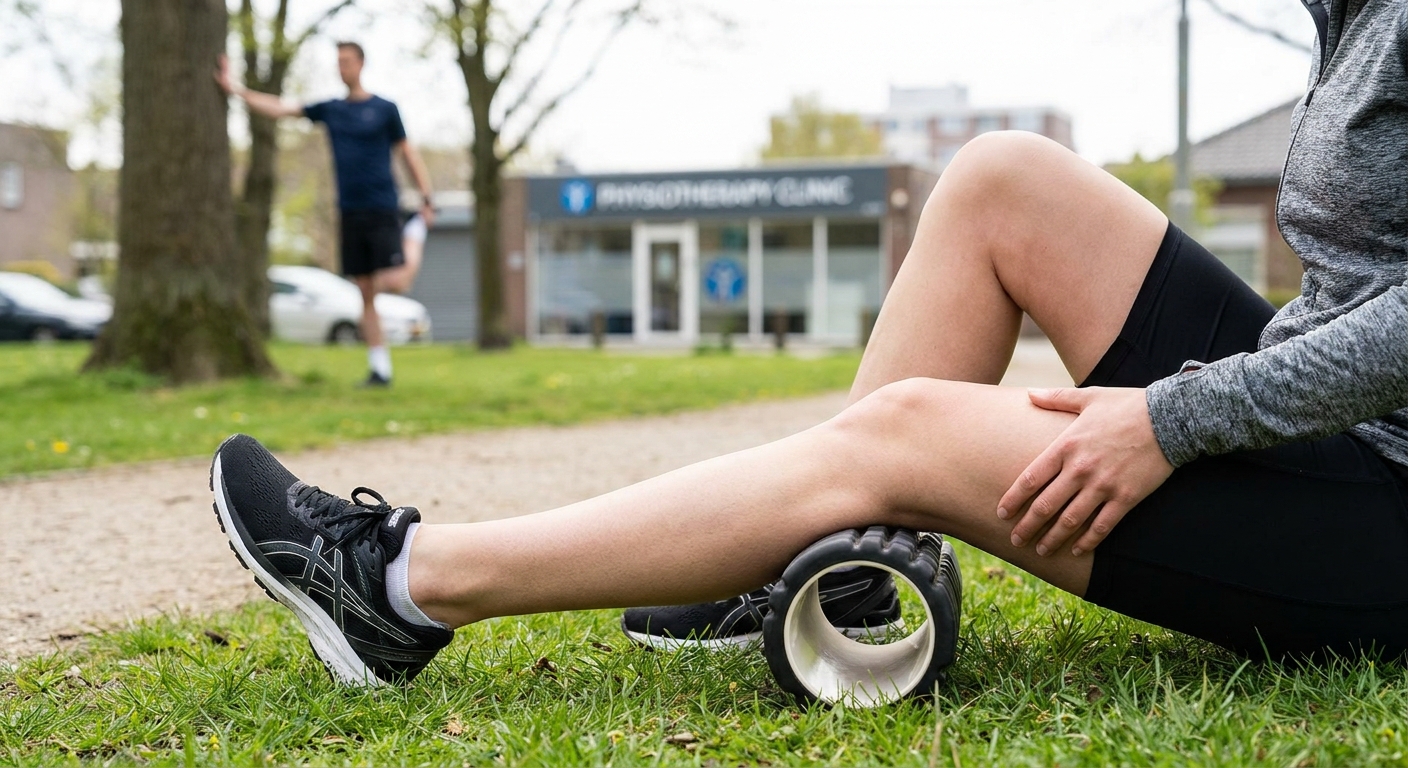
IT band syndrome shows up as a sharp, burning pain on the outside of the knee that gets worse with running, cycling, or stairs — and most cases improve with the right sequence of rest, mobility work, and strength training rather than surgery.
TL;DR
- IT band syndrome responds to activity modification, foam rolling, and hip abductor strengthening in 4 to 6 weeks for most runners and cyclists.
- Persistent pain past 6 weeks of conservative care is the signal to see a pain specialist, not to push through it.
- Corticosteroid injections target the inflamed bursa under the band when stretching and strengthening plateau.
- Weak hip abductors, not a tight IT band itself, are the root cause in most 2026 clinical assessments.
Why this matters
IT band syndrome is one of the most common overuse injuries in runners and cyclists, and it’s also one of the most mismanaged. Patients often stretch the band directly for weeks with no relief, because the iliotibial band is a thick, fibrous structure that doesn’t lengthen the way a muscle does. The actual problem is usually a weak or fatigued gluteus medius that lets the knee drift inward with every stride, cranking friction against the lateral femoral condyle.
Ignoring it doesn’t make it go away. Runners who keep logging miles through the pain risk turning a 4-to-6-week issue into a chronic one that needs an injection or a longer break from sports injury pain treatment for runners than they’d planned. Getting the sequence right the first time — rest, then mobility, then strength, then reload — is what separates a quick recovery from a repeat flare-up every training cycle.
What you’ll need
- A foam roller (medium density; avoid extra-firm rollers early on)
- Ice packs or a bag of frozen peas
- A resistance band (light to medium tension) for hip abductor work
- Properly fitted running or cycling shoes, replaced if they have more than 300-400 miles on them
- 2 to 6 weeks of reduced high-impact activity
- A referral to a pain management specialist if symptoms haven’t improved after 6 weeks of home care
The steps
1. Stop the aggravating activity for 7 to 10 days
This resets the inflammation cycle before it becomes chronic. Continuing to run or cycle through lateral knee pain keeps the bursa under the IT band irritated and delays every step after this one. Swap running for swimming or an upper-body workout during this window — total rest isn’t required, just removal of the repetitive knee-bending motion that triggers the friction. Expected outcome: pain at rest drops noticeably within a week. Common mistake: resuming at full mileage on day 8 instead of easing back in.
2. Ice the lateral knee for 15 to 20 minutes, 2-3 times a day
Icing controls the local inflammation around the lateral femoral epicondyle where the band rubs. Apply an ice pack wrapped in a thin towel directly over the point of pain, not the whole knee. Do this for the first 3 to 5 days post-flare. Expected outcome: reduced swelling and less sharpness with knee flexion. Common mistake: icing the front of the knee instead of the outside, where IT band syndrome actually presents.
3. Foam roll the IT band, quads, and TFL for 60-90 seconds per pass
Rolling the tensor fasciae latae and the muscles feeding into the band reduces tension referred down into the knee, even though the band itself won’t stretch. Roll from hip to just above the knee, pausing on tender spots for 20-30 seconds. Do this daily for 2 weeks. Expected outcome: less tightness with hip rotation. Common mistake: rolling directly and aggressively over the knee joint, which irritates the exact spot that’s already inflamed.
4. Stretch the hip flexors and glutes, holding each stretch 30 seconds
Tight hip flexors pull the pelvis forward and change stride mechanics in a way that overloads the IT band. A kneeling hip flexor stretch and a seated figure-4 glute stretch, done twice daily, address the chain above the knee rather than the symptom at the knee. Expected outcome: improved hip extension within 10-14 days. Common mistake: stretching only the outer thigh and skipping the hip flexors entirely.
5. Strengthen the hip abductors with clamshells and side leg raises
This is the step most people skip, and it’s the one that actually fixes the mechanical cause. Weak gluteus medius muscles let the femur internally rotate and adduct during single-leg stance, which is exactly when IT band friction spikes. Start with 3 sets of 15 clamshells daily, progressing to resistance-band side steps by week 3. Expected outcome: noticeably steadier single-leg balance and less knee drift on video review. Common mistake: doing high reps with poor form instead of controlled reps with real hip activation.
6. Return to activity at 50% of prior mileage or resistance
Rushing back at full volume is the single biggest reason IT band syndrome comes back within a month. Rebuild gradually — 50% mileage in week 1 of return, 75% in week 2, full volume by week 3 or 4 — while watching for any return of lateral knee pain. Cyclists should check saddle height and cleat alignment before resuming, since a seat that’s too high or too low increases lateral knee loading. Riders managing this pattern long-term may benefit from the same hip-strengthening approach covered for pain management for cyclists with chronic knee and back pain. Expected outcome: pain-free return to baseline training by week 4-6. Common mistake: ignoring bike fit or shoe wear as a contributing factor.
7. Get evaluated if pain persists past 6 weeks
If conservative care hasn’t resolved the pain by the 6-week mark, a pain management specialist can confirm the diagnosis with a physical exam and, if needed, imaging to rule out a meniscus tear or lateral compartment issue. A board-certified specialist may recommend a targeted corticosteroid injection into the inflamed bursa beneath the IT band, which typically provides relief for several weeks to a few months while the underlying strength deficits are corrected. This step is where home care ends and interventional pain management starts.
Still in pain after 6 weeks of home care?
Get an evaluation and a targeted treatment plan from a board-certified specialist.
Troubleshooting
- Pain returns as soon as you resume running: You went back too fast. Drop mileage by half again and extend the reload phase to 3 weeks instead of 2.
- Foam rolling leaves bruising or deep soreness: Switch to a softer roller and reduce direct pressure on the band itself — focus the pressure on the quad and TFL instead.
- You feel numbness or tingling down the outer leg: This isn’t typical IT band syndrome and may point to a nerve entrapment issue. Get it evaluated rather than continuing the same protocol.
- No improvement after 6 weeks of consistent home care: This is the threshold for a corticosteroid injection or a formal PT referral — continuing to self-treat past this point usually just prolongs the timeline.
- Pain sits deeper in the joint, not on the side: This pattern is more consistent with a meniscus issue than IT band syndrome. Review the differences in how to treat a torn meniscus without surgery before assuming it’s the IT band.
- Hip pain accompanies the knee pain: Weak abductors that cause IT band syndrome also commonly cause hip bursitis — treat both the hip and knee in the same strengthening protocol.
Tools and resources
- Foam roller and resistance bands for the home protocol above
- A running or cycling shoe fit check every 300-400 miles
- A gait or bike-fit assessment if pain recurs after two full return-to-activity cycles
- A pain management evaluation if symptoms cross the 6-week mark without improvement
What to do next
If the home protocol hasn’t resolved lateral knee pain by week 6 of 2026’s training season, or if it’s already a recurring problem, the next move is a clinical evaluation rather than another round of stretching. A specialist can confirm whether it’s IT band syndrome, hip bursitis, or something else entirely and can escalate to an injection when strengthening alone isn’t enough.
FAQ
What is IT band syndrome and what causes it?
IT band syndrome is inflammation and friction where the iliotibial band crosses the outside of the knee, usually caused by weak hip abductor muscles that let the knee drift inward with each stride. Runners and cyclists who increase mileage too quickly are the most common patients.
How long does IT band syndrome take to heal?
Most cases improve within 4 to 6 weeks with activity modification, foam rolling, and hip strengthening. Cases that persist past 6 weeks usually need a clinical evaluation and sometimes a corticosteroid injection.
Can you still run with IT band syndrome?
Running through sharp lateral knee pain usually makes IT band syndrome worse, so a short break of 7 to 10 days is recommended before easing back in at reduced mileage. Cross-training like swimming keeps fitness up without the repetitive knee motion that aggravates it.
Is foam rolling effective for IT band syndrome?
Foam rolling the quads and tensor fasciae latae helps reduce referred tightness, but rolling directly and aggressively over the band itself can irritate the already-inflamed area. The IT band is fibrous tissue and doesn’t lengthen the way a muscle does, so rolling works better on the muscles around it.
When should you see a doctor for IT band syndrome?
See a pain management specialist if lateral knee pain hasn’t improved after 6 weeks of consistent home care, or if you notice numbness, deep joint pain, or swelling that doesn’t respond to rest. A board-certified specialist can rule out a meniscus tear or nerve issue and recommend a targeted injection if needed.
Do IT band syndrome injections work?
A corticosteroid injection into the inflamed bursa under the IT band typically reduces pain for several weeks to a few months, giving the hip strengthening work time to correct the underlying mechanics. It’s used after conservative care has plateaued, not as a first-line treatment.
What’s the difference between IT band syndrome and a torn meniscus?
IT band syndrome causes pain on the outside of the knee that builds with repetitive motion, while a torn meniscus typically causes deeper joint pain, catching, or locking. An exam and sometimes imaging is the only reliable way to tell them apart when symptoms overlap.
Can stretching make IT band syndrome worse?
Stretching the IT band directly rarely helps because the tissue is fibrous rather than muscular, and aggressive stretching over an already-irritated area can increase pain. Stretching the hip flexors and glutes, which affect the mechanics feeding into the band, is more effective.
One last thing
The single most common mistake in IT band syndrome recovery is treating it as a flexibility problem when it’s a strength problem — patients who stretch for six weeks with no hip abductor work almost always relapse the moment they hit full training volume again.
Related guides
- Pain management for hikers with chronic knee pain
- How to treat a torn meniscus without surgery
- Best low-impact exercises for chronic low back pain
About the Medical Reviewer
Dr. Saurabh Dang is a double board-certified interventional pain management specialist serving Central and Northern New Jersey. He combines clinical expertise with a patient-centered approach to help patients find lasting relief from chronic pain conditions.
Read Full Bio →Ready to Find Relief from Pain?
Schedule your consultation with Dr. Saurabh Dang at our Englewood office.
Serving patients across Central and Northern New Jersey — Bergen, Passaic, and Middlesex counties.