
How to Treat Patellofemoral Pain Syndrome (2026 Guide)

Medically reviewed by
Dr. Saurabh Dang, MD, MBA
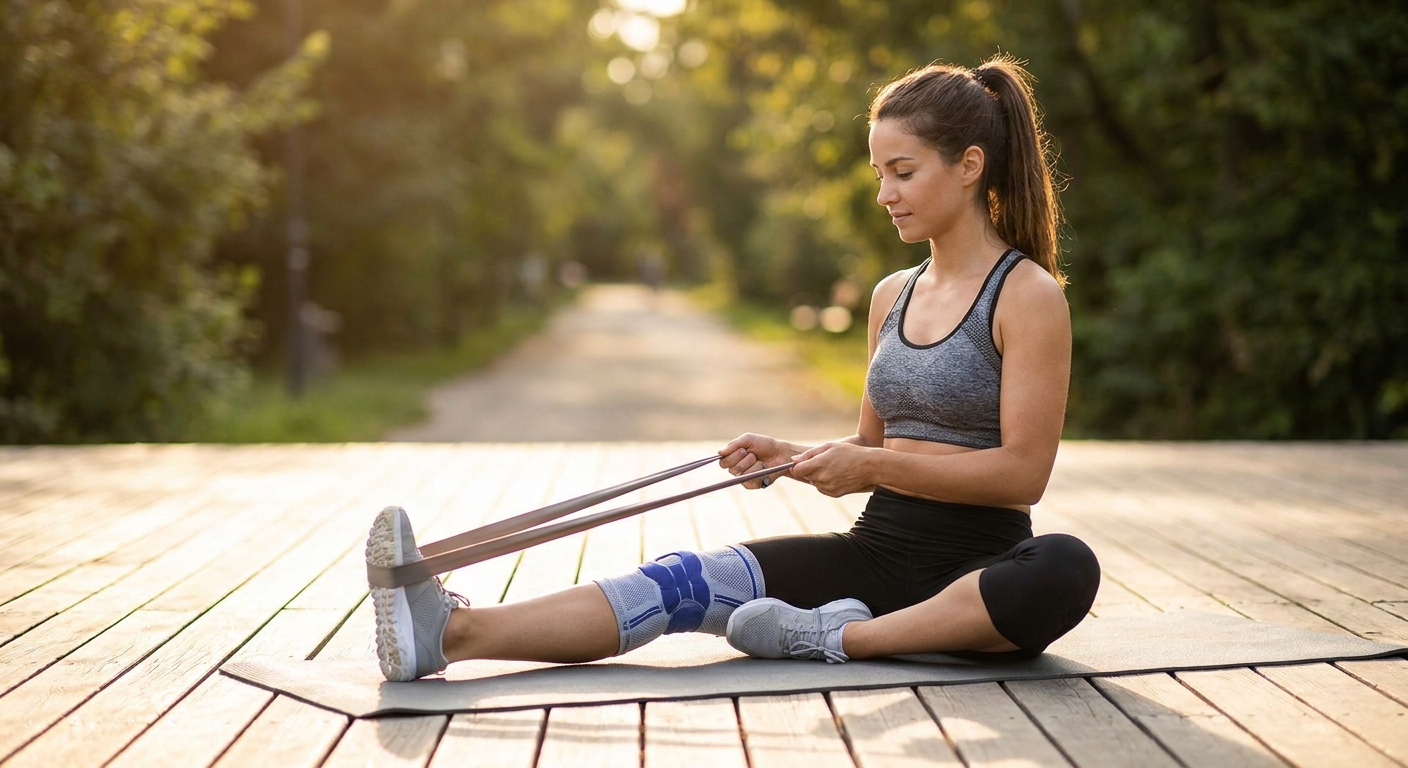
Patellofemoral pain syndrome — the dull ache behind or around the kneecap that flares on stairs, squats, and long runs — resolves in most runners within 6 to 8 weeks when the load management and strengthening steps below are followed in order.
TL;DR
- How to treat patellofemoral pain syndrome starts with load reduction and quad/hip strengthening, not rest alone.
- Most runner’s knee cases improve in 6-8 weeks; persistent pain past that point warrants imaging and a specialist visit.
- Genicular nerve blocks and corticosteroid injections treat flare-ups that don’t respond to physical therapy in 2026.
- Surgery is rarely indicated for patellofemoral pain syndrome unless a structural issue like a torn meniscus shows up on MRI.
Why this matters
Patellofemoral pain syndrome accounts for a large share of knee complaints seen in runners and recreational athletes, and it’s frequently misdiagnosed as a meniscus tear or early arthritis because the pain sits in the same general area. Treating it as the wrong condition wastes weeks. Treating it correctly — targeted strengthening plus temporary load reduction — gets most patients back to running without injections or surgery.
The distinction matters because sports injury pain treatment for runners differs by diagnosis. A meniscus tear needs imaging before a return-to-run plan. Runner’s knee, in most cases, doesn’t.
What you’ll need
- Ice packs (reusable gel or a bag of frozen vegetables)
- A resistance band (light to medium tension)
- A foam roller
- Supportive running shoes less than 300-400 miles old
- A patellar strap or knee sleeve
- A training log or running app to track mileage
- Access to a physical therapist or pain management specialist if symptoms persist past 6 weeks
The steps
1. Cut your running volume by 50% for two weeks
This isn’t full rest — it’s load reduction. Dropping mileage in half while keeping easy movement (walking, cycling, swimming) lets the irritated cartilage under the kneecap calm down without deconditioning your legs. Expected outcome: pain during daily activities (stairs, sitting for long periods) should drop noticeably within 10-14 days. Common mistake: stopping running entirely and doing nothing else, which weakens the exact muscles you need for recovery.
2. Ice for 15-20 minutes, 2-3 times a day
Ice after activity and before bed reduces the low-grade inflammation around the patellar tendon and fat pad that keeps the pain cycle going. Use a thin towel barrier to avoid frostbite and never ice for more than 20 minutes at a stretch. Common mistake: icing only once a day, which isn’t enough to blunt post-activity swelling.
3. Strengthen the quads and hips, not just the knee
Weak hip abductors and a weak vastus medialis (the inner quad muscle) let the kneecap track poorly, which is the root mechanical cause of patellofemoral pain syndrome in most runners. Start with straight-leg raises, clamshells, and wall sits — 3 sets of 12-15 reps, 4-5 days a week. Add banded lateral walks once wall sits feel easy. Expected outcome: pain-free single-leg squats by week 4-5. Common mistake: jumping straight to deep squats or lunges before the hips can stabilize the knee.
4. Check your running shoes and gait
Shoes past 400 miles lose cushioning and change how force loads the kneecap. A short gait analysis at a running store — or a video of yourself running from behind — often reveals overstriding or excessive inward knee collapse (dynamic valgus). Correcting cadence (aiming for roughly 170-180 steps per minute) reduces impact per stride. Common mistake: buying a completely different shoe category (max cushion to minimalist) without transitioning gradually.
5. Add a patellar strap during return-to-run sessions
A strap placed just below the kneecap changes tracking mechanics slightly and reduces pain during activity for many runners, even though it doesn’t fix the underlying weakness. Use it as a bridge tool during weeks 3-6, not a permanent fix. Expected outcome: lower pain scores during test runs, which lets you gauge whether strength gains are holding up under load.
6. Reintroduce mileage using the 10% rule
Once you can do 20 pain-free bodyweight squats and single-leg step-downs without kneecap pain, start running again at roughly 50% of your prior weekly mileage. Increase total volume by no more than 10% per week. Common mistake: returning to full mileage and speed work in the same week, which is the single most common cause of relapse.
7. Consider an injection if pain persists past 6-8 weeks
When structured strengthening and load management don’t resolve pain, a corticosteroid injection or a genicular nerve block can quiet inflammation enough to let rehab work take hold. These are targeted, image-guided procedures — not a substitute for the strengthening steps above, but a way to break a pain cycle that’s blocking progress. Expected outcome: measurable pain reduction within days, giving you a window to push harder on strength work.
Still in pain after 6 weeks of rehab?
Board-certified evaluation for knee pain that isn’t resolving with home care.
8. Track pain and swelling weekly, not daily
Daily fluctuation is normal and misleading. Log pain on a 0-10 scale once a week at the same point in your training cycle (say, the morning after your longest run). A clear downward trend over 3-4 weeks means the plan is working. A flat or rising trend past week 6 means it’s time for a specialist visit and possibly imaging.
Troubleshooting
Pain persists past 8 weeks of consistent strengthening. This is the point to see a specialist rather than keep adjusting the home program on your own — persistent patellofemoral pain past 8 weeks sometimes points to a cartilage issue that needs imaging, not more rehab.
Pain is sharp and localized on the outside of the knee, not around the kneecap. That pattern is more consistent with IT band syndrome than patellofemoral pain syndrome, and the treatment approach is different — see how to treat IT band syndrome knee pain for the distinction.
Swelling doesn’t go down despite rest and ice. Persistent joint effusion, especially with a locking or catching sensation, raises the possibility of a meniscus tear rather than simple patellofemoral pain — how to treat a torn meniscus without surgery covers the non-surgical options if imaging confirms it.
Pain returns as soon as mileage increases. This almost always means the 10% rule was skipped or the strength phase ended too early. Drop back to the last pain-free mileage level and hold there for two full weeks before increasing again.
Numbness or tingling accompanies the knee pain. That’s not typical for patellofemoral pain syndrome and suggests a nerve-related cause that needs a separate evaluation rather than more knee strengthening.
Pain is worse going downstairs than upstairs. This is a classic patellofemoral sign tied to poor kneecap tracking under load — it responds well to the vastus medialis strengthening in step 3, but expect it to be the last symptom to resolve.
Tools and resources
- Physical therapy referral for a structured strengthening program
- Gait analysis at a running specialty store
- A patellar strap or knee sleeve for return-to-run sessions
- Pain management for hikers with chronic knee pain if your knee pain shows up on trails rather than roads
- Board-certified interventional pain management if corticosteroid injection or genicular nerve block becomes necessary
What to do next
If pain hasn’t meaningfully improved after two full months of structured strengthening and load management, the next move is a specialist evaluation rather than another round of self-directed rehab. When to see a pain management specialist for chronic pain outlines the signs that it’s time to stop troubleshooting on your own.
FAQ
How long does it take to treat patellofemoral pain syndrome?
Most cases improve in 6 to 8 weeks with consistent quad and hip strengthening plus reduced running volume. Pain that persists past 8 weeks needs a specialist evaluation rather than continued home treatment.
What is the best treatment for runner’s knee?
Targeted strengthening of the quads and hips combined with temporary load reduction is the primary treatment for runner’s knee in 2026. Injections are reserved for cases that don’t respond to rehab within 6-8 weeks.
Is patellofemoral pain syndrome the same as a torn meniscus?
No. Patellofemoral pain syndrome is a mechanical tracking issue behind the kneecap, while a meniscus tear is structural cartilage damage that often causes locking or catching. Persistent swelling points toward the latter and needs imaging to confirm.
Can you keep running with patellofemoral pain syndrome?
Yes, but at reduced volume — cutting mileage by roughly 50% for two weeks while strengthening the hips and quads is standard practice. Full-volume running before strength gains hold usually causes a relapse.
Do injections help patellofemoral pain syndrome?
Corticosteroid injections and genicular nerve blocks can reduce inflammation enough to let rehab progress when strengthening alone hasn’t worked after 6-8 weeks. They’re used alongside, not instead of, a strengthening program.
What causes patellofemoral pain syndrome in runners?
Weak hip abductors and a weak vastus medialis let the kneecap track poorly under load, which is the primary mechanical cause in most runners. Worn shoes and rapid mileage increases are common contributing factors.
Should I see a doctor for runner’s knee?
See a specialist if pain persists past 8 weeks of structured strengthening, if swelling doesn’t resolve, or if you notice locking or catching in the joint. Those signs suggest something beyond simple patellofemoral pain syndrome.
One last thing
The detail most runners miss: pain location changes as the condition improves. Early on, patellofemoral pain syndrome hurts diffusely around the kneecap; as strengthening takes hold, it narrows to a specific spot on the inner edge before disappearing entirely. That narrowing is a better progress signal than the pain scale itself — track it alongside your weekly log in 2026 and you’ll catch a stalled recovery faster than pain scores alone would show.
Related guides
- Pain management for hikers with chronic knee pain
- When to see a pain management specialist for chronic pain
About the Medical Reviewer
Dr. Saurabh Dang is a double board-certified interventional pain management specialist serving Central and Northern New Jersey. He combines clinical expertise with a patient-centered approach to help patients find lasting relief from chronic pain conditions.
Read Full Bio →Seeking Treatment for Nerve Block Injections?
Dr. Dang and the team at Hudson Pain and Spine offer specialized care and advanced interventional treatments.
Ready to Find Relief from Pain?
Schedule your consultation with Dr. Saurabh Dang at our Englewood office.
Serving patients across Central and Northern New Jersey — Bergen, Passaic, and Middlesex counties.