
Phantom Limb Pain Treatment 2026: Steps That Work

Medically reviewed by
Dr. Saurabh Dang, MD, MBA
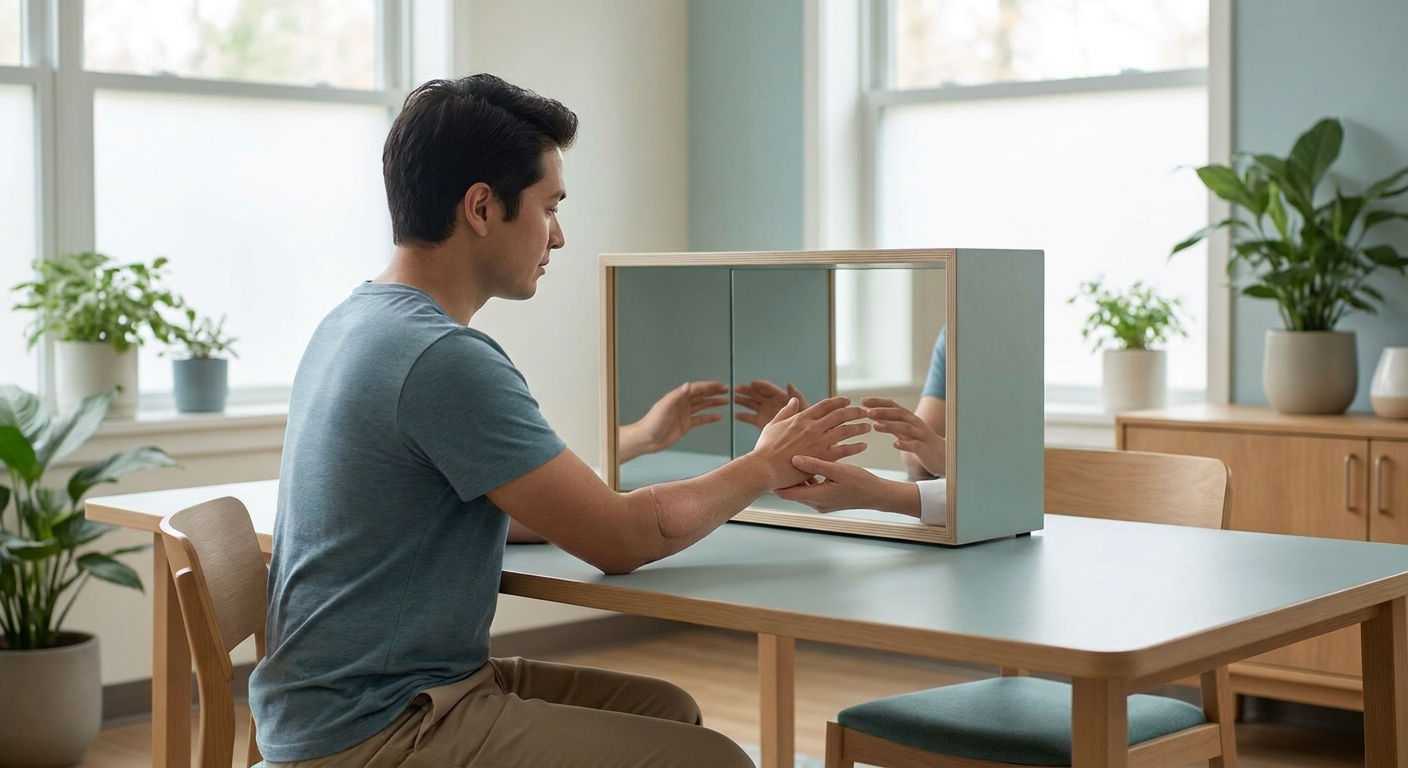
Phantom limb pain feels real because the nerve signals are real — even when the limb is gone. Treatment in 2026 combines medication, physical retraining, and interventional procedures, and most patients need more than one approach layered together.
TL;DR
- Phantom limb pain treatment works best as a layered plan: medication, mirror therapy, TENS, then interventional care.
- Mirror therapy and desensitization retrain the brain’s map of the limb and cost nothing to start at home.
- Peripheral nerve stimulation is the strongest option when medication and mirror therapy stop working after 2026 flare-ups.
- Ketamine infusion therapy is reserved for pain that resists nerve blocks and standard neuropathic medication.
- Ask about non-opioid protocols first — opioids rarely touch phantom limb pain long-term.
Why this matters
Phantom limb pain shows up in a large share of amputees within the first months after surgery, and it doesn’t fade on its own for everyone. Left untreated, it disrupts sleep, prosthetic use, and return to work.
The pain originates in the brain and spinal cord, not the missing limb, which is why rubbing or massaging the residual limb rarely helps. Effective phantom limb pain treatment in 2026 targets the nervous system directly — through retraining techniques, targeted medication, and, when needed, nerve-level procedures at a pain management practice like Hudson Pain and Spine.
What you’ll need
- A referral or evaluation from a pain management specialist, ideally within 4-8 weeks of surgery if pain persists
- A mirror box or a full-length mirror for mirror therapy sessions
- A TENS unit for at-home nerve stimulation (many patients start here before escalating)
- A current medication list, since neuropathic agents (gabapentinoids, certain antidepressants) interact with other prescriptions
- Imaging or a residual limb exam to rule out neuromas, infection, or poor prosthetic fit as separate pain drivers
- Patience for a 6-12 week trial period — most phantom limb pain protocols need that long to show a clear response
The steps
1. Rule out residual limb complications first
Phantom limb pain gets misdiagnosed when the real driver is a neuroma, bone spur, or a prosthetic socket that fits wrong. A physical exam and, when indicated, ultrasound imaging separates residual limb pain from true phantom pain before any prescription starts. Skipping this step wastes weeks on the wrong treatment.
2. Start neuropathic medication at a low dose
Gabapentin or pregabalin is the standard first-line choice, started low and titrated over 2-4 weeks to reduce the nerve misfiring that drives phantom sensations. Tricyclic antidepressants like nortriptyline are a common second option when gabapentinoids cause too much sedation. Common mistake: stopping after one week because relief feels slow — these medications take 3-4 weeks to reach full effect.
3. Begin mirror therapy sessions
Mirror therapy uses a mirror positioned to reflect the intact limb, tricking the brain into “seeing” the missing limb move normally. Sessions run 15-20 minutes, once or twice daily, for at least 4 weeks before judging results. This is the lowest-cost, lowest-risk step in any phantom limb pain treatment plan and it works best started early, not as a last resort.
4. Add TENS therapy for daily nerve stimulation
A TENS unit delivers a mild electrical current through the skin near the residual limb, interrupting pain signals before they reach the brain. Patients typically run sessions for 20-30 minutes, 2-3 times a day, adjusting intensity until they feel a tingling, not a shock. How TENS therapy helps manage chronic pain at home covers settings and safety limits in more detail. Expected outcome: a 20-30% reduction in pain intensity within 2-3 weeks for responders; non-responders should move to the next step rather than keep adjusting the device indefinitely.
5. Escalate to a diagnostic nerve block
When medication and at-home tools plateau, a diagnostic nerve block at the residual limb or spinal level identifies exactly which nerve pathway is generating the phantom signal. This step also rules out complex regional pain syndrome, which mimics phantom limb pain and needs a different protocol — see how to treat complex regional pain syndrome if swelling, skin color change, or temperature shifts accompany the pain. A positive block (pain drops 50% or more for hours) confirms the target for the next intervention.
6. Move to peripheral nerve stimulation for persistent cases
When a diagnostic block works but wears off, peripheral nerve stimulation places a thin lead near the affected nerve to deliver continuous low-level stimulation, often trialed for 5-7 days before a permanent implant is considered. This step is the strongest interventional option for phantom limb pain that survives medication and mirror therapy. Details on candidacy and the trial process are in how peripheral nerve stimulation treats chronic nerve pain. Common mistake: waiting years to try this step after medication fails, when earlier trial timing tends to produce better long-term response.
7. Reserve ketamine infusion for resistant, high-severity pain
For phantom limb pain that resists nerve blocks and stimulation, ketamine infusion therapy interrupts the NMDA receptor pathway responsible for centralized, treatment-resistant pain signals. Infusions run in a monitored clinical setting, typically as a short series rather than a single session. How ketamine infusion therapy treats resistant chronic pain walks through dosing schedules and who qualifies. This is a later-stage option, not a first move — it follows, not replaces, steps 2 through 6.
Get a phantom limb pain evaluation
Board-certified interventional pain care in Englewood, Woodland Park, and Edison, NJ.
Troubleshooting
- Mirror therapy isn’t reducing pain after 4 weeks — check mirror positioning; the reflection must fully replace the visual field where the missing limb would be, not sit off to one side.
- Gabapentin causes daytime grogginess — dosing schedule matters more than total dose; shifting the largest dose to bedtime often resolves this without lowering the total amount.
- TENS stopped working after initial relief — this is nerve accommodation; changing the electrode placement or pulse pattern usually restores effect faster than raising intensity.
- Pain spikes with prosthetic use — this often points to a socket fit issue layered on top of phantom pain, not a treatment failure; a prosthetist re-fit should happen before escalating medication.
- Insurance denies a nerve stimulation trial — prior authorization for interventional procedures is common and appealable; how to get insurance approval for pain procedures covers the documentation that speeds approval.
- Pain disrupts sleep despite medication — ask about timing adjustments before adding a second drug; sequencing existing medication correctly solves this more often than stacking new prescriptions.
Tools and resources
- A mirror box (commercial or a full-length mirror at home)
- A TENS unit rated for neuropathic pain, not just muscle soreness
- A pain diary tracking intensity, triggers, and medication timing for the first 8-12 weeks
- A pain management practice experienced in both diagnostic blocks and stimulation trials, such as Hudson Pain and Spine
- Documentation from your surgeon or prosthetist for insurance review
What to do next
Once medication and mirror therapy are underway, the next real decision point is whether to pursue a diagnostic nerve block. For a broader look at cutting opioid reliance out of the plan entirely, best non-opioid options for chronic pain management lays out the alternatives interventional pain specialists reach for first.
FAQ
What is the best phantom limb pain treatment?
The best phantom limb pain treatment combines neuropathic medication, mirror therapy, and TENS as first steps, escalating to nerve blocks or peripheral nerve stimulation if pain persists past 8-12 weeks. No single treatment works for every patient, which is why a layered plan outperforms any one approach alone.
How long does phantom limb pain last?
Phantom limb pain often improves within the first 6 months after amputation, but a significant share of patients report symptoms years later without treatment. Early intervention with mirror therapy and medication shortens the timeline for most patients.
Is phantom limb pain treatable with medication alone?
Medication alone helps some patients, but gabapentin and pregabalin typically work best paired with mirror therapy or TENS rather than used in isolation. Patients who plateau on medication alone are candidates for nerve blocks or peripheral nerve stimulation.
Does mirror therapy actually work for phantom limb pain?
Mirror therapy reduces phantom limb pain intensity for many patients when practiced consistently for at least 4 weeks, 15-20 minutes per session. It works by retraining the brain’s visual and motor map of the missing limb, not by treating the residual limb directly.
When should I see a pain specialist for phantom limb pain?
See a pain specialist if phantom limb pain hasn’t improved after 4-6 weeks of home management, or immediately if the residual limb shows swelling, color change, or new numbness. Those symptoms can signal complex regional pain syndrome, which needs a different treatment path.
Can peripheral nerve stimulation cure phantom limb pain permanently?
Peripheral nerve stimulation manages phantom limb pain rather than curing it outright, with many patients reporting sustained relief as long as the device remains active. A 5-7 day trial period determines candidacy before a permanent implant is considered.
Is ketamine infusion safe for phantom limb pain?
Ketamine infusion is administered in a monitored clinical setting with vital sign tracking, and it’s reserved for phantom limb pain that hasn’t responded to medication, mirror therapy, or nerve blocks. It is not a first-line treatment.
Does insurance cover phantom limb pain treatment?
Insurance typically covers medication, TENS units, and diagnostic nerve blocks with standard documentation, while stimulation trials and ketamine infusion often require prior authorization. Working with a pain management practice familiar with the appeals process speeds this along.
One last thing
Patients who start mirror therapy in the first 4 weeks after amputation report faster pain reduction than those who wait until pain becomes chronic — timing beats intensity when it comes to phantom limb pain treatment. If you’re already past that window, that doesn’t rule mirror therapy out; it just means pairing it with medication or TENS from day one instead of trying it alone.
Related guides
- How to treat complex regional pain syndrome (CRPS)
- Best non-opioid options for chronic pain management
About the Medical Reviewer
Dr. Saurabh Dang is a double board-certified interventional pain management specialist serving Central and Northern New Jersey. He combines clinical expertise with a patient-centered approach to help patients find lasting relief from chronic pain conditions.
Read Full Bio →Seeking Treatment for Nerve Block Injections?
Dr. Dang and the team at Hudson Pain and Spine offer specialized care and advanced interventional treatments.
Ready to Find Relief from Pain?
Schedule your consultation with Dr. Saurabh Dang at our Englewood office.
Serving patients across Central and Northern New Jersey — Bergen, Passaic, and Middlesex counties.