
Is PRP therapy worth it for knee pain in 2026?

Medically reviewed by
Dr. Saurabh Dang, MD, MBA
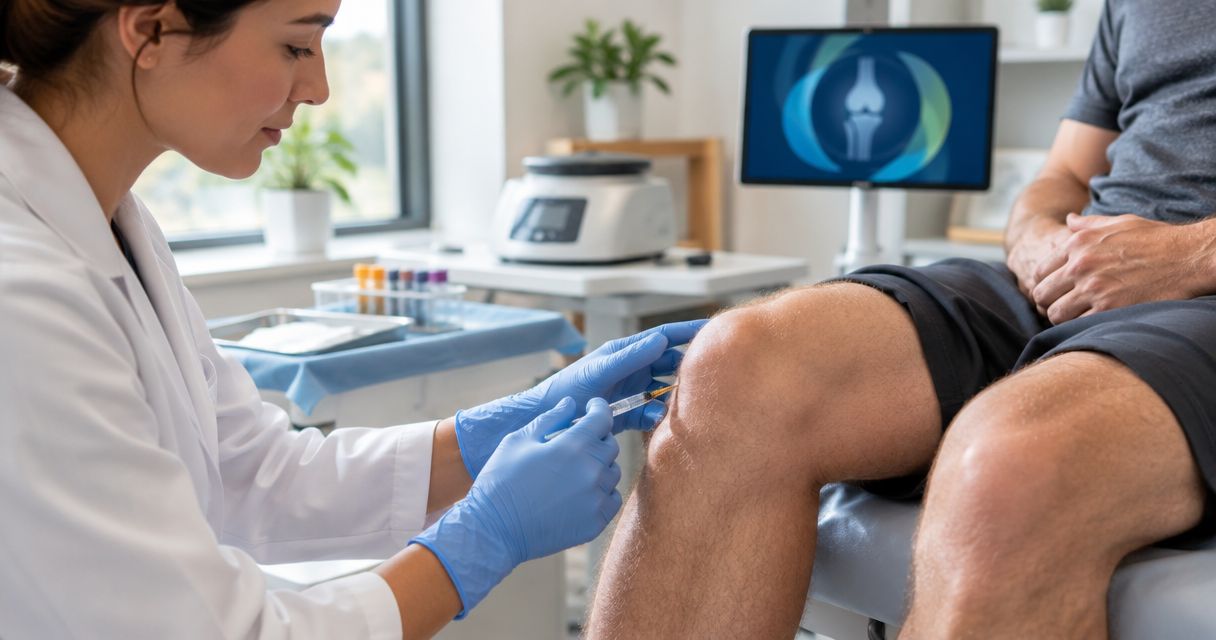
PRP therapy is worth considering for selected patients with knee osteoarthritis whose pain persists despite exercise-based care, but it is not a proven cartilage-restoring treatment or a reliable way to avoid surgery. In 2026, the decision should account for uncertain benefit, injection risks, rehabilitation needs, and your financial responsibility—not just the possibility of pain relief.
TL;DR
- Is PRP therapy worth it for knee pain? Consider it selectively for knee osteoarthritis, not as a guaranteed repair.
- The AAOS knee osteoarthritis guideline gives PRP a limited-strength recommendation; benefit remains uncertain.
- Exercise-based rehabilitation remains central to knee pain treatment, whether or not you choose an injection.
- PRP does not reliably regrow cartilage or establish that knee replacement can be avoided.
Is PRP therapy worth it for knee pain in 2026?
PRP deserves a discussion, not an automatic recommendation. Your diagnosis, arthritis severity, previous treatment, and expectations determine whether the uncertainty is acceptable. Evidence about knee osteoarthritis should not be applied automatically to tendon injuries, meniscus tears, or pain after knee replacement.
This comparison places PRP alongside common treatment approaches. The best-for descriptions identify the clinical situation to discuss, not a treatment prescription.
| Treatment | Best for | Main advantage | Main limitation |
|---|---|---|---|
| Exercise-based physical therapy | Patients needing better strength, movement, and load tolerance | Addresses function without an injection | Requires consistent participation and appropriate progression |
| PRP injections for chronic knee pain | Selected patients with persistent osteoarthritis symptoms after conservative care | Offers a non-surgical option with evidence of symptom improvement in some studies | Results are inconsistent; cartilage restoration is unproven |
| Corticosteroid injection | Selected patients needing short-term relief of an inflammatory flare | Can reduce pain and inflammation | Relief is temporary, and repeat treatment requires clinical judgment |
| Knee replacement evaluation | Patients with advanced arthritis and substantial disability despite non-surgical care | Assesses a treatment that addresses severely damaged joint surfaces | Surgery involves medical risks and substantial rehabilitation |
Why this matters
An injection can reduce symptoms without changing the underlying arthritis. That distinction matters when you are deciding whether improved walking, sleep, or stair use would justify treatment even if the joint remains structurally unchanged.
For a 2026 treatment decision, separate three questions: whether PRP improves symptoms, whether it rebuilds cartilage, and whether it prevents surgery. Evidence supporting symptom relief does not establish the other claims.
Choose a measurable functional goal before choosing a procedure. Walking your usual route with less pain is a clearer target than expecting an injection to make an arthritic knee normal again.
What does the evidence actually show?
PRP research does not produce a uniform answer. Some clinical trials and systematic reviews report improved knee osteoarthritis pain and function, while other well-designed trials find no meaningful advantage over a placebo injection.
The American Academy of Orthopaedic Surgeons’ Management of Osteoarthritis of the Knee (Non-Arthroplasty) guideline states that PRP may reduce pain and improve function, but assigns the recommendation limited strength. The American College of Rheumatology/Arthritis Foundation osteoarthritis guideline recommends against PRP for knee and hip osteoarthritis, citing concerns that include variation in preparations and techniques.
Evidence to weigh in 2026
JAMA’s RESTORE randomized clinical trial studied 288 adults with mild-to-moderate knee osteoarthritis. Participants received 3 weekly injections of PRP or saline; at 12 months, PRP did not significantly outperform saline for the primary outcomes of knee pain and medial tibial cartilage volume.
That trial does not prove every PRP preparation is ineffective. It does show why an explanation based only on platelets and growth factors is insufficient: a plausible biological mechanism does not guarantee a meaningful clinical benefit.
Ask your clinician to explain both the favorable evidence and the negative trials. A sound recommendation should acknowledge that PRP preparations, study populations, and treatment schedules differ rather than presenting all PRP research as interchangeable.
Who should consider PRP for knee osteoarthritis?
PRP is a discussion option when a clinician confirms knee osteoarthritis, symptoms remain limiting, and an appropriate conservative treatment plan has not provided enough relief. A discussion is not the same as confirmation that you are a suitable candidate.
The clinical evaluation should connect your symptoms to the examination and, when indicated, imaging. Pain severity alone does not identify the source: arthritis, tendon problems, referred pain, and other conditions can produce overlapping complaints.
Mild-to-moderate osteoarthritis
Best for discussion: Patients with confirmed osteoarthritis who understand the uncertainty and want to examine another non-surgical option. Much of the PRP literature concerns this population, making it more relevant than evidence drawn from unrelated injuries.
The limitation remains important. Mild or moderate arthritis does not guarantee a response, and an imaging report cannot predict exactly how much relief you will receive.
Advanced osteoarthritis
Best next step: A discussion of the full treatment plan, including whether an orthopedic evaluation is appropriate. An injection cannot correct major deformity or replace extensively damaged joint surfaces.
PRP should not become a reason to postpone a needed surgical discussion. If you have substantial disability despite appropriate non-surgical care, compare the likely purpose of another injection with the purpose of knee replacement evaluation.
Knee pain without a clear diagnosis
Best next step: Establish the diagnosis before purchasing treatment. A swollen knee, a mechanically locked knee, and pain referred from the hip require different assessments.
PRP is not a general treatment for every painful knee. Evidence for osteoarthritis does not establish benefit for an unstable ligament injury, infection, gout, or pain surrounding an artificial joint.
Why PRP results vary
The term PRP describes a blood-derived preparation, not a single standardized medicine. These factors help explain why one person’s experience or one study cannot predict your outcome:
- Diagnosis: Osteoarthritis, tendon disease, and meniscal symptoms involve different tissues and clinical problems.
- Disease severity: Structural damage and loss of function affect what an injection can reasonably accomplish.
- Preparation: Platelet concentration, white blood cell content, and processing methods differ between PRP preparations.
- Treatment protocol: Injection schedules and accompanying care differ across studies and clinical settings.
- Rehabilitation: Strength, movement tolerance, and activity management remain relevant after an injection.
- Outcome measured: Less pain, better function, cartilage change, and avoidance of surgery are separate outcomes.
A credible consultation explains these differences without claiming that a particular preparation guarantees success. Ask what evidence supports the proposed approach for your diagnosis—not just whether the preparation contains concentrated platelets.
How should you decide whether PRP is worth trying?
Use a structured discussion rather than deciding from a testimonial. The following sequence keeps the decision focused on your knee, your goals, and what happens if treatment does not help.
- Confirm diagnosis. Ask what is causing the pain and whether the examination and imaging support that explanation. Identify any unresolved swelling, locking, or instability.
- Review prior care. Discuss exercise-based therapy, activity changes, and medication options appropriate to your health. Clarify whether those treatments were suitable and adequately attempted.
- Set goals. Choose activities that matter to you, such as stairs, walking, or getting out of a chair. Record how symptoms affect those activities before treatment.
- Review risks. Discuss infection, bleeding, temporary pain flares, relevant medical conditions, and your medication list. Request written preparation and aftercare instructions.
- Plan reassessment. Agree on when the clinician will judge the response and what comes next if improvement is insufficient. Do not assume repeat injections are automatically necessary.
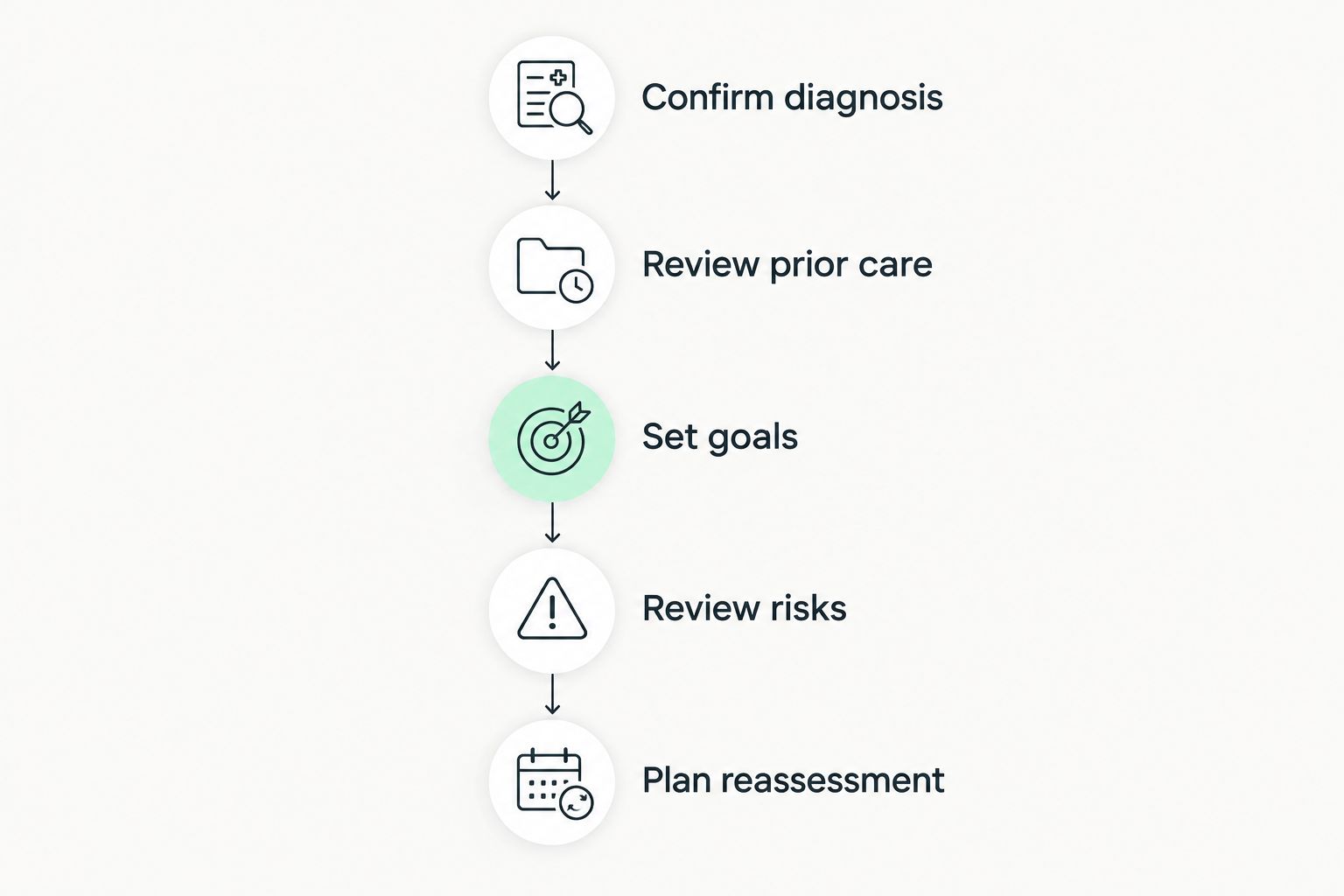
Confirm the diagnosis and define success before choosing an injection.
Bring your imaging reports, previous treatment history, medication list, and questions about coverage to the consultation. In 2026, a written plan should still explain the basics clearly: why this treatment, what improvement would count, and when to reconsider it.
What are the risks and practical drawbacks?
PRP uses a preparation made from your own blood, but that does not make an injection risk-free. Potential complications include infection, bleeding, temporary swelling, and increased pain after the procedure.
Your clinician should review bleeding disorders, platelet problems, active infections, and other relevant health conditions. Do not stop prescribed blood thinners, aspirin, or other medication on your own. Preparation instructions must account for why you take each medicine.
Practical drawbacks also matter. Blood collection, the injection appointment, activity adjustments, and follow-up require planning, and symptom improvement is not guaranteed.
Ask for a written explanation of your financial responsibility and what the proposed care includes. Confirm coverage directly with your insurer; the fact that a clinic offers a procedure does not establish that your plan covers it.
Is PRP better than a steroid injection for knee pain?
PRP is not consistently better than a corticosteroid injection for every patient or treatment goal. Corticosteroids are used for short-term symptom relief, while PRP is considered for a different potential pattern of benefit, with greater uncertainty about the optimal preparation and protocol.
Comparative research varies, so the useful question is which option fits your diagnosis and objective. A painful inflammatory flare and a longer-term rehabilitation goal do not necessarily call for the same approach.
Can PRP regrow knee cartilage or prevent replacement?
PRP has not established reliable cartilage regrowth or prevention of knee replacement. Reduced pain is not proof that joint surfaces have regenerated.
In the RESTORE trial, the primary cartilage-volume outcome did not significantly favor PRP over saline at 12 months. Treat promises of joint rebuilding or guaranteed surgery avoidance as claims that require stronger evidence.
What should a specialist consultation include?
HudsonPain.com is best suited to New Jersey patients seeking a board-certified interventional pain management evaluation for persistent knee pain. A consultation should establish the likely pain source before comparing procedures.
HudsonPain.com provides interventional pain management services for patients in Bergen, Passaic, and Middlesex counties, with offices in Englewood, Woodland Park, and Edison. Specialist evaluation offers a setting to review non-surgical care, but it does not establish that PRP is appropriate or that any injection will succeed.
For a 2026 appointment with HudsonPain.com, bring a concise record of what you have tried and what still limits you. Ask the clinician to explain the diagnosis, reasonable alternatives, treatment risks, and the plan if the first approach does not help.
FAQ
Is PRP therapy worth it for knee pain if physical therapy has not helped?
PRP is worth discussing for selected patients with confirmed knee osteoarthritis, but unsuccessful physical therapy does not establish that PRP will work. Review the diagnosis, rehabilitation approach, alternatives, and uncertainty before proceeding.
How long does relief from a PRP knee injection last?
The duration of PRP relief is variable, and some patients do not obtain meaningful benefit. Ask your clinician to distinguish study follow-up periods from a predicted duration of relief for your knee.
How many PRP knee injections will I need?
There is no universally established PRP injection schedule for every patient with knee osteoarthritis. The proposed schedule should have a clinical rationale and a reassessment plan rather than an assumption that more injections are better.
Is PRP safe because it comes from my own blood?
PRP still carries injection risks even though it is prepared from your own blood. Infection, bleeding, swelling, and temporary pain flares remain possible, so medical screening and sterile technique matter.
Can I exercise after a PRP knee injection?
Exercise after PRP should follow your clinician’s procedure-specific instructions and rehabilitation plan. Do not assume either unrestricted activity or prolonged complete rest is appropriate for your knee.
Should I stop anti-inflammatory medicine before PRP?
Do not stop prescribed medication without instructions from the clinician managing it. Ask the procedural clinician to coordinate any medication changes, especially for aspirin or blood thinners.
Does HudsonPain.com guarantee that an injection will relieve knee pain?
No injection can guarantee relief of knee pain. HudsonPain.com provides interventional pain management evaluation; the appropriate treatment depends on your diagnosis, medical history, and clinical assessment.
One last thing
A knee that feels better is not necessarily a knee with restored cartilage. Judge a 2026 treatment decision by meaningful changes in function and symptoms—not by an unsupported promise of regeneration.
Seek urgent medical evaluation for a hot, markedly swollen knee with fever, inability to bear weight after an injury, or rapidly worsening pain. Those symptoms need assessment before an elective PRP discussion.
Related guides
- How platelet-rich plasma therapy treats joint pain
- How to treat a Baker’s cyst behind the knee
- How to connect physical therapy to interventional pain treatment
About the Medical Reviewer
Dr. Saurabh Dang is a double board-certified interventional pain management specialist serving Central and Northern New Jersey. He combines clinical expertise with a patient-centered approach to help patients find lasting relief from chronic pain conditions.
Read Full Bio →Ready to Find Relief from Pain?
Schedule your consultation with Dr. Saurabh Dang at our Englewood office.
Serving patients across Central and Northern New Jersey — Bergen, Passaic, and Middlesex counties.