Pain Management for Estheticians: 2026 Guide & Verdicts

Medically reviewed by
Dr. Saurabh Dang, MD, MBA
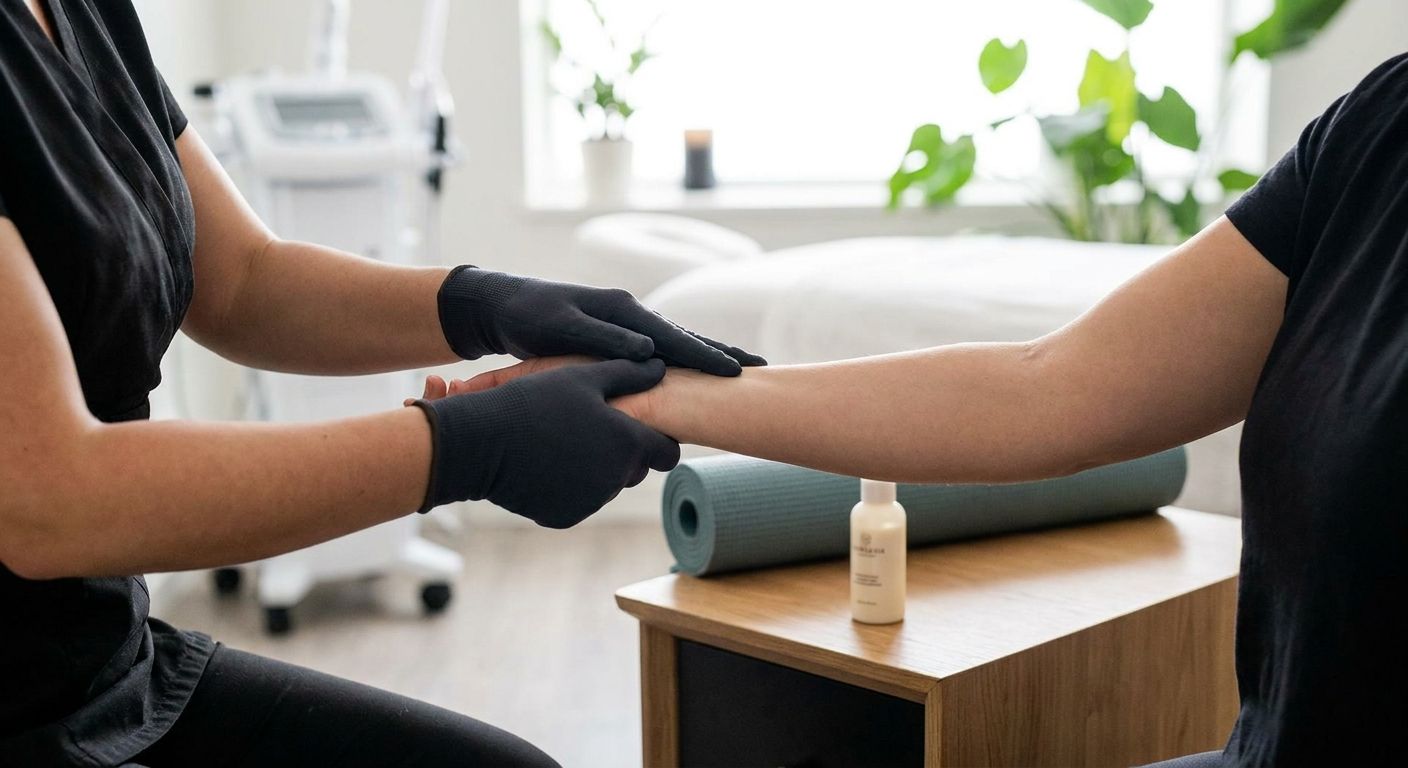
Estheticians and nail technicians spend entire shifts bent over hands, wrists, and necks in fixed positions — and the repetitive motion of filing, waxing, and extractions catches up with almost everyone in the trade eventually. This guide breaks down what actually helps, what to skip, and where to get an accurate diagnosis in New Jersey.
TL;DR
- Carpal tunnel and De Quervain’s tenosynovitis are the two most common wrist diagnoses among nail technicians and estheticians — both respond to targeted injections before surgery is ever discussed.
- Pain management for estheticians works best when it starts with an accurate diagnosis, not a generic wrist brace from a drugstore.
- Trigger point injections address the neck and shoulder tension that builds from hours of forward-leaning posture — Buy this route before chronic tightness sets in.
- Hudson Pain and Spine treats occupational repetitive strain injuries at offices in Englewood, Woodland Park, and Edison, NJ.
Why this matters
A wrist injury doesn’t sideline an office worker the way it sidelines a nail technician. Your hands are the tool — filing, buffing, extracting, and holding a wax spatula all load the same tendons and nerves hundreds of times a shift.
Left untreated, early tingling in the thumb and index finger from carpal tunnel syndrome can progress to grip weakness that ends a career. The fix is rarely surgery on day one — most cases respond to splinting, targeted corticosteroid injection, or ultrasound-guided nerve treatment first.
Board-certified, fellowship-trained interventional pain specialists diagnose these conditions with nerve conduction studies and imaging rather than guesswork, which matters when your income depends on your hands working correctly in 2026 and beyond.
Who this is for
This guide is written for licensed estheticians, nail technicians, and salon-based skincare providers dealing with thumb, wrist, forearm, neck, or lower back pain tied directly to their work — whether that’s a manicure table, a facial chair, or standing at a waxing station for 8-hour shifts. If you’ve noticed numbness in your fingers by mid-shift, a dull ache between your shoulder blades by 4 p.m., or pain that flares every time you grip a nail file, the criteria below apply to you.
What to look for in pain management for estheticians
A specialist who treats occupational repetitive strain, not just “general pain”
Generic orthopedic visits often stop at “rest and ice.” What you need is a provider who understands that resting for two weeks isn’t realistic when your paycheck depends on working — someone who can build a treatment plan around continued (modified) work.
Diagnostic imaging before treatment, not after
An accurate read on whether you’re dealing with tendon inflammation, a compressed nerve, or a joint issue changes the entire treatment path. Ultrasound-guided injections and nerve conduction testing take roughly 30 minutes and remove the guesswork that leads to months of the wrong treatment.
Non-surgical options tried first
Corticosteroid injections, splinting, and activity modification resolve a large share of early-stage wrist and thumb cases. Surgery should be the fallback, not the starting point, for most estheticians and nail techs under 2026 treatment protocols.
Scheduling that fits salon hours
Salons don’t pause for appointments during standard 9-to-5 windows. A pain management practice offering early, evening, or weekend slots across multiple counties matters more to this audience than it does to a typical office worker.
Transparent costs, especially without insurance
Many estheticians and nail technicians are independent contractors or booth renters without employer-sponsored insurance. Knowing the cost of pain management procedures without insurance before booking avoids a surprise bill.
Return-to-work guidance specific to fine motor work
A generic “avoid repetitive motion” instruction is useless to someone whose entire job is repetitive motion. Look for a provider who gives concrete guidance — grip modifications, tool adjustments, break intervals — not a blanket work restriction.
Get your wrist or neck pain diagnosed
Board-certified pain specialists in Englewood, Woodland Park, and Edison, NJ.
Top picks for this audience
Carpal tunnel treatment — the most common diagnosis. Thumb and index finger numbness that worsens through a shift is the classic sign of median nerve compression. Splinting plus a corticosteroid injection resolves symptoms for many patients within 6 to 8 weeks, and nerve conduction testing confirms severity before anyone discusses surgery. Verdict: Buy — this is the first stop for any nail technician with morning numbness.
De Quervain’s tenosynovitis — the thumb-and-wrist specific pick. Filing and buffing load the tendons at the base of the thumb directly, and this condition shows up as sharp pain when gripping a nail file or twisting a wrist. A targeted injection for De Quervain’s tenosynovitis often provides relief for 3 to 6 months while the tendon sheath calms down. Verdict: Buy for anyone with pain specifically at the thumb-side of the wrist.
Trigger point injections — the neck-and-shoulder pick. Hours leaning over a client’s face or hands builds tight, painful knots across the upper back and shoulders that stretching alone doesn’t release. Trigger point injections target those specific muscle bands directly rather than treating the whole area generically. Verdict: Consider this once posture correction and stretching stop working on their own.
The hairstylist-and-barber comparison — the closest occupational parallel. Hairstylists and barbers deal with nearly identical postural loads — arms raised, wrists flexed, standing for long stretches — and the pain management approach for hairstylists and barbers maps closely onto esthetician and nail tech cases. Verdict: Consider reading this if your pain pattern doesn’t match a clean wrist diagnosis.
The massage therapist comparison — the hand-strain benchmark. Massage therapists load their hands and wrists even more aggressively than nail technicians, and the pain management guide for massage therapists with hand and wrist strain covers grip-strength preservation strategies worth adapting. Verdict: Consider for cross-training on ergonomic fixes even if you’re not a massage therapist.
What to avoid
- Drugstore wrist braces as a standalone fix. They reduce flare-ups but don’t address an underlying nerve compression or tendon inflammation — wearing one for months while symptoms worsen delays real treatment.
- Jumping straight to surgical consultation. Most early carpal tunnel and De Quervain’s cases respond to injections and activity modification first; surgery carries downtime a booth-renting professional can’t always absorb.
- Ignoring numbness because “it goes away by morning.” Intermittent numbness that resolves overnight is often the earliest, most treatable stage — waiting until it’s constant means a longer recovery.
Verdict comparison
| Condition | Primary symptom | Typical first-line treatment | Verdict |
|---|---|---|---|
| Carpal tunnel syndrome | Thumb/finger numbness | Splint + corticosteroid injection | Buy |
| De Quervain’s tenosynovitis | Thumb-side wrist pain | Targeted injection | Buy |
| Neck/shoulder trigger points | Upper back knots | Trigger point injection | Consider |
| Chronic, unaddressed wrist pain | Constant numbness/weakness | Surgical referral | Skip until non-surgical options are tried |
FAQ
What is the best pain management approach for estheticians with wrist pain?
An accurate diagnosis first — nerve conduction testing or ultrasound imaging to confirm whether it’s carpal tunnel, De Quervain’s tenosynovitis, or tendonitis — followed by splinting or a targeted injection. Surgery is a later option, not a first step, for most cases.
Can nail technicians get carpal tunnel syndrome from filing nails?
Yes. Repetitive gripping and wrist flexion from filing, buffing, and extractions are well-documented contributors to median nerve compression. Splinting and corticosteroid injections resolve many early cases within 6 to 8 weeks.
Is a corticosteroid injection better than surgery for De Quervain’s tenosynovitis?
For early to moderate cases, yes — an injection often provides 3 to 6 months of relief without downtime. Surgery is reserved for cases that don’t respond to injections or activity modification.
How much do pain management procedures cost without insurance in NJ?
Costs vary by procedure type and location. Review the breakdown on pricing without insurance before booking so there are no surprises at checkout.
How long does it take to recover from a wrist injection?
Most patients resume normal hand use within a few days, though full symptom relief from a corticosteroid injection can take one to two weeks to peak.
Do estheticians need a specialist or a general orthopedist for wrist pain?
An interventional pain specialist who performs ultrasound-guided injections and nerve testing gets to an accurate diagnosis faster than a general practice visit, and offers non-surgical options as the first line of treatment.
What causes neck and shoulder pain in nail technicians and estheticians?
Sustained forward-leaning posture over a manicure table or facial chair for hours builds muscle tension and trigger points across the upper back and shoulders. Trigger point injections target those specific bands directly.
Where can estheticians in NJ find a pain specialist for occupational injuries?
Hudson Pain and Spine treats occupational repetitive strain and nerve injuries from offices in Englewood, Woodland Park, and Edison, NJ, covering Bergen, Passaic, and Middlesex counties.
One last thing
The thumb and wrist take the brunt of this job, but the earliest sign most technicians ignore is neck stiffness — not hand pain. By the time hand symptoms show up, the postural strain has usually been building for months. Treating the neck and shoulder tension early, alongside any wrist symptoms, is what actually keeps a career going past year five.
Hudson Pain and Spine’s approach to pain management for estheticians centers on getting an accurate diagnosis before recommending any procedure, whether that’s a nerve conduction study for numbness or a targeted injection for tendon pain. The goal in 2026 is the same as it’s always been for this line of work: keep your hands functional without unnecessary downtime.
About the Medical Reviewer
Dr. Saurabh Dang is a double board-certified interventional pain management specialist serving Central and Northern New Jersey. He combines clinical expertise with a patient-centered approach to help patients find lasting relief from chronic pain conditions.
Read Full Bio →Ready to Find Relief from Pain?
Schedule your consultation with Dr. Saurabh Dang at our Englewood office.
Serving patients across Central and Northern New Jersey — Bergen, Passaic, and Middlesex counties.