
Pain Management for Gamers Wrist Pain (2026 Guide)

Medically reviewed by
Dr. Saurabh Dang, MD, MBA
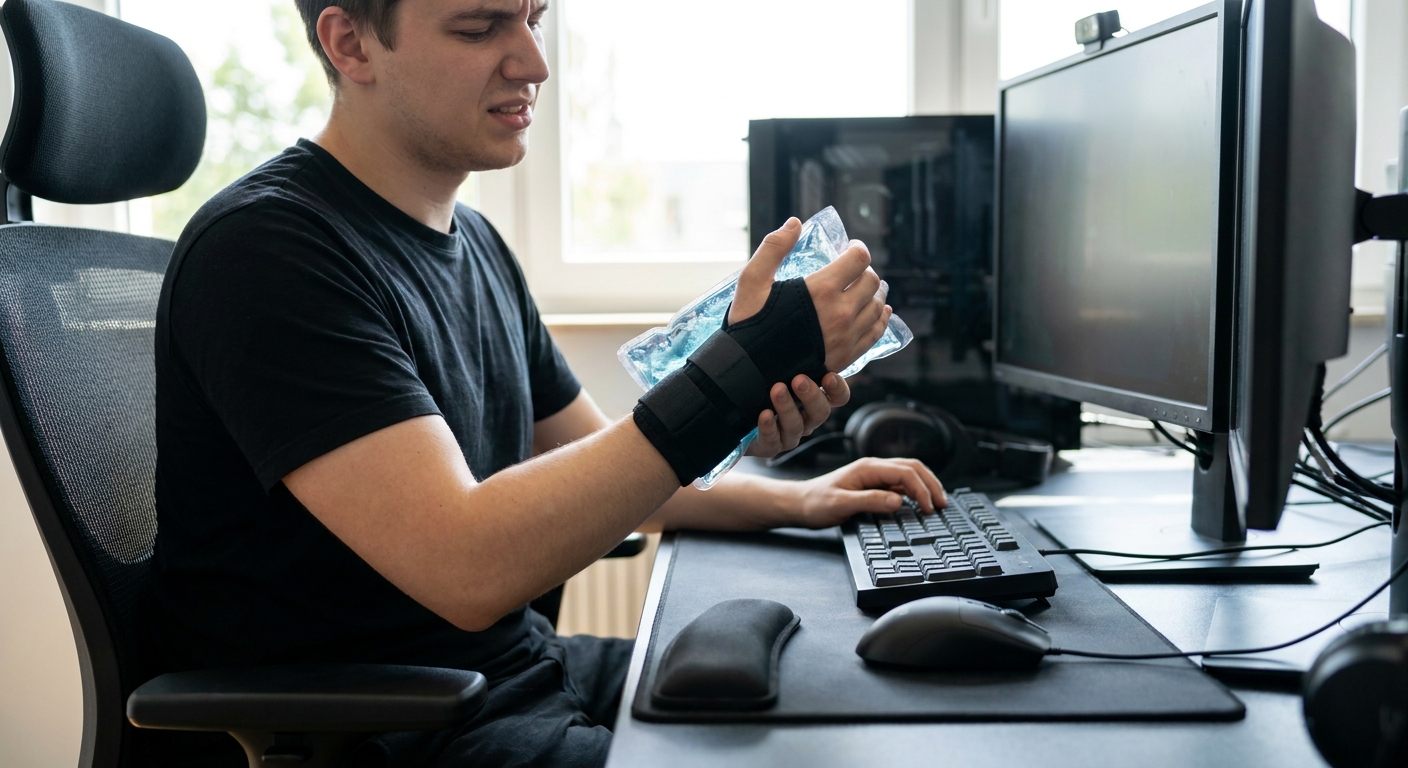
Wrist and hand pain that flares after long ranked sessions or scrim blocks is not something to stretch away and ignore. This guide breaks down what actually helps competitive and casual gamers with wrist pain, what a pain management specialist checks first, and when an injection makes more sense than another week of wrist braces.
TL;DR
- Pain management for gamers wrist pain starts with a nerve exam, not a brace order.
- Carpal tunnel syndrome, de Quervain’s tenosynovitis, and cubital tunnel syndrome are the three most common wrist diagnoses in high-hour players in 2026.
- Corticosteroid injections typically hold symptoms down for 3 to 6 months when splinting alone has failed.
- Ignoring numbness or tingling past 6 weeks risks permanent nerve damage, not just soreness.
Why this matters
Gamers and esports players put thousands of repetitive micro-movements through the wrist and thumb every session, and that load doesn’t stop at the ranked queue. Streamers, competitive players, and even casual mobile gamers who play 3-4 hours a day put the same tendons and nerves under stress that assembly-line workers and musicians deal with, just at a different rhythm.
The difference between a sore wrist that resolves on its own and a nerve injury that needs treatment is usually six weeks of symptoms and whether numbness or tingling shows up. A carpal tunnel syndrome treatment plan looks nothing like a tendinitis plan, and guessing wrong wastes months.
Who this is for
This guide is for competitive gamers, streamers, and high-volume casual players in Bergen, Passaic, and Middlesex counties who feel wrist, thumb, or forearm pain that doesn’t clear after a few days off the keyboard or controller. It’s also for parents of youth esports competitors and coaches managing a roster where a starter is playing through pain instead of reporting it. If your wrist pain includes numbness, tingling, or a weak grip on your mouse or controller, this applies directly to you, and 2026 is the year to get it checked instead of pushing through another season.
What to look for in pain management for gamers with wrist pain
Diagnosis before bracing
Wrist pain in gamers usually falls into one of three buckets: carpal tunnel syndrome, de Quervain’s tenosynovitis, or cubital tunnel syndrome affecting the ulnar nerve near the elbow and pinky side of the hand. A specialist who examines grip strength, nerve response, and thumb range of motion before recommending a brace catches the right diagnosis faster than a generic “rest and ice” answer. Treating the wrong structure for six weeks is a common reason players come back worse.
Non-surgical options come first
Most gaming-related wrist injuries respond to splinting, activity modification, and anti-inflammatory management before anyone discusses surgery. A pain management approach that starts conservative and escalates only when needed protects your season and your hands. Surgery should be a last resort discussion, not a first appointment recommendation.
A return-to-play timeline that fits your schedule
Competitive players need a realistic answer to “when can I scrim again,” not a vague “take it easy.” A good treatment plan states expected recovery windows in weeks, not just “it depends,” so you can plan around tournaments and practice blocks in 2026.
Ergonomic and grip coaching
Treating the flare-up without fixing the setup that caused it guarantees a repeat visit. Mouse grip, keyboard angle, palm rest height, and even controller stick tension all factor into recovery and prevention. Ask whether the specialist addresses setup changes alongside medical treatment.
Insurance and cost clarity
Imaging, nerve conduction studies, and injections carry different costs depending on your plan. A practice that can answer coverage questions upfront, or point you to a breakdown of pain management procedure costs, saves you a surprise bill mid-treatment.
Credentials that match the complexity
Wrist and nerve pain diagnosis benefits from a double board-certified, fellowship-trained pain management physician rather than a general urgent care visit. Nerve issues in particular need someone who reads electromyography and nerve conduction results regularly, not occasionally.
Top picks for treating gamer wrist pain
Carpal Tunnel Syndrome Treatment — the median-nerve culprit
Carpal tunnel syndrome is the most common wrist diagnosis among high-hour gamers, caused by compression of the median nerve as it passes through the carpal tunnel. Symptoms include numbness in the thumb, index, and middle fingers, often worse at night or after long sessions. A carpal tunnel syndrome treatment plan usually starts with a 4 to 6 week night-splinting trial before a corticosteroid injection is considered. See a specialist now if numbness has lasted more than six weeks.
De Quervain’s Tenosynovitis Treatment — the thumb-scroller’s flare-up
This one hits the tendons on the thumb side of the wrist and shows up as sharp pain when gripping a controller or flicking a mouse quickly. It’s especially common in mobile and fighting-game players who rely on rapid thumb inputs. The de Quervain’s tenosynovitis treatment path typically combines a thumb spica splint with activity modification for 4 to 6 weeks before an injection enters the conversation. Try conservative care first, but don’t wait past a month if pain is sharp and localized.
Cubital Tunnel Syndrome Treatment — the ulnar nerve wildcard
Elbow-and-pinky-side numbness that shows up after long sessions often traces back to the ulnar nerve at the elbow, not the wrist itself. Players who rest their elbow on a hard desk edge for hours are the classic case. A cubital tunnel syndrome evaluation checks nerve conduction before recommending elbow padding, activity changes, or, in persistent cases, a nerve block. Rule this out before assuming it’s a wrist-only problem if pinky and ring finger numbness is present.
Get your wrist pain diagnosed
Board-certified evaluation for gamer wrist and nerve pain across Bergen, Passaic, and Middlesex counties.
What to avoid
- Wrist braces as a permanent fix. A splint controls symptoms during a flare-up; it doesn’t correct grip mechanics or setup issues that caused the injury. Wearing one indefinitely without addressing the cause just delays the real conversation.
- Generic TENS units without a diagnosis. At-home TENS therapy can help manage chronic pain once you know what you’re treating, but using it to mask undiagnosed numbness or tingling can hide a worsening nerve injury.
- Pushing through numbness because a tournament is close. Numbness that persists during and after play is a nerve signal, not a soreness signal. Playing through it for one more bracket risks a longer recovery after the season ends.
Verdict comparison
| Condition | Common Cause | First-Line Treatment | Typical Timeline | Verdict |
|---|---|---|---|---|
| Carpal tunnel syndrome | Median nerve compression at the wrist | Night splinting, activity modification | 4-6 weeks before injection discussion | See a specialist now |
| De Quervain’s tenosynovitis | Thumb tendon irritation from rapid inputs | Thumb spica splint, NSAIDs | 4-6 weeks | Try conservative care first |
| Cubital tunnel syndrome | Ulnar nerve compression at the elbow | Elbow padding, posture changes | Varies by nerve conduction findings | Rule out before wrist-only diagnosis |
FAQ
What’s the best pain management for gamers with wrist pain?
The best approach starts with a diagnosis, not a generic brace. Carpal tunnel syndrome, de Quervain’s tenosynovitis, and cubital tunnel syndrome each need a different treatment plan, and Hudson Pain and Spine evaluates which one you have before recommending splinting, injections, or ergonomic changes.
Is wrist pain from gaming the same as carpal tunnel syndrome?
Not always. Carpal tunnel syndrome is one common cause, but de Quervain’s tenosynovitis (thumb-side tendon pain) and cubital tunnel syndrome (ulnar nerve pain near the elbow and pinky) are just as common in gamers in 2026.
How long does gamer wrist pain take to heal?
Mild cases treated with splinting and activity changes often improve in 4 to 6 weeks. If symptoms persist past that window, a corticosteroid injection or further nerve testing is usually the next step.
Do esports players need surgery for wrist pain?
Surgery is rarely the first step. Most gaming-related wrist and nerve conditions respond to conservative care and injections; surgery is reserved for cases that don’t improve after non-surgical treatment has been fully tried.
When should a gamer see a pain management specialist for wrist pain?
See a specialist if numbness, tingling, or weak grip lasts more than 6 weeks, or if pain interferes with practice and tournament schedules. Waiting longer increases the risk of lasting nerve damage.
Can ergonomic setup changes fix gaming wrist pain on their own?
Ergonomic changes help prevent recurrence but rarely reverse an existing nerve or tendon injury on their own. They work best paired with medical treatment, not as a standalone fix once symptoms are already present.
Are corticosteroid injections safe for competitive gamers?
Yes, when used appropriately after conservative care hasn’t resolved symptoms. Corticosteroid injections typically provide 3 to 6 months of relief and allow players to return to practice sooner than surgery would.
What’s the difference between wrist tendinitis and a pinched nerve in gamers?
Tendinitis causes pain and stiffness with movement, while a pinched nerve causes numbness, tingling, or weakness that can radiate up the arm. The distinction matters because treatment paths differ significantly.
One last thing
The detail most players miss: pinky-and-ring-finger numbness almost never comes from the wrist at all, it comes from the elbow. Treating that as a wrist problem for weeks is the single most common misdirected treatment plan among gamers evaluated at Hudson Pain and Spine in 2026, and it’s exactly why a nerve exam before bracing matters more than any specific brand of splint.
Related guides
- Pinched nerve treatment for arm numbness and tingling
- Pain management for musicians with repetitive strain injuries
About the Medical Reviewer
Dr. Saurabh Dang is a double board-certified interventional pain management specialist serving Central and Northern New Jersey. He combines clinical expertise with a patient-centered approach to help patients find lasting relief from chronic pain conditions.
Read Full Bio →Seeking Treatment for Nerve Block Injections?
Dr. Dang and the team at Hudson Pain and Spine offer specialized care and advanced interventional treatments.
Ready to Find Relief from Pain?
Schedule your consultation with Dr. Saurabh Dang at our Englewood office.
Serving patients across Central and Northern New Jersey — Bergen, Passaic, and Middlesex counties.