
Pain Management for Swimmers with Shoulder Pain (2026)

Medically reviewed by
Dr. Saurabh Dang, MD, MBA
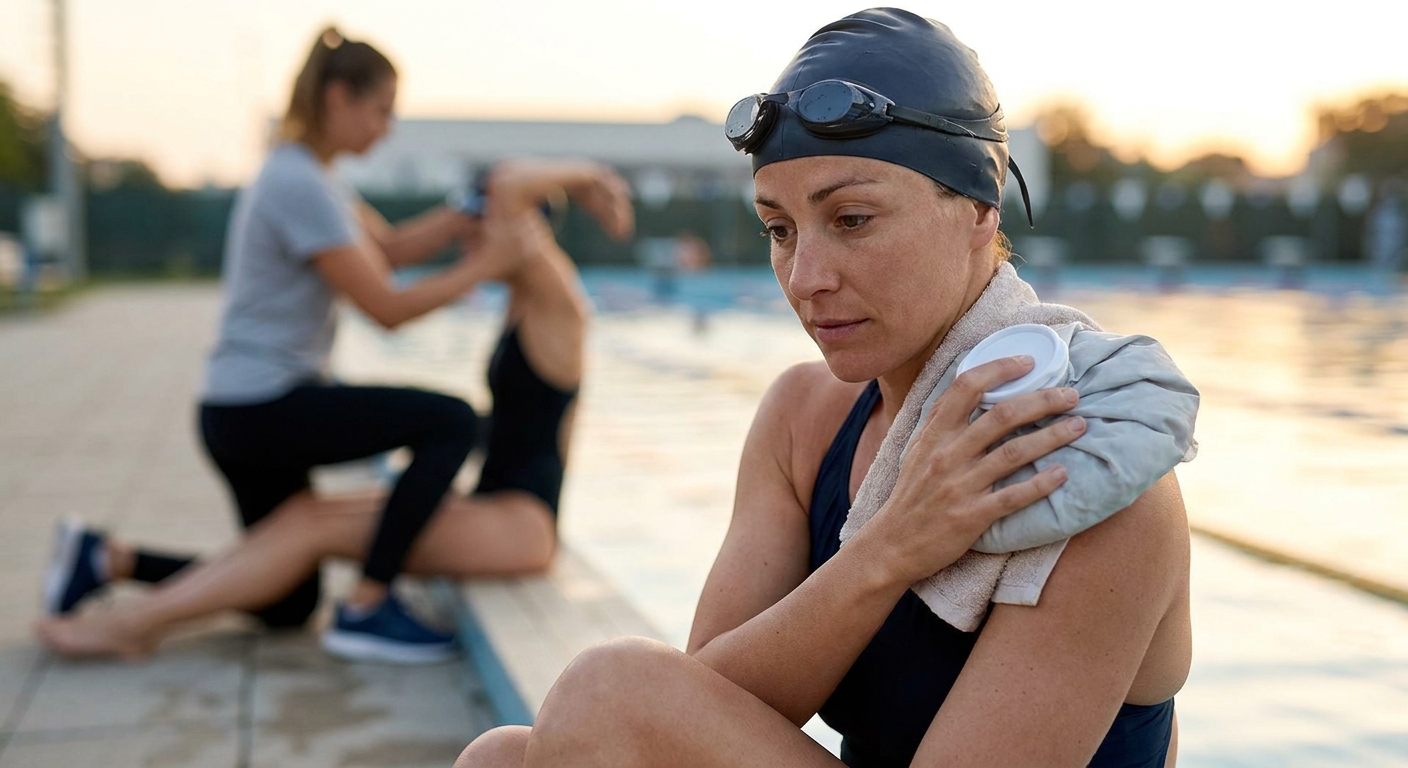
Swimmers who log serious yardage put the shoulder through more overhead repetitions in a week than most overhead athletes see in a season, and by 2026 that volume is catching up with masters swimmers, triathletes, and lap swimmers across Bergen, Passaic, and Middlesex counties. Pain management for swimmers with chronic shoulder pain means matching the actual diagnosis — impingement, bursitis, labral fraying, or nerve irritation — to a treatment that respects stroke mechanics instead of just numbing the joint.
TL;DR
- Ultrasound-guided corticosteroid injections work best for acute flare-ups, giving relief in 1-2 weeks that lasts 6-12 weeks.
- PRP injections take 4-6 weeks to kick in but hold up 6-12 months for recurring swimmer’s shoulder in 2026 cases.
- Physical therapy targeting scapular mechanics is the one step no injection replaces.
- Blind, non-guided injections and unlimited corticosteroid dosing are the two most common mistakes swimmers make.
Why this matters
Swimmer’s shoulder is rarely one injury. It’s usually a stack of small ones — subacromial impingement from a dropped elbow on recovery, bursitis from thousands of pull-through cycles, biceps tendinopathy from overreliance on the front crawl catch. Treat the wrong layer and the pain comes back within a season.
The difference between a swimmer who’s back in the pool in six weeks and one who’s still hurting a year later usually comes down to diagnosis accuracy, not the toughness of the treatment. If rest, ice, and over-the-counter anti-inflammatories haven’t moved the needle after a few weeks, that’s the point to see a pain management specialist rather than keep guessing.
Who this is for
This guide is for competitive and masters swimmers, triathletes, and adult lap swimmers who train three or more times a week and notice shoulder pain that flares during specific phases of the stroke — the catch, the pull-through, or the recovery over the top of the water — and doesn’t fully settle with a few rest days. It’s also for swimmers already told they have “impingement” or “rotator cuff irritation” who want to know what actually fixes it versus what just masks it until the next set.
What to look for in pain management for swimmers
Ultrasound guidance on every injection
A landmark-based injection into the shoulder without imaging is a guess at anatomy that shifts with arm position. Ultrasound guidance confirms the needle tip is in the subacromial space or bursa, not muscle or fat, which is the difference between an injection that works and one that doesn’t.
A diagnosis that separates impingement from labral tear from nerve irritation
All three present as “shoulder pain that gets worse overhead,” but they need different treatments entirely. A plan built on symptoms alone, without imaging or a targeted exam, treats the wrong structure roughly half the time in overuse shoulder cases.
A plan that keeps you training, not benched indefinitely
Swimmers lose fitness fast. A treatment plan that says “stop swimming for three months” without a modified-stroke or dry-land bridge plan is treating the shoulder and ignoring the athlete.
Injection limits that protect tendon tissue
Corticosteroid is effective, but it’s not free. Repeated injections into the same tendon weaken collagen structure over time, which is why responsible dosing caps corticosteroid shots at three to four per year per site.
Access to biologic options when steroids stop working
For swimmers who’ve already had one or two corticosteroid injections with fading returns, platelet-rich plasma is the next tier, not a repeat of the same shot.
Coordination with a physical therapist who understands stroke mechanics
A generic “shoulder protocol” PT plan misses the scapular stabilization and stroke-timing work that actually prevents recurrence in swimmers specifically, the way it’s built into programs for overhead athletes like golfers.
Get your shoulder pain evaluated
Board-certified interventional pain care across Bergen, Passaic, and Middlesex counties.
Top picks for swimmer’s shoulder pain in 2026
1. Ultrasound-guided subacromial corticosteroid injection — the fast fix
This is the front-line option when a swimmer is mid-season and needs the pain down within days. Relief typically starts within 1 to 2 weeks and lasts 6 to 12 weeks, long enough to finish a training block or a race schedule. The catch is the injection limit: three to four shots per year per tendon site, no more, because repeated dosing thins the tissue you’re trying to protect. Read more on rotator cuff shoulder pain treatments. Verdict: Recommended for acute flare-ups, not as a standing maintenance plan.
2. Platelet-rich plasma (PRP) injection — the biologic option
PRP uses concentrated platelets from the swimmer’s own blood to drive tendon repair rather than just suppress inflammation. It takes longer to show up — 4 to 6 weeks for full effect — but relief in tendon injuries commonly holds for 6 to 12 months, and it carries none of the tissue-weakening risk of repeated steroid dosing. Details on how platelet-rich plasma therapy treats joint pain. Verdict: Recommended for swimmers cycling through recurring flare-ups or already maxed out on steroid injections.
3. Ultrasound-guided subacromial bursa injection — the bursitis-specific pick
When imaging shows bursa thickening without a tendon tear, targeting the bursa directly gets relief faster than a broader subacromial shot — often within 3 to 7 days. It’s a narrower fix, which is exactly why it only works when the diagnosis confirms bursitis is the primary driver, not a tendon problem hiding underneath it. Verdict: Consider it, but only after imaging confirms bursitis is the main issue.
4. Suprascapular nerve block — the diagnostic tool that doubles as treatment
When shoulder pain persists despite a structurally sound joint on imaging, a nerve block to the suprascapular nerve does two jobs at once: it clarifies whether nerve irritation is driving the pain, and it can relieve that pain for weeks to months if the nerve is the culprit. Verdict: Consider when structural treatment hasn’t resolved the pain and the source is unclear.
5. Structured physical therapy with stroke mechanics correction — the foundation
No injection fixes a dropped elbow catch or a collapsed recovery phase. A 6 to 8 week program built around scapular stabilizers and stroke-specific movement patterns is what keeps the pain from coming back after any injection wears off. Verdict: Recommended alongside every option above — never skip it to save time.
What to avoid
- Blind, non-guided injections. Without ultrasound confirming needle placement, the medication can land in muscle or fat instead of the target space, which is why guided injections outperform landmark-based ones for shoulder pain.
- Unlimited corticosteroid injections. More than three to four shots a year into the same tendon site trades short-term relief for long-term tissue weakening — and in a swimmer, weakened tendon tissue under repetitive overhead load is a setup for a bigger injury.
- Stopping swimming cold with no return plan. Total rest deconditions the shoulder stabilizers, and swimmers who go from zero to full training volume overnight often come back with worse pain than before they stopped.
Verdict comparison table
| Treatment | Onset | Typical relief window | Injection limit | Verdict |
|---|---|---|---|---|
| Ultrasound-guided corticosteroid injection | 1-2 weeks | 6-12 weeks | 3-4 per year | Recommended (flare-ups) |
| PRP injection | 4-6 weeks | 6-12 months | 1-3 series | Recommended (recurring cases) |
| Bursa injection | 3-7 days | 4-8 weeks | Limited | Consider |
| Suprascapular nerve block | Days | Weeks to months | As needed | Consider |
| PT + mechanics correction | Ongoing | Ongoing | N/A | Recommended (foundation) |
FAQ
What’s the best pain management for swimmer’s shoulder in 2026?
For an acute flare, an ultrasound-guided subacromial corticosteroid injection paired with physical therapy is the standard front-line approach in 2026. For recurring cases where steroids have stopped working, PRP injections are the next step.
Is PRP better than corticosteroid for swimmer’s shoulder?
PRP isn’t better across the board, it’s better for a different problem. Corticosteroid works faster for acute inflammation, while PRP takes 4-6 weeks to build effect but lasts longer, often 6-12 months, in tendon-driven pain.
How many corticosteroid injections can I get for shoulder impingement?
Most protocols cap corticosteroid injections at three to four per year per tendon site to protect the tissue from weakening. Beyond that limit, PRP or a different approach is usually the better move.
Can I keep swimming while getting treated for shoulder pain?
Often yes, with modified volume and stroke adjustments rather than a full stop. A physical therapist familiar with swim mechanics can usually build a reduced-load plan around treatment instead of shutting training down entirely.
How much does a shoulder injection cost without insurance?
Cash pay costs for interventional procedures vary by treatment type and location, so it’s worth checking current pricing directly rather than assuming a flat rate. Insurance coverage also changes what you’ll owe out of pocket.
When should a swimmer see a pain management specialist instead of just a physical therapist?
If pain hasn’t improved after several weeks of rest, ice, and basic PT, or if it’s limiting stroke mechanics during every session, that’s the signal to get an interventional evaluation rather than continue conservative care alone.
Does insurance cover ultrasound-guided shoulder injections?
Most major insurance plans cover medically necessary ultrasound-guided injections for diagnosed shoulder conditions in 2026, though prior authorization requirements vary by plan and diagnosis.
What causes chronic shoulder pain in swimmers?
The most common drivers are subacromial impingement from stroke mechanics, bursitis from repetitive overhead motion, and biceps or rotator cuff tendinopathy from training volume outpacing recovery. Nerve irritation is less common but shows up when structural treatment doesn’t resolve the pain.
One last thing
The swimmers who recover fastest aren’t the ones who find the strongest injection, they’re the ones who fix the stroke flaw that caused the injury in the first place. A corticosteroid shot or a PRP series buys the window to do that work; skipping the mechanics fix just resets the clock on the next flare-up.
Related guides
About the Medical Reviewer
Dr. Saurabh Dang is a double board-certified interventional pain management specialist serving Central and Northern New Jersey. He combines clinical expertise with a patient-centered approach to help patients find lasting relief from chronic pain conditions.
Read Full Bio →Seeking Treatment for Nerve Block Injections?
Dr. Dang and the team at Hudson Pain and Spine offer specialized care and advanced interventional treatments.
Ready to Find Relief from Pain?
Schedule your consultation with Dr. Saurabh Dang at our Englewood office.
Serving patients across Central and Northern New Jersey — Bergen, Passaic, and Middlesex counties.