
Why does pain get worse after a nerve block?

Medically reviewed by
Dr. Saurabh Dang, MD, MBA

Worse pain after nerve block can result from injection-site soreness, temporary irritation, or the numbing medicine wearing off before longer-lasting relief develops. Severe or rapidly worsening pain, new weakness, fever, or bladder or bowel changes need prompt medical assessment—not reassurance that the block is simply wearing off.
TL;DR
- Worse pain after nerve block can follow injection soreness or the return of pain as local anesthetic wears off.
- New weakness, spreading redness, fever, or bladder changes need urgent assessment, not home monitoring alone.
- Not every nerve block contains a steroid; recovery depends on the procedure and medicines used.
- Hudson Pain and Spine provides interventional pain management for patients seeking specialist evaluation in New Jersey.
Why this matters: nerve block recovery in 2026
The important distinction is between familiar pain returning and a new symptom developing. An ache around the needle entry point is different from increasing leg weakness, and each needs a different response.
Your discharge instructions take priority over general recovery advice. For background on the loss and return of sensation, read about how long numbness lasts after a nerve block. If symptoms are worsening, contact the clinician who performed the procedure rather than waiting for a general timeline to pass.
Why does pain get worse after a nerve block?
Pain can increase because the injection temporarily irritates nearby tissues, the local anesthetic stops working, or the original condition remains painful. If the injection included a corticosteroid, its anti-inflammatory effect does not begin at the same moment as the numbing effect.
The pattern helps guide the next step. It does not establish the diagnosis by itself.
| Symptom pattern | Possible explanation | What to do |
|---|---|---|
| Tenderness centered on the needle entry point | Local tissue irritation or bruising | Follow discharge instructions; report increasing tenderness, swelling, or redness |
| Familiar pain returns as numbness fades | Local anesthetic wearing off | Follow the prescribed pain plan and document whether there was initial relief |
| Temporary pain increase after a steroid-containing injection | A post-injection flare | Ask the treating team whether the pattern fits the procedure; do not assume every flare is harmless |
| Burning or electric pain that is new or worsening | Nerve irritation or another neurologic problem | Contact the treating clinician promptly, especially with altered sensation or weakness |
| Worsening pain with fever, drainage, or spreading redness | Possible infection | Seek urgent medical assessment |
| Severe back pain with new weakness or bladder or bowel changes | Possible nerve compression or another serious complication | Seek emergency care immediately |
Pain returning after temporary relief does not, by itself, mean the nerve was damaged. Conversely, a previous period of relief does not make new warning signs safe to ignore.
Injection-site soreness: pain near the needle entry point
A needle passes through skin and other tissues to reach the intended target. That can leave localized tenderness or bruising, even when the medication reaches the correct location.
Notice where the discomfort sits. Soreness at the entry point differs from pain spreading into a previously unaffected area, and increasing warmth, redness, drainage, or swelling deserves a call to the treating team.
Use only the aftercare measures your clinician approved. Do not massage the injection area, apply heat to numb skin, or use pain relief as permission to exceed activity restrictions.
Anesthetic wearing off: familiar pain returns
Local anesthetic temporarily interrupts pain signaling. When it wears off, pain from the underlying condition can return, sometimes abruptly enough to feel worse than the earlier baseline.
A diagnostic nerve block is intended to help identify a pain source, not necessarily provide lasting treatment. Short-lived relief can therefore be useful information rather than proof that the procedure failed.
Record the timing of relief and the activities that became easier. Tell your clinician whether the returning pain feels like the original problem or has a new location, quality, or associated symptom.
Steroid-related flare: only if your injection included steroid
Some nerve blocks contain a corticosteroid, while others use local anesthetic without steroid. If steroid was included, temporary post-injection discomfort can occur before an anti-inflammatory benefit develops.
Do not use this explanation to dismiss escalating pain. Fever, spreading redness, new weakness, or other warning signs need assessment regardless of which medicine was injected.
Check your procedure paperwork or ask the treating office what you received. The phrase nerve block alone does not identify the medication, expected recovery, or purpose of the procedure.
Why pain after a nerve block varies
Your clinician interprets symptoms in the context of the actual procedure. These factors help explain why another patient’s recovery is not a reliable guide for yours:
- Injection target: A block near a peripheral nerve differs from a procedure near spinal structures. The location affects which symptoms need particular attention.
- Medication used: Local anesthetic and corticosteroid have different purposes. Not every injection includes both.
- Reason for the block: A diagnostic procedure and a treatment intended for symptom relief have different measures of success.
- Underlying condition: Temporarily reducing nerve signaling does not remove every source of inflammation, compression, or joint pain.
- Activity after treatment: Reduced pain or sensation can make it easier to overuse an area before you recognize strain.
- Medical history: Blood-thinning medication, bleeding disorders, diabetes, and infection risk are relevant when the clinician evaluates new symptoms.
Do not stop a blood thinner or change another prescribed medication independently. Report what you take and follow the instructions from the clinicians managing those medicines.
What should you do about worse pain after a nerve block in 2026?
Start with warning signs, not a countdown. The safest response depends on symptoms and function, not simply how long it has been since the injection.
- Check warning signs. Look for new or increasing weakness, bladder or bowel changes, numbness around the groin, fever, breathing difficulty, or rapidly worsening pain. Emergency symptoms need emergency care.
- Review instructions. Confirm which procedure you had, what medicines were used, and which restrictions apply. Use the after-hours instructions if the office is closed.
- Record symptoms. Note when pain changed, where it travels, and whether numbness or weakness is improving or worsening. Include medication names and when you last took them.
- Contact your clinician. Explain what is different from your usual pain. Ask whether you need an examination and what to do while awaiting assessment.
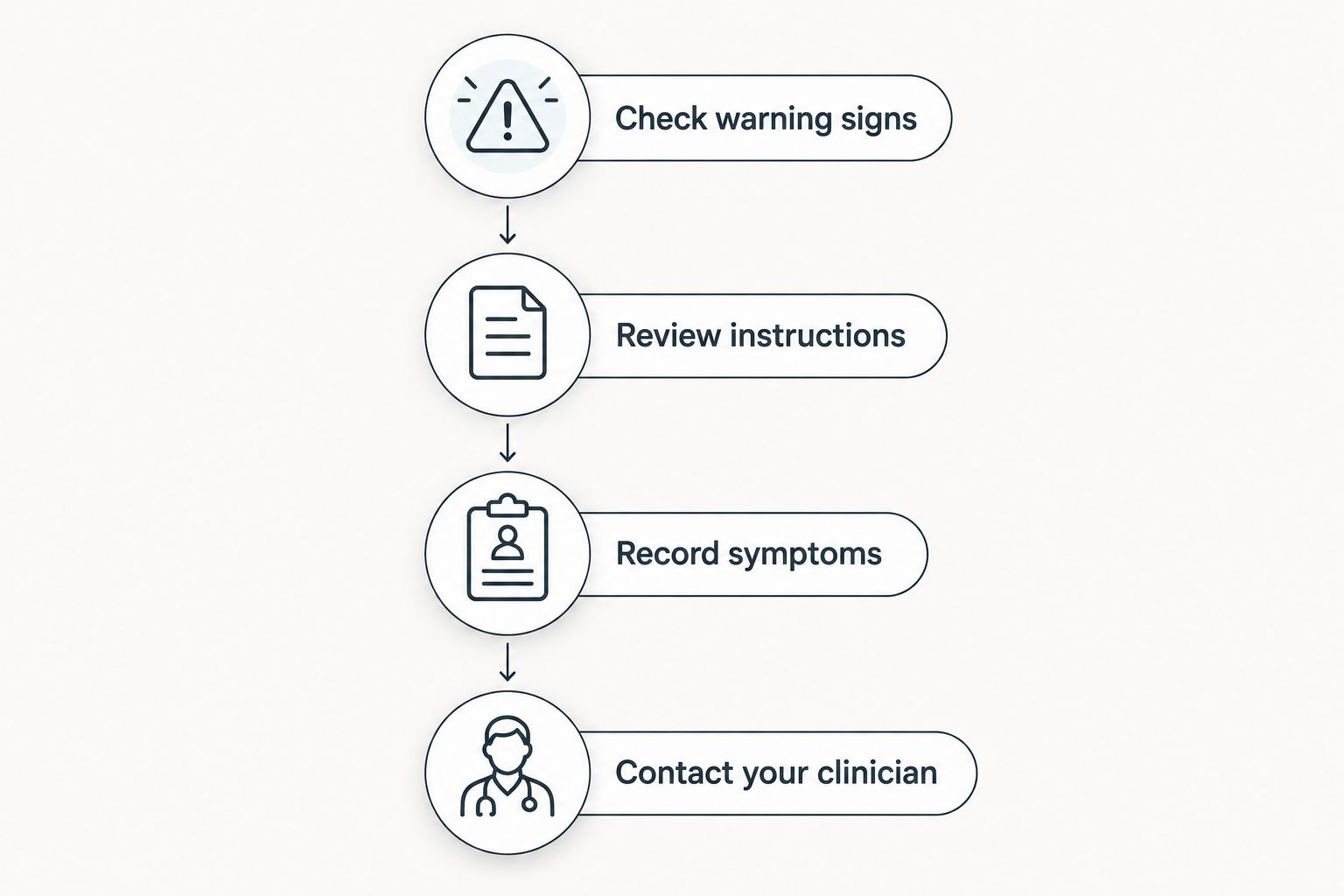
Warning signs determine urgency before routine recovery measures.
If you cannot reach the treating team and symptoms are severe or progressing, seek urgent care rather than repeatedly leaving messages. Do not drive yourself if weakness, numbness, sedation, or pain prevents safe vehicle control.
When is pain after a nerve block an emergency?
Seek emergency care for new or progressive limb weakness, loss of bladder or bowel control, inability to urinate with new neurologic symptoms, or numbness around the groin or inner thighs. Severe back pain combined with these changes is especially concerning after a procedure near the spine.
Breathing difficulty, throat or facial swelling, collapse, or seizures also require emergency help. Call 911 for these symptoms rather than contacting an office through an appointment form.
Fever with worsening pain, spreading redness, drainage, or a growing swelling needs urgent assessment. Do not wait for a scheduled follow-up to report a possible complication.
How can you manage discomfort safely in 2026?
Follow the medication plan supplied by your treating clinician. Do not take extra doses, combine products with the same active ingredient, or add over-the-counter medicines without checking that they are appropriate for your health conditions and other prescriptions.
Protect any area that remains numb. Avoid direct heat, pressure, and activities that require normal strength or sensation; reduced pain does not mean the tissues are ready for unrestricted use.
If your discharge instructions permit a cold pack, use a protective layer and follow the recommended application schedule. Do not place ice directly on skin or use temperature treatments where you cannot reliably feel them.
Keep movement within the restrictions you received. Forceful stretching or a strenuous workout is not a way to test whether the injection worked, and complete bed rest is not a substitute for a personalized recovery plan.
What should you tell your clinician about the pain?
Describe the change rather than reporting only that the injection made things worse. Your clinician needs to distinguish returning baseline pain from a new problem.
Use a short symptom record:
- Before the procedure: Where was the pain, and what did it stop you from doing?
- Immediately afterward: Did the familiar pain improve, and did numbness or weakness develop?
- When symptoms changed: Did pain return as sensation returned, or did a different symptom appear?
- Current function: Can you walk, use the affected limb, and manage routine activities as expected?
- Associated symptoms: Report fever, swelling, skin changes, bladder symptoms, or altered sensation.
- Medication response: State what you took as prescribed and whether it helped.
A pain score on the standard 0–10 scale can support this account, but function matters too. Explain whether walking became harder or an arm became weaker, even if the pain score stayed similar.
Does worse pain mean the nerve block failed?
Worse pain alone does not establish failure. A diagnostic block is assessed partly by whether the usual pain improved during the anesthetic effect, while a therapeutic injection requires assessment against its intended treatment goal.
The benefit of a diagnostic block is information about a possible pain source; its limitation is that relief can be temporary. A therapeutic block aims to reduce symptoms, but it does not guarantee relief or correct every underlying cause.
Hudson Pain and Spine is best suited to New Jersey patients seeking specialist interventional pain management. For non-emergency evaluation, you can contact the practice; immediate post-procedure concerns should first go to the clinician who performed the block.
How long should I wait before calling about worse pain?
Do not wait when pain is severe, escalating, or accompanied by warning signs. For milder symptoms, use the recovery instructions and contact the treating team when the pattern falls outside what they described.
There is no single waiting period that safely covers every nerve block. The injection location, medicines used, and accompanying symptoms determine the appropriate response.
Can worse pain after a nerve block mean nerve damage?
Worse pain does not by itself prove nerve damage. New weakness, persistent altered sensation beyond the expected anesthetic effect, or worsening neurologic symptoms require clinical assessment.
Pain quality alone cannot settle the question. Burning or electric sensations should be described to the treating clinician rather than diagnosed at home.
Should I have another nerve block if the first made pain worse?
Another nerve block should follow a review of the first procedure’s purpose, benefit, and adverse symptoms. Repeating the injection without understanding the pain increase is not the next step.
Bring your symptom record to the follow-up. The clinician can then decide whether to reassess the diagnosis, adjust the treatment plan, or investigate a possible complication.
FAQ
Is worse pain after nerve block normal?
Worse pain after nerve block can occur with injection-site soreness or the return of pain as anesthetic wears off, but it should not automatically be labeled normal. Severe, progressive, or unfamiliar pain needs assessment, especially with fever, weakness, or bladder changes.
What should I do about worse pain after a nerve block in 2026?
Check for warning signs and follow your procedure-specific discharge instructions. Contact the treating clinician about worsening symptoms; seek emergency care for new progressive weakness, bladder or bowel changes, or breathing difficulty.
Does every nerve block contain a steroid?
No, not every nerve block contains a steroid. Ask which medicines were used before attributing increased pain to a steroid flare.
Can I exercise if the block made my pain disappear?
Pain relief is not clearance to exercise without restrictions. Follow your clinician’s activity instructions and protect any area with reduced strength or sensation.
Should I take more pain medicine if the block wears off?
Do not increase your dose unless your treating clinician instructed you to do so. Follow the prescribed plan and ask for guidance if it is not controlling your symptoms.
Can a nerve block cause permanent nerve damage?
Nerve injury is a recognized complication, but pain alone cannot establish that it occurred or whether symptoms will persist. New or worsening weakness and unexpected sensory changes require prompt evaluation.
Can Hudson Pain and Spine evaluate ongoing nerve pain?
Hudson Pain and Spine provides interventional pain management, including nerve blocks, for patients in New Jersey. Emergency symptoms need emergency care, not a routine appointment.
One last thing
A brief period of relief can still be useful diagnostic information. Write down what improved before the pain returned—not just how bad it feels now. That distinction helps your clinician interpret the block without overlooking a new complication.
This information supports, but does not replace, your procedure-specific instructions or a medical assessment.
Related guides
- What to expect after a nerve block procedure
- Can a nerve block injection cause side effects?
- Can you exercise after a nerve block injection?
About the Medical Reviewer
Dr. Saurabh Dang is a double board-certified interventional pain management specialist serving Central and Northern New Jersey. He combines clinical expertise with a patient-centered approach to help patients find lasting relief from chronic pain conditions.
Read Full Bio →Seeking Treatment for Nerve Block Injections?
Dr. Dang and the team at Hudson Pain and Spine offer specialized care and advanced interventional treatments.
Ready to Find Relief from Pain?
Schedule your consultation with Dr. Saurabh Dang at our Englewood office.
Serving patients across Central and Northern New Jersey — Bergen, Passaic, and Middlesex counties.