
Best Shin Splints Treatment for Runners (2026)

Medically reviewed by
Dr. Saurabh Dang, MD, MBA
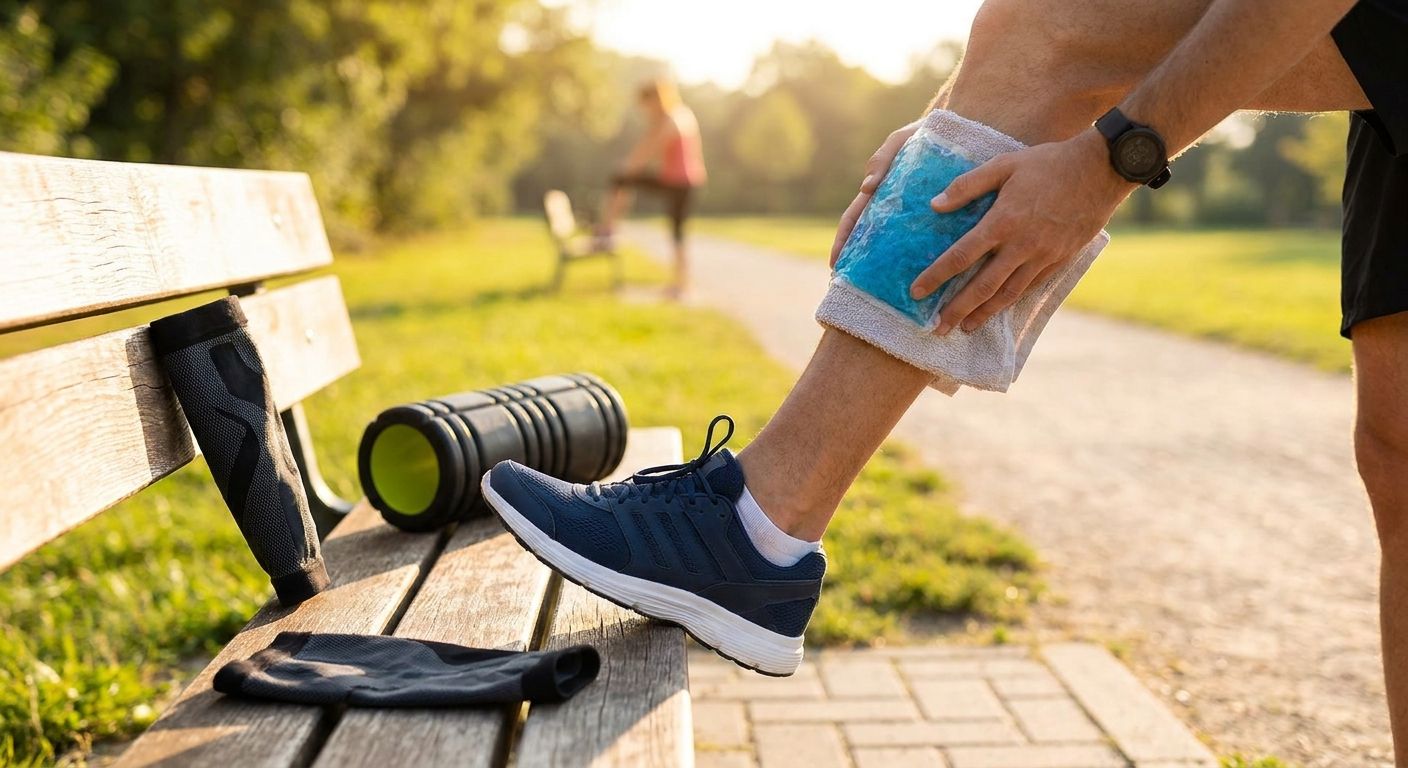
Shin splints sideline more runners than almost any other overuse injury, and most of them try to run through it for weeks before getting real treatment. This guide ranks the treatments that actually work for medial tibial stress syndrome, the medical term for shin splints, and tells you when icing and rest stop being enough.
TL;DR
- Activity modification plus a structured 4-6 week reload plan is the top shin splints treatment for most runners in 2026 — Buy in.
- Extracorporeal shockwave therapy is worth considering for cases that stall past 6 weeks of rest.
- Skip generic drugstore orthotics before a gait assessment — they treat the wrong problem for most runners.
- Imaging to rule out a tibial stress fracture is non-negotiable if pain persists past 3-4 weeks.
- Interventional options like corticosteroid injections are a Hold, not a first-line shin splints treatment.
Why this matters
Shin splints and a tibial stress fracture feel almost identical in the first two weeks, and treating a stress fracture like a shin splint delays healing and risks a full fracture. The distinction changes the entire treatment plan, not just how long you rest.
Runners training for spring 2026 races often push through the ache because it fades mid-run and returns after — a classic shin splints pattern. But pain that’s sharp, localized to one spot on the bone, and present at rest is a different diagnosis that needs a different shin splints treatment plan entirely.
How this list was ranked
Treatments below are ranked by how fast they get a runner back to training without re-injury, based on standard sports medicine protocols for medial tibial stress syndrome. Options that require a diagnosis first (imaging, gait analysis) rank above passive treatments that mask symptoms. Anything with a meaningful non-response rate or recovery cost gets flagged so you’re not surprised six weeks in.
The ranked list
1. Activity modification and load reduction — the foundation
This is rest, but structured. Cut running volume by 50-70% for the first 2 weeks, cross-train on a bike or in a pool, and reintroduce mileage in 10% weekly increments once pain-free at rest. Most runners see meaningful improvement in 4-6 weeks. Skipping this step and jumping straight to gadgets or injections is the most common reason shin splints become chronic. Verdict: Buy.
2. Gait retraining and footwear assessment — the underrated fix
A cadence that’s too low or a heavy heel strike loads the tibia more than shoe cushioning can offset. A running-specific gait assessment identifies overstriding, cadence under 170 steps per minute, and asymmetric loading — all common drivers of shin splints. Cheap insoles bought without an assessment fix nothing because they don’t address the mechanics causing the injury. Verdict: Buy.
3. Ice, compression, and NSAIDs — the short-term bridge
Ice for 15-20 minutes after activity and short-course NSAIDs reduce the periosteal inflammation that makes shin splints painful, but neither treats the underlying bone stress. Relying on NSAIDs to keep running through pain masks a signal your tibia is telling you to back off. Use this to manage symptoms during the reload phase, not as a substitute for load reduction. Verdict: Consider — bridge only.
4. Extracorporeal shockwave therapy — the plateau breaker
For shin splints that don’t respond to 6-8 weeks of conservative management, shockwave therapy stimulates blood flow and bone remodeling at the site of periosteal irritation. It’s not a first-line treatment because most runners never need to get here — but for a stubborn case heading into training season, it’s a reasonable next step before considering injections. Verdict: Consider if conservative care stalls.
5. Diagnostic imaging to rule out stress fracture
An X-ray often misses an early tibial stress fracture; an MRI or bone scan catches what X-ray can’t. Any runner with pain lasting past 3-4 weeks, pain at rest, or a single point of maximum tenderness on the bone needs imaging before continuing to train. Treating an undiagnosed stress fracture as a routine shin splint is how a 6-week injury becomes a 12-week one. Verdict: Buy — mandatory if pain persists.
6. Corticosteroid or targeted injections — the last resort, not the first move
Injections have a narrow role in shin splints care and are not standard first-line treatment for medial tibial stress syndrome. They’re occasionally used for a confirmed, localized inflammatory process that hasn’t responded to structured rehab, and only after a stress fracture has been ruled out. Jumping to an injection before addressing gait mechanics and training load treats a symptom while the cause keeps grinding on the bone. Verdict: Hold — rehab first.
7. Custom orthotics without a gait assessment — the trap
Off-the-shelf or generic custom orthotics purchased without a running gait evaluation frequently correct the wrong thing. They can feel supportive in the store and do nothing for the overstriding or cadence issue actually driving the injury. Runners spend weeks adapting to a device that never addresses the mechanical cause. Verdict: Skip without an assessment first.
Get shin pain evaluated properly
Rule out a stress fracture before you keep training on it.
What to avoid
- Running through sharp, single-point tibial pain. That pattern points toward a stress fracture, not shin splints, and continued loading risks a complete fracture.
- Jumping straight to injections or shockwave therapy in week one. Both treatments work best after structured rest has been given a fair 4-6 week trial.
- Buying orthotics before a gait assessment. Cushioning doesn’t fix cadence or overstriding, the two most common mechanical drivers of shin splints.
Comparison table
| Treatment | Best for | Typical timeline | Verdict |
|---|---|---|---|
| Activity modification | All shin splints cases | 4-6 weeks | Buy |
| Gait retraining | Recurrent or bilateral shin splints | 2-4 weeks to assess | Buy |
| Ice / NSAIDs | Symptom control during reload | Ongoing, short-term | Consider |
| Shockwave therapy | Cases stalled past 6-8 weeks | 3-6 sessions | Consider |
| Imaging | Pain past 3-4 weeks or at rest | 1 visit | Buy (mandatory) |
| Corticosteroid injection | Confirmed localized inflammation only | Single procedure | Hold |
| Generic orthotics | Not recommended alone | N/A | Skip |
Where to get treatment
- Start with a running-specific evaluation, not a general checkup. A clinician who understands running mechanics catches the gait issues a standard exam misses.
- Ask for imaging if pain has lasted more than 3-4 weeks. Don’t accept a shin splints diagnosis by default if the pain pattern looks like a stress fracture.
- Involve a pain management specialist once conservative care stalls past 6-8 weeks. Runners managing lingering shin or hip pain from training often need a plan that goes beyond rest and ice.
Runners who also deal with Achilles tightness alongside shin pain should get both evaluated together — Achilles tendonitis and shin splints share overlapping mechanical causes and often respond to the same gait correction.
FAQ
What is the best shin splints treatment for runners?
Structured activity modification combined with a gait assessment is the best shin splints treatment for most runners in 2026. Ice and NSAIDs manage symptoms during recovery but don’t replace load reduction.
How long does it take to recover from shin splints?
Most runners recover from shin splints in 4 to 8 weeks with proper activity modification. Cases that stall past 6-8 weeks often need shockwave therapy or a closer look at gait mechanics.
Is it shin splints or a stress fracture?
Shin splints cause diffuse pain along the shin that eases during a run and returns after; a stress fracture causes sharp, localized pain that’s present at rest. Pain lasting past 3-4 weeks needs imaging to tell the two apart.
Can you keep running with shin splints?
Light, pain-free running is sometimes possible with reduced volume, but running through worsening or sharp pain risks turning shin splints into a stress fracture. Cut mileage by 50-70% and reassess within 2 weeks.
Do compression sleeves help shin splints?
Compression sleeves can reduce swelling and provide comfort during activity but don’t correct the gait mechanics that usually cause shin splints. They work best as a supplement to activity modification, not a standalone treatment.
When should a runner see a specialist for shin splints?
See a specialist if shin pain lasts more than 3-4 weeks, occurs at rest, or returns every time running resumes. A pain management specialist can order imaging and rule out a stress fracture before recommending next steps.
Are custom orthotics worth it for shin splints?
Custom orthotics help when they’re prescribed after a running gait assessment identifies a specific mechanical issue. Bought without an assessment, they frequently fail to address the actual cause of shin splints.
Does shockwave therapy work for shin splints?
Extracorporeal shockwave therapy shows benefit for shin splints that haven’t responded to 6-8 weeks of conservative treatment. It’s not typically a first-line option because most cases resolve with rest and gait correction alone.
One last thing
The detail most runners skip: cadence. Bumping stride rate toward 170-180 steps per minute reduces tibial load per stride without changing pace, and it’s often the single fix that resolves recurrent shin splints when rest alone hasn’t. Runners who treat cadence as the root cause, not just the symptom, tend to stay out of the shin splints cycle for good in 2026 and beyond.
Related guides
- Sports injury pain treatment for runners
- Best treatments for stress fractures in athletes
- Hip pain treatment for runners and active adults
- How to treat Achilles tendonitis pain
- When to see a pain management specialist for chronic pain
About the Medical Reviewer
Dr. Saurabh Dang is a double board-certified interventional pain management specialist serving Central and Northern New Jersey. He combines clinical expertise with a patient-centered approach to help patients find lasting relief from chronic pain conditions.
Read Full Bio →Seeking Treatment for Chronic Pain?
Dr. Dang and the team at Hudson Pain and Spine offer specialized care and advanced interventional treatments.
Ready to Find Relief from Pain?
Schedule your consultation with Dr. Saurabh Dang at our Englewood office.
Serving patients across Central and Northern New Jersey — Bergen, Passaic, and Middlesex counties.