
Pain Management for Pickleball Players: 2026 Guide

Medically reviewed by
Dr. Saurabh Dang, MD, MBA
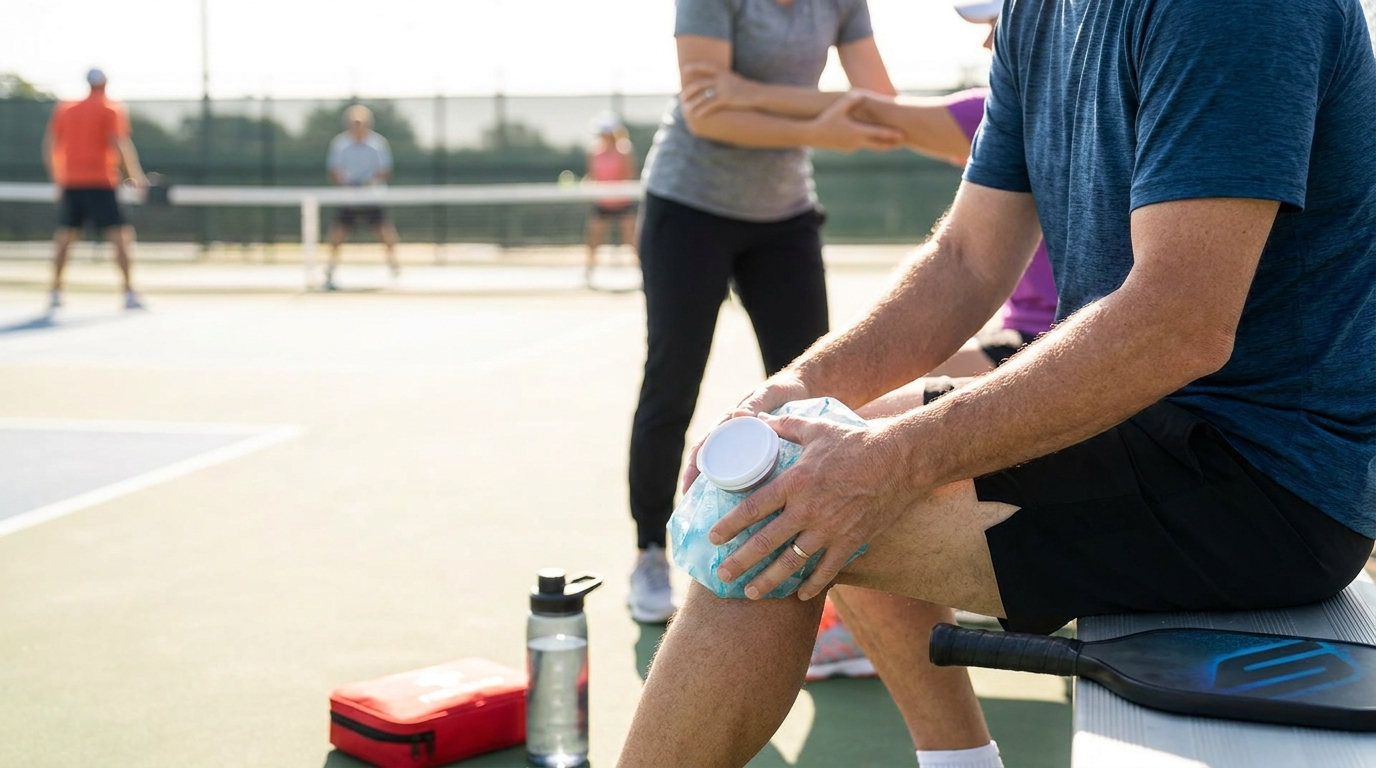
Pickleball’s stop-start pivots and overhead smashes put more stress on knees, shoulders, elbows, hips, and heels than most players expect, and pain management for pickleball players in 2026 has to match that specific injury pattern instead of relying on generic advice.
TL;DR
- Pain management for pickleball players targets knee, shoulder, elbow, hip, and heel overuse injuries from repetitive pivoting.
- PRP injections for chronic knee pain suit players with meniscus wear who want to keep playing in 2026: Consider.
- Hip bursitis and genicular nerve treatments target inflammation without surgery: Buy.
- Skip generic cortisone if relief fades inside six weeks - that signals a missed diagnosis, not a bad shot.
- Tennis elbow and rotator cuff pain from pickleball respond best to imaging-guided care, not rest alone.
Why this matters
Pickleball sends more new patients into orthopedic and pain clinics every season, and the injury mix is different from tennis or running. The paddle’s short reach forces sharper wrist snaps and quicker lateral shuffles, which load the medial knee, the lateral elbow, and the rotator cuff in ways recreational players’ joints aren’t conditioned for.
Most players try rest, ice, and over-the-counter anti-inflammatories first. That works for a sprain. It does not work for a partially torn meniscus or an inflamed bursa that keeps flaring every time you step back on the court. PRP injections for chronic knee pain exist precisely because rest alone stalls out on tissue that needs a biological nudge to heal, and 2026 data from sports medicine clinics keeps showing the same pattern: players who get an accurate diagnosis early return to the court faster than players who guess.
Who this is for
This guide is for recreational and competitive pickleball players in their 40s, 50s, and 60s dealing with a joint that flares every time they play - not a fresh ankle roll from last weekend. If you’ve had knee, shoulder, elbow, hip, or heel pain for more than six weeks and it’s changing how you move on the court, the treatments below apply to you. If you’re managing a brand-new acute injury, see a sports medicine doctor first; pain management for pickleball players is built for chronic, recurring pain, not day-one trauma.
What to look for in pain management for pickleball players
Imaging-guided precision, not guesswork
A blind injection into “the knee” or “the shoulder” misses the actual inflamed structure more often than patients realize. Fluoroscopy or ultrasound guidance puts the needle at the exact bursa, tendon sheath, or joint capsule causing your pain, which matters more in pickleball injuries because the pain generators (bursitis, tendinosis, partial tears) sit close together.
A return-to-play timeline you can plan around
You want a doctor who tells you “expect to modify play for two to four weeks after this injection” rather than a vague “take it easy.” Concrete timelines let you plan around a league schedule or a tournament instead of guessing when you’re cleared.
Non-opioid, non-surgical options first
Most pickleball joint pain responds to targeted injections, bracing, and physical therapy before surgery ever enters the conversation. A doctor who defaults to conservative, non-opioid treatment first is protecting both your joint and your ability to keep playing.
Injury-specific protocols, not one-size treatment
Knee bursitis, tennis elbow, and rotator cuff impingement are three different problems with three different injection targets and rehab plans. A clinic offering the same cortisone shot for every joint complaint isn’t treating your actual injury.
Board-certified oversight
Interventional pain procedures - nerve blocks, PRP, radiofrequency work - carry more risk in unqualified hands. Confirm the provider is board-certified in pain management or physiatry before scheduling an injection.
Cost and insurance clarity before you commit
Injection series can mean multiple visits. Ask upfront what’s covered and what isn’t so a treatment plan doesn’t stall halfway through because of a billing surprise.
Top picks for pickleball joint injuries
The Knee: PRP for meniscus and cartilage wear
The most common pickleball complaint. Platelet-rich plasma uses your own blood’s growth factors to calm inflammation in a worn meniscus or early-stage cartilage breakdown, and a typical series runs three injections over four to six weeks. Best for players with knee pain that’s persisted past six weeks despite rest and bracing. Verdict: Consider for chronic knee pain that hasn’t responded to conservative care.
The Elbow: Targeted treatment for tennis elbow and golfer’s elbow
The paddle grip and repeated backhand snap load the same tendons as a tennis racket. Tennis elbow and golfer’s elbow treatment usually starts with bracing and physical therapy, moving to a targeted injection if pain persists past four to six weeks. Players who ignore early elbow pain often end up with a chronic tendinosis that takes months longer to resolve. Verdict: Buy on early treatment - waiting makes this worse, not better.
The Shoulder: Rotator cuff and overhead-motion pain
Overhead smashes and serves stress the same rotator cuff tendons as a golf swing or a tennis serve. Rotator cuff shoulder pain treatment ranges from physical therapy and activity modification to guided corticosteroid or PRP injections for partial tears. Shoulder pain that limits your reach on an overhead shot for more than three weeks is worth an evaluation, not more ibuprofen. Verdict: Consider for persistent shoulder pain limiting your swing.
The Hip: Bursitis from lateral shuffling
The constant side-to-side shuffle inflames the hip’s outer bursa, producing pain that flares specifically when you push off laterally. Hip bursitis treatment typically combines activity modification with a guided corticosteroid injection that can ease pain for eight to twelve weeks. Players often mistake this for arthritis and skip the actual fix. Verdict: Buy - it’s a quick, targeted fix for a specific, identifiable problem.
The Heel: Plantar fasciitis from court surfaces
Hard outdoor courts and quick direction changes overload the plantar fascia, especially in players over 50. Plantar fasciitis treatment starts with stretching, night splints, and shoe changes, escalating to a guided injection if morning heel pain persists past six weeks. Verdict: Consider, but only after basic stretching and footwear changes have had a fair trial.
Get your joint pain evaluated
Board-certified interventional pain care in Englewood, Woodland Park, and Edison, NJ.
What to avoid
- Repeat cortisone shots with no fresh diagnosis. If a cortisone injection wears off inside six weeks, the problem is the diagnosis, not the shot - get imaging before the next one.
- “Just rest it” for more than four weeks. Prolonged rest without an actual treatment plan lets tendinosis and bursitis become chronic instead of resolving.
- Skipping physical therapy after an injection. An injection calms inflammation; it doesn’t fix the biomechanics that caused it. Skip the rehab and the same joint flares again within a season.
If a cortisone shot wears off inside six weeks, the problem isn’t the shot - it’s the diagnosis.
Verdict comparison for common pickleball injuries
| Injury | First-line approach | Typical relief window | Verdict |
|---|---|---|---|
| Knee (meniscus/cartilage) | PRP series, 3 injections over 4-6 weeks | Weeks to months, builds over time | Consider |
| Elbow (tennis/golfer’s) | Bracing, PT, then guided injection | 4-6 weeks to improve with early care | Buy |
| Shoulder (rotator cuff) | PT, activity modification, guided injection | 3-8 weeks depending on severity | Consider |
| Hip (bursitis) | Guided corticosteroid injection | 8-12 weeks of relief | Buy |
| Heel (plantar fasciitis) | Stretching, splints, then injection | 6+ weeks with consistent stretching | Consider |
FAQ
What is the best pain management approach for pickleball players?
The best approach for pain management for pickleball players matches the specific joint - PRP for meniscus wear, guided injections for bursitis, and bracing plus physical therapy for tendon injuries like tennis elbow. Generic rest-only advice fails most chronic pickleball injuries by 2026 clinical standards.
Is pickleball elbow the same as tennis elbow?
Yes, pickleball elbow is functionally the same lateral tendinosis as tennis elbow, caused by the repeated backhand snap of the paddle. Treatment for both starts with bracing and physical therapy before any injection.
How long does knee pain from pickleball take to heal?
Mild knee strain from pickleball improves in 1-2 weeks with rest, but chronic meniscus or cartilage pain often needs a PRP series over 4-6 weeks to show real improvement. Pain persisting past six weeks warrants an evaluation.
Can you keep playing pickleball with hip bursitis?
Playing through hip bursitis usually worsens it, since the lateral shuffle motion directly aggravates the inflamed bursa. Most players need to modify or pause play for a few weeks around a guided corticosteroid injection.
Are cortisone shots safe for pickleball players?
Cortisone injections are safe when guided by imaging and spaced appropriately, but repeated shots into the same joint without a fresh diagnosis can mask a worsening problem. If relief fades within six weeks, further imaging is warranted before another injection.
When should a pickleball player see a pain management specialist?
See a pain management specialist when joint pain persists past four to six weeks, limits your motion on the court, or keeps returning after rest. Earlier evaluation generally means a shorter path back to full play.
Does insurance cover injections for pickleball injuries?
Coverage for guided injections varies by plan and diagnosis code, so confirming benefits before scheduling avoids billing surprises. Ask the clinic directly what your specific plan covers for the injection type recommended.
One last thing
The joint that hurts after pickleball usually isn’t the joint doing the most work - a hip that shuffles poorly often shows up as knee pain, and a stiff shoulder often shows up as elbow strain. Treating only the sore spot without checking the joint above and below it is why some players cycle through the same injury every season instead of fixing it once, in 2026 or any other year.
About the Medical Reviewer
Dr. Saurabh Dang is a double board-certified interventional pain management specialist serving Central and Northern New Jersey. He combines clinical expertise with a patient-centered approach to help patients find lasting relief from chronic pain conditions.
Read Full Bio →Seeking Treatment for Nerve Block Injections?
Dr. Dang and the team at Hudson Pain and Spine offer specialized care and advanced interventional treatments.
Ready to Find Relief from Pain?
Schedule your consultation with Dr. Saurabh Dang at our Englewood office.
Serving patients across Central and Northern New Jersey — Bergen, Passaic, and Middlesex counties.