
Pain Management for Rock Climbers: Shoulder & Elbow 2026

Medically reviewed by
Dr. Saurabh Dang, MD, MBA
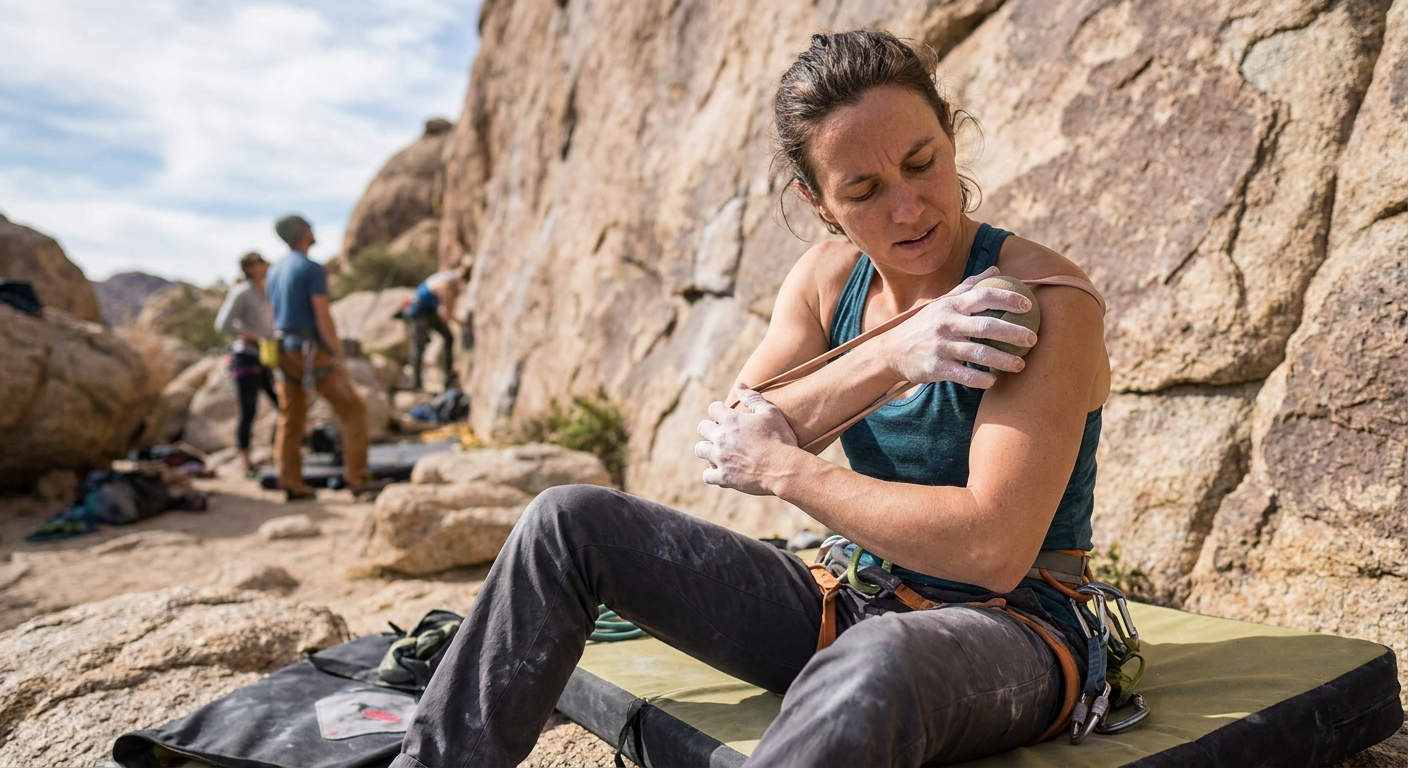
Shoulder impingement and “climber’s elbow” sideline more boulderers and sport climbers than any other overuse pattern, and rest alone rarely fixes either one by the time a climber is searching for help. This guide breaks down what actually works for pain management for rock climbers with shoulder and elbow pain in 2026, and where a conservative approach stops being enough.
TL;DR
- Ultrasound-guided injections for rotator cuff impingement let most climbers return to easy top-roping within 2-4 weeks. Buy.
- Climber’s elbow (medial epicondylitis) responds to PRP injections when rest and bracing stall out past 6-8 weeks.
- Numbness in the pinky and ring finger while crimping points to cubital tunnel syndrome, not tennis elbow - get it checked before it progresses.
- Pain management for rock climbers works best when the diagnosis is sport-specific, not a generic ‘shoulder pain’ or ‘elbow pain’ label.
Why this matters
Climbing loads the shoulder and elbow in ways most sports don’t: locked-off crimps, dynamic reaches, and full-body weight hanging off two or three fingers. That combination produces a narrow set of injuries - subacromial impingement, medial epicondylitis, and ulnar nerve irritation at the elbow - that generic orthopedic advice often misses.
A climber who gets told to “just rest it” for six weeks and then re-aggravates the same shoulder on the first outdoor session of the season isn’t unusual. The issue is rarely the rest itself. It’s that nobody addressed the underlying inflammation or nerve compression driving the pain, so the same movement pattern just re-injures the same tissue. Hudson Pain and Spine sees this cycle often enough in climbers from Bergen, Passaic, and Middlesex counties that it’s worth naming directly: pain management for rock climbers needs a diagnosis specific to climbing mechanics, not a one-size-fits-all shoulder protocol.
Who this is for
This guide is for climbers - gym, sport, or trad - who’ve had shoulder or elbow pain for more than 3-4 weeks, who’ve already tried rest, ice, and taping without lasting relief, and who want to know what an interventional pain specialist can actually offer before they consider surgery or give up the sport. It’s also for anyone dealing with a hooked finger, a dynamic reach, or a hangboard session that left them with pain that didn’t go away after a normal rest week.
What to look for in pain management for rock climbers
A diagnosis specific to climbing mechanics
Rotator cuff impingement, labral irritation, medial epicondylitis, and cubital tunnel syndrome all show up as “shoulder pain” or “elbow pain” on a basic exam, but they need different treatments. A specialist who asks about crimp grip, dynos, and hang time - not just “does it hurt when you lift your arm” - is more likely to land on the right diagnosis the first time.
Imaging that actually confirms the injury
Ultrasound or MRI should confirm what the exam suggests before any injection happens. Guessing at a rotator cuff tear versus a labral tear versus simple tendinopathy leads to treating the wrong structure, which wastes weeks a climber doesn’t want to lose from the season.
Ultrasound guidance on any injection
Blind injections into the shoulder or elbow miss the target more often than climbers expect, especially around the small, crowded structures near the elbow. Ultrasound-guided injections place the medication exactly where the inflammation is, which matters more in a joint this compact than it does in a hip or knee.
A realistic return-to-climbing timeline
A specialist should be able to say, in weeks, when a climber can expect to top-rope again, when they can crimp hard again, and when dynos are back on the table. Vague answers like “it depends” without a plan attached usually mean the treatment isn’t sport-specific.
Nerve screening, not just joint screening
Cubital tunnel syndrome - ulnar nerve compression at the elbow - gets missed constantly in climbers because it mimics golfer’s elbow. A specialist who checks for numbness or tingling in the ring and pinky fingers, not just tenderness at the elbow, catches this before it becomes chronic.
Board certification and a track record with overuse athletes
Double board-certified, fellowship-trained pain specialists have handled hundreds of overuse injuries in throwing athletes, golfers, and climbers. That repetition matters when the injury pattern is niche.
Get your shoulder or elbow pain diagnosed
Board-certified pain specialists serving Bergen, Passaic, and Middlesex counties, NJ.
Top picks: treatments that fit a climber’s shoulder and elbow
Rotator cuff impingement - the overhead-reach injury. Climbers who feel a pinch reaching high for a hold or locking off overhead usually have subacromial impingement, sometimes with early rotator cuff tendinopathy. An ultrasound-guided corticosteroid injection into the subacromial space typically calms the inflammation enough to resume light climbing within 2-4 weeks, paired with a rotator cuff strengthening plan. Read more on rotator cuff shoulder pain treatment. Verdict: Buy for climbers with overhead pinch pain and confirmed impingement on imaging.
Climber’s elbow (medial epicondylitis) - the crimp-grip culprit. This is the classic “climber’s elbow” - pain on the inside of the elbow from repeated crimping and pulling. When rest, bracing, and physical therapy haven’t resolved it after 6-8 weeks, a PRP injection or a targeted corticosteroid injection is the next step, not surgery. Details on tennis elbow and golfer’s elbow pain treatment. Verdict: Buy once conservative care has plateaued past two months.
Cubital tunnel syndrome - the numb-pinky warning sign. If a climber feels tingling or numbness in the ring and pinky finger during or after crimping, this is ulnar nerve compression at the elbow, not tendon pain. Left unaddressed, it can progress to grip weakness that ends a season. Nerve-specific treatment options are covered in cubital tunnel syndrome nerve pain. Verdict: Buy immediately if numbness is present - this one doesn’t improve with rest alone.
Labral irritation and overhead-athlete shoulder pain - the dynamic-move injury. Climbers who throw dynos or campus hard sometimes strain the labrum rather than just the rotator cuff, and the pain pattern overlaps heavily with what shows up in golfers and other overhead athletes. This pattern needs a specific overhead-athlete workup rather than a generic shoulder exam. Verdict: Consider if pain is deep and worse on dynamic reaches rather than steady overhead holds.
Trigger point injections for forearm and shoulder tightness - the maintenance option. For climbers with muscle knots and referred pain rather than a structural tear, trigger point injections can loosen chronically tight forearm flexors and shoulder stabilizers between climbing sessions. Verdict: Consider as a supplement to strength work, not a standalone fix for a confirmed tear.
What to avoid
- Generic cortisone shots without imaging first. A corticosteroid injection into the wrong structure - say, treating the rotator cuff when the real problem is a labral tear - buys temporary relief and delays the real fix.
- Skipping the nerve check because “it feels like tennis elbow.” Cubital tunnel syndrome and medial epicondylitis sit millimeters apart and get confused constantly. Numbness or tingling changes the treatment plan entirely.
- Jumping to surgical consults before trying targeted injections. Most climbing-related shoulder and elbow overuse injuries respond to ultrasound-guided injections and a structured return-to-climbing plan long before surgery becomes necessary.
Verdict comparison table
| Injury pattern | Key sign | First-line treatment | Verdict |
|---|---|---|---|
| Rotator cuff impingement | Pinch pain reaching overhead | Ultrasound-guided corticosteroid injection | Buy |
| Climber’s elbow (medial epicondylitis) | Inner elbow pain when crimping | PRP or corticosteroid injection | Buy |
| Cubital tunnel syndrome | Numb pinky/ring finger | Nerve-specific treatment plan | Buy |
| Labral irritation | Deep pain on dynamic moves | Overhead-athlete workup | Consider |
| Forearm/shoulder muscle tightness | Referred ache, no numbness | Trigger point injections | Consider |
FAQ
What is the best pain management for rock climbers with shoulder pain?
For most climbers, an ultrasound-guided injection targeted at the specific structure - rotator cuff, labrum, or bursa - confirmed by imaging works better than a generic cortisone shot. Pain management for rock climbers should always start with a diagnosis specific to overhead and crimping mechanics.
Is climber’s elbow the same as tennis elbow?
Climber’s elbow is usually medial epicondylitis, the inner-elbow version of tennis elbow, which affects the outer elbow. Both come from repetitive gripping and can respond to similar treatments, but a specialist needs to confirm which side is actually inflamed.
How long does it take to return to climbing after a shoulder injection?
Most climbers resume light top-roping within 2-4 weeks of an ultrasound-guided injection for rotator cuff impingement, with a gradual return to harder grades over 6-8 weeks. Timelines vary based on how long the injury went untreated before the visit.
Why does my pinky finger go numb when I crimp?
Numbness in the ring and pinky finger during crimping usually points to cubital tunnel syndrome, ulnar nerve compression at the elbow, not tendon pain. This needs a different treatment path than tennis or golfer’s elbow and should be checked before grip weakness sets in.
Do I need surgery for climbing-related shoulder or elbow pain?
Most overuse injuries in climbers respond to ultrasound-guided injections, PRP, and a structured strength plan before surgery is ever discussed. Surgery becomes relevant mainly for confirmed full-thickness rotator cuff tears or labral tears that don’t improve with conservative treatment.
Can I keep climbing through shoulder or elbow pain?
Climbing through sharp, pinching pain or any numbness typically makes the injury worse and extends recovery time. Lower-intensity movement is sometimes fine, but that call should come from a specialist who has actually examined the joint.
How much does an injection for climber’s elbow cost?
Cost varies by insurance coverage and the specific injection type, with corticosteroid injections generally costing less than PRP. Check current coverage details and out-of-pocket costs before scheduling.
What’s the difference between PRP and corticosteroid injections for elbow pain?
Corticosteroid injections reduce inflammation faster but PRP injections use the patient’s own platelets to support tendon healing over a longer timeline. Specialists often recommend PRP once corticosteroid injections have already been tried without lasting results.
One last thing
The detail climbers overlook most in 2026 isn’t the shoulder - it’s the elbow numbness they’ve been calling “tennis elbow” for months. Cubital tunnel syndrome from repeated crimping gets misdiagnosed constantly because the pain pattern overlaps so closely with medial epicondylitis, and the wrong treatment plan can let ulnar nerve compression progress toward permanent grip weakness. If there’s any tingling in the ring or pinky finger, that’s the detail to mention first at the next appointment, not the elbow ache itself.
Related guides
- Shoulder pain treatment for golfers and overhead athletes
- How platelet-rich plasma therapy treats joint pain
About the Medical Reviewer
Dr. Saurabh Dang is a double board-certified interventional pain management specialist serving Central and Northern New Jersey. He combines clinical expertise with a patient-centered approach to help patients find lasting relief from chronic pain conditions.
Read Full Bio →Ready to Find Relief from Pain?
Schedule your consultation with Dr. Saurabh Dang at our Englewood office.
Serving patients across Central and Northern New Jersey — Bergen, Passaic, and Middlesex counties.