
Pain Management for Yoga Instructors: 2026 Guide

Medically reviewed by
Dr. Saurabh Dang, MD, MBA
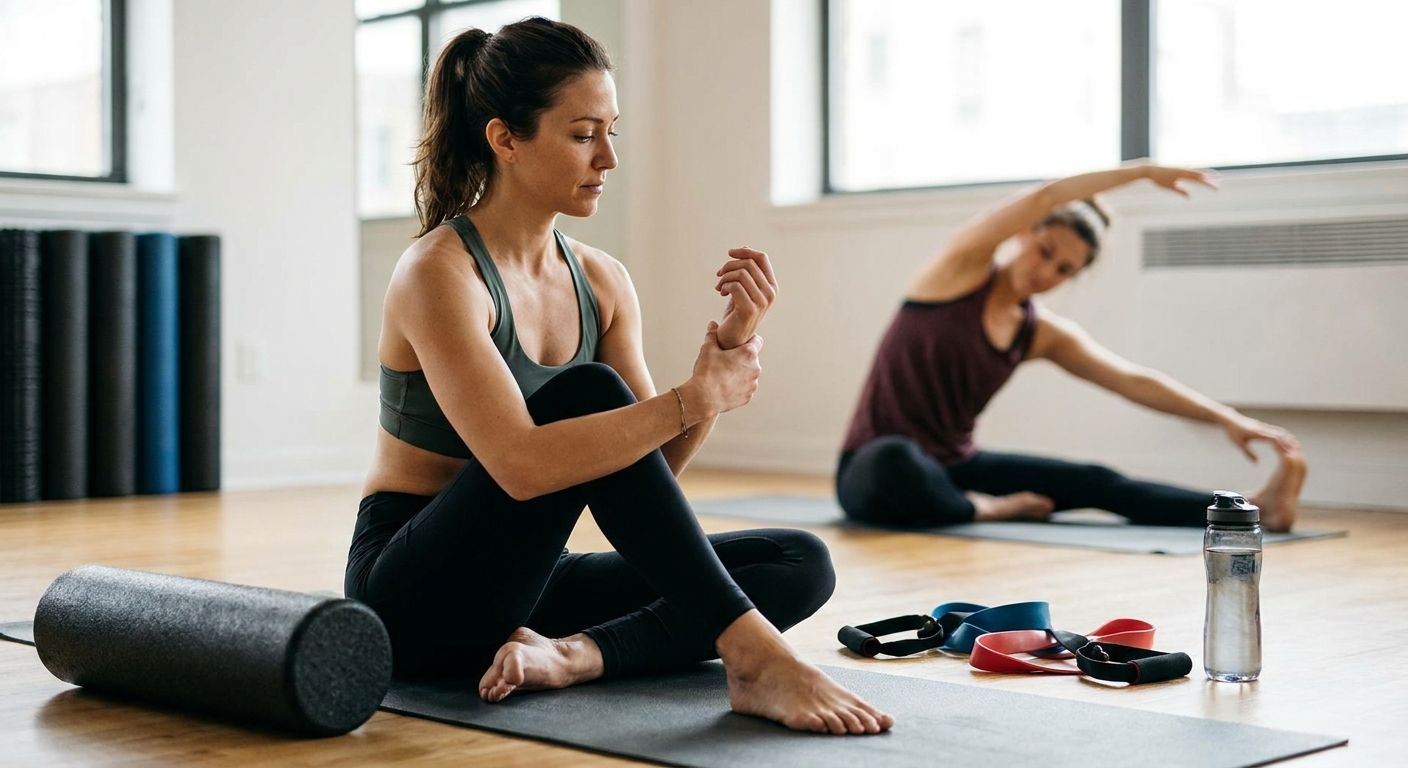
Yoga and pilates instructors log 15-25 teaching hours a week on top of their own practice, and joint strain from repeated deep flexion, overhead loading, and weight-bearing arm balances adds up faster than most instructors admit. This guide breaks down what actually helps when stretching and modifying stopped working, and where interventional treatment fits into a teaching career you don’t want to pause.
TL;DR
- Pain management for yoga instructors starts with identifying the joint under repetitive load — shoulder, hip, wrist, or SI joint — not treating pain generically.
- Corticosteroid or PRP injections for rotator cuff strain from chaturanga and arm balances: Consider before modifying your entire class sequence.
- Hip labral irritation from deep external rotation (pigeon, lotus) responds to targeted injections in many cases — surgery is often avoidable.
- Carpal tunnel symptoms from repetitive weight-bearing poses need a nerve conduction workup before you assume it’s just teacher’s wrist.
- Hudson Pain and Spine evaluates instructors across Bergen, Passaic, and Middlesex counties in 2026 without requiring you to stop teaching first.
Why this matters
Most yoga and pilates instructors treat joint pain the way they’d treat a student’s tight hamstring — stretch it, ice it, keep going. That approach works for muscle soreness. It does not work for a labral tear, a subacromial impingement, or an SI joint that’s been compensating for hypermobility for three years.
The difference matters because instructors rarely have the luxury of a full stop. You’re demonstrating poses, spotting adjustments, and holding planks for cueing purposes dozens of times a day. Pain management for yoga instructors in 2026 has to account for that reality — treatment that gets you back to teaching in weeks, not months, without masking a problem that gets worse under repeated load.
Hudson Pain and Spine sees this pattern often: an instructor who modified around a sore shoulder for six months, only to find the underlying issue was cumulative and treatable with a targeted injection rather than a hiatus from work.
Who this is for
This guide is for yoga and pilates instructors — studio-based or private — who teach 10 or more classes a week and are dealing with a joint that flares predictably: a shoulder that aches after chaturanga-heavy vinyasa, a hip that locks up after deep external rotation sequences, a wrist that goes numb during arm balances, or a low back that never quite resets after backbend-focused classes. If rest days aren’t fixing it and it’s been going on more than six weeks, this is for you.
What to look for in pain management for yoga and pilates instructors
A provider who understands repetitive-load injury, not just acute injury
A sprained ankle from a fall and a rotator cuff strain from 500 chaturangas a month are not the same clinical problem, even though both involve a joint. Repetitive-load injuries in instructors build slowly and often present with intermittent pain that the patient has been managing around for months. A provider who only screens for trauma will miss the pattern.
Diagnostic imaging before injections, not instead of a conversation
MRI or ultrasound confirms what’s actually torn, inflamed, or impinged versus what’s just tight. Injecting a joint without imaging risks treating the wrong structure — a labral tear masquerading as a hip flexor strain is a common miss in active patients.
Treatment options that don’t require stopping teaching entirely
Corticosteroid injections, platelet-rich plasma (PRP), and nerve blocks are all outpatient procedures with limited downtime compared to surgery. For an instructor whose income depends on a full class schedule, this distinction changes which treatment makes sense first.
A plan that addresses the movement pattern, not just the joint
Treating a shoulder injection without addressing the chaturanga mechanics that caused it means you’re back in the same office in eight months. Look for a provider who asks about your sequencing and hand placement, not just your pain scale.
Insurance and scheduling that fit a self-employed or 1099 teaching schedule
Many instructors work across multiple studios without employer-sponsored health coverage. A practice that can walk you through what board-certified and fellowship-trained really means for pain care, alongside straightforward insurance verification, saves you from guessing at what a procedure will cost.
Proximity to where you actually teach
If you teach across Bergen, Passaic, or Middlesex counties, a provider with offices in Englewood, Woodland Park, and Edison means you’re not driving 45 minutes each way for a follow-up injection.
Top picks: treatment approaches by joint
The shoulder pick: rotator cuff and impingement management
Chaturanga, plank holds, and overhead arm balances load the rotator cuff repeatedly, and impingement symptoms — pain reaching overhead, a catch during external rotation — show up in instructors more than almost any other profession outside of swimming and throwing sports. Corticosteroid injections reduce inflammation directly at the subacromial space, often within days, while PRP is used for degenerative tendon changes that don’t respond to steroids alone. Detailed options are covered in best treatments for rotator cuff shoulder pain. Verdict: Consider before eliminating overhead sequences from your teaching entirely.
The hip pick: labral irritation from deep external rotation
Pigeon pose, lotus, and deep hip openers place repeated stress on the labrum, the cartilage ring stabilizing the hip socket. Instructors often describe a deep groin ache or a clicking sensation that worsens with prolonged sitting after class. Image-guided injections combined with a modified sequencing plan resolve symptoms in many patients without surgery — the full breakdown is in how to treat a hip labral tear without surgery. Verdict: Buy in if imaging confirms a labral component rather than just tight hip flexors.
The wrist pick: nerve compression from weight-bearing poses
Downward dog, crow pose, and extended plank holds put sustained pressure through the wrist and carpal tunnel. Numbness or tingling into the thumb and first two fingers during or after teaching is a red flag for nerve compression, not just soreness. A nerve conduction study confirms the diagnosis before any injection or bracing plan starts — see how to treat carpal tunnel syndrome nerve pain for the full workup. Verdict: Consider getting tested as soon as numbness appears — waiting lets nerve irritation become nerve damage.
The low back pick: SI joint dysfunction from hypermobility
Instructors with naturally flexible hips and spines are prone to SI joint instability, especially after years of deep backbends and hip openers. The pain often sits just off-center at the belt line and worsens with standing demonstrations. SI joint injections both diagnose and treat the source — details are in SI joint pain treatment for hip and low back pain. Verdict: Buy in if pain is asymmetric and worse on one side after teaching.
Talk to a Pain Specialist About Joint Strain
Evaluations available across Bergen, Passaic, and Middlesex counties in 2026.
What to avoid
- Generic physical therapy referrals with no imaging first. PT is useful once you know what’s actually wrong — sent in blind, it can aggravate a labral tear or impingement that needed rest, not strengthening.
- Long-term reliance on anti-inflammatories to keep teaching. NSAIDs mask pain signals that are telling you a movement pattern needs to change, and daily use over months carries its own risks.
- Skipping diagnosis because it’s just an occupational hazard. Repetitive strain in instructors is treatable, not an inevitable cost of the job — waiting years to address a shoulder or hip issue makes recovery longer, not easier.
Verdict comparison
| Joint / Issue | Common Trigger | First-Line Treatment | Verdict |
|---|---|---|---|
| Shoulder impingement | Chaturanga, plank, overhead holds | Corticosteroid or PRP injection | Consider |
| Hip labral irritation | Pigeon, lotus, deep external rotation | Image-guided hip injection | Buy in |
| Carpal tunnel / wrist nerve compression | Crow, downward dog, arm balances | Nerve conduction study, then bracing or injection | Consider |
| SI joint dysfunction | Backbends, hypermobility, standing cues | SI joint injection | Buy in |
FAQ
What’s the best pain management approach for yoga instructors with shoulder pain?
For most instructors, a corticosteroid or PRP injection targeted at the subacromial space addresses rotator cuff impingement from repeated chaturanga and overhead loading. Imaging confirms the diagnosis first, since generic shoulder pain can come from several different structures.
Is PRP better than corticosteroid injections for teaching-related joint pain?
PRP tends to work better for degenerative tendon changes that have built up over months or years, while corticosteroids act faster for acute inflammation. The right choice depends on how long symptoms have been present and what imaging shows.
How much does pain management for a yoga instructor’s joint strain cost without insurance?
Costs vary by procedure and imaging needed, and a full breakdown of typical pricing is available in a dedicated cost guide. Insurance verification before scheduling avoids surprise bills for self-employed instructors.
Can I keep teaching yoga while getting treated for joint strain?
Most instructors modify their class load for a short period around an injection rather than stopping entirely, since corticosteroid, PRP, and nerve procedures are outpatient with limited downtime. A provider familiar with instructor schedules will build the recovery plan around your teaching calendar.
How do I know if my wrist pain from arm balances is carpal tunnel syndrome?
Numbness or tingling into the thumb and first two fingers during or after weight-bearing poses like crow or downward dog points toward nerve compression rather than simple soreness. A nerve conduction study confirms the diagnosis before treatment starts.
What causes hip pain in instructors who teach a lot of deep hip openers?
Repeated deep external rotation in poses like pigeon and lotus can irritate the labrum, the cartilage ring that stabilizes the hip socket, causing a deep groin ache or clicking sensation. Imaging distinguishes labral irritation from simple hip flexor tightness.
When should a yoga instructor see a pain specialist instead of a physical therapist?
See a specialist first when pain has lasted more than six weeks, includes numbness or tingling, or worsens despite modifying your sequencing. A specialist can order imaging and injections that a general PT referral cannot.
Does insurance cover injections for repetitive strain injuries in instructors?
Coverage depends on the specific plan and whether conservative treatment has been tried first, and many plans do cover diagnostic imaging and injections once medical necessity is documented. Checking with the provider’s office before scheduling avoids unexpected costs.
One last thing
The instructors who recover fastest in 2026 aren’t the ones who push through the most pain — they’re the ones who get an accurate diagnosis within the first six to eight weeks of a flare, before a manageable strain turns into a structural tear that needs a longer recovery. If a joint has been aching through the same three or four poses for more than a month, that’s the signal to get it looked at, not to add another modification.
Related guides
- Pain management for dancers and performers with chronic injuries
- How platelet-rich plasma therapy treats joint pain
- Best low-impact exercises for chronic low back pain
- Pain management for massage therapists with hand and wrist strain
About the Medical Reviewer
Dr. Saurabh Dang is a double board-certified interventional pain management specialist serving Central and Northern New Jersey. He combines clinical expertise with a patient-centered approach to help patients find lasting relief from chronic pain conditions.
Read Full Bio →Seeking Treatment for Nerve Block Injections?
Dr. Dang and the team at Hudson Pain and Spine offer specialized care and advanced interventional treatments.
Ready to Find Relief from Pain?
Schedule your consultation with Dr. Saurabh Dang at our Englewood office.
Serving patients across Central and Northern New Jersey — Bergen, Passaic, and Middlesex counties.