What Is a Pain Management Plan? A Clear Guide

Medically reviewed by
Dr. Saurabh Dang, MD, MBA
What Is a Pain Management Plan? A Clear Guide
TL;DR:
- A pain management plan is a personalized, multidisciplinary approach aimed at reducing pain’s impact on daily life and restoring function.
- It is a dynamic, goal-oriented strategy that combines therapies like physical and psychological support, medication, and interventional procedures, tailored to individual needs.
A pain management plan is defined as a personalized, multidisciplinary strategy designed to reduce pain’s impact on daily life and restore function. The goal is not simply to eliminate pain. Long-term pain management focuses on restoring function and participation through person-centered, coordinated care. This distinction matters because chronic pain rarely disappears completely. A well-built plan gives you the tools to live better despite it. If you are researching what is a pain management plan, this guide covers every core component, how plans are built, and what the evidence says about which techniques actually work.
What is a pain management plan and what does it include?
A pain management plan is a structured, written agreement between you and your care team that maps out your treatment goals, chosen therapies, and progress checkpoints. The industry term used by clinicians is a “multimodal pain care plan,” reflecting the fact that no single treatment works for everyone. Therapeutic pain education focuses on improving function by shifting patient understanding about pain neuroplasticity and emotional regulation, rather than chasing a pain score of zero. That reframe is central to every modern plan.

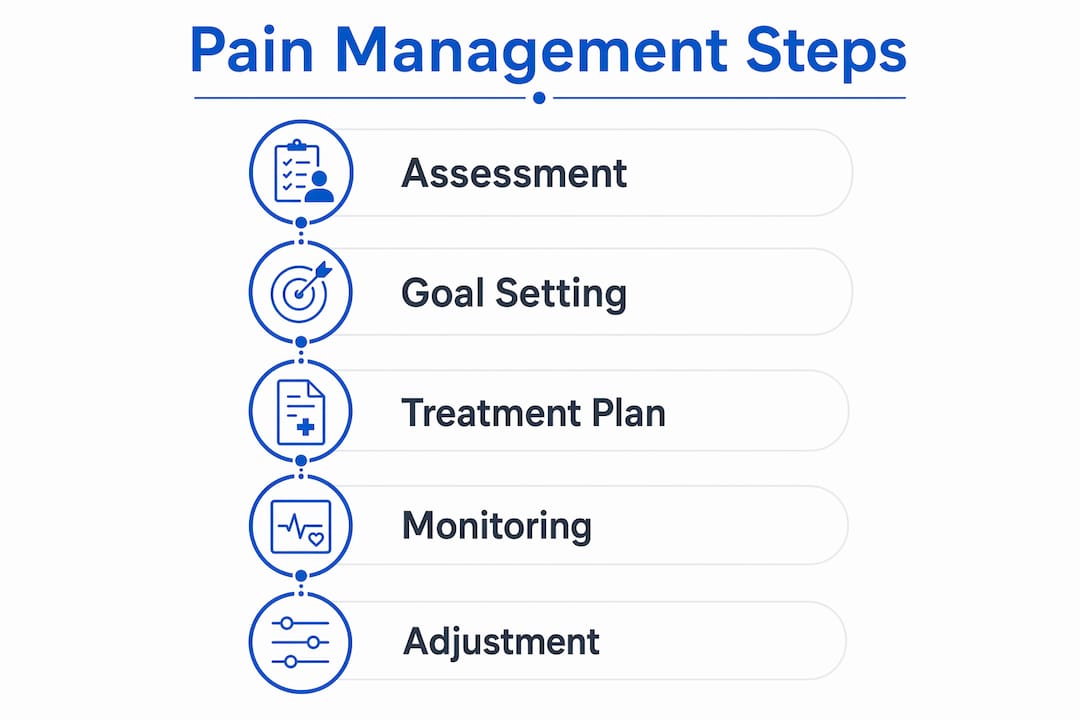
The assessment phase comes first. Your care team conducts a thorough biopsychosocial history, a physical and neurological exam, and a review of prior imaging and medications. Initial consultations typically run 30–60 minutes and emphasize understanding your full history before recommending any intervention. That depth of intake is what separates a real pain management plan from a simple prescription refill.
Core components of a pain management plan
A complete plan typically includes the following elements:
- Comprehensive assessment: Biopsychosocial history, physical exam, imaging review, and medication audit
- Functional goals: Specific targets such as returning to work, walking a set distance, or sleeping through the night
- Physical therapy: Graded exercise programs targeting mobility, strength, and aerobic capacity
- Psychological support: Cognitive behavioral therapy (CBT) or acceptance-based approaches to address fear and catastrophizing
- Medication strategy: Non-opioid medications prioritized, with opioids reserved for selected cases with defined endpoints
- Interventional procedures: Epidural injections, nerve blocks, or spinal cord stimulation used as adjuncts when conservative care plateaus
- Patient education: Teaching you how the nervous system processes pain so you can reframe your experience
- Monitoring checkpoints: Scheduled reassessments to track progress and adjust the plan
Pro Tip: Write your top three functional goals before your first appointment. Clinicians build better plans when patients arrive knowing what they want to do, not just what they want to stop feeling.
How is a pain management plan created for your specific needs?
Every plan starts with a detailed intake process. The goal is to understand you as a whole person, not just your diagnosis. Here is how a well-run consultation typically unfolds:
- Detailed history intake. Your clinician collects information about pain location, duration, triggers, and prior treatments. Social and occupational factors are included because they directly affect recovery.
- Physical and neurological examination. The exam identifies pain generators, checks nerve function, and rules out red flags such as fractures, tumors, or infections that require urgent care.
- Psychological screening. Behavioral assessments evaluate fear-avoidance and catastrophizing, both of which predict how well you will respond to rehabilitation. These are not optional extras. They are core clinical data.
- Shared goal setting. You and your clinician agree on realistic, measurable goals. Motivation and readiness to change are factored in because a plan you do not believe in will not work.
- Treatment selection. Therapies are chosen based on your specific pain generators, lifestyle, and preferences. A desk worker with lumbar disc pain needs a different plan than an active adult with knee osteoarthritis.
- Scheduled reassessment. The plan includes built-in review dates, typically at 4, 8, and 12 weeks, to measure progress and adjust treatments that are not delivering results.
Pro Tip: Ask your clinician to explain the reasoning behind each treatment choice. Understanding why a therapy is included increases your commitment to it and improves outcomes.
The plan is not a static document. Personalization and ongoing reassessment create a dynamic care pathway that adapts to your needs and maximizes improvement over time. Think of it as a living roadmap, not a one-time prescription.
What are the most effective pain management techniques?
Evidence-based pain management techniques fall into four broad categories. Each plays a different role, and the most effective plans combine several of them.
Physical therapy and graded exercise
Physical therapy and graded exercise reduce pain sensitivity and improve confidence in movement, thereby restoring function. The key word is “graded.” Programs start at a level you can manage without triggering a flare, then increase gradually. This approach directly counters the fear of movement that keeps many chronic pain patients stuck. Personalized progressions target mobility, strength, and aerobic capacity based on your baseline.
Psychological therapies
CBT integrated into pain management addresses unhelpful thought patterns like catastrophizing and avoidance, improving coping skills and emotional regulation. CBT does not mean your pain is imaginary. It means your brain’s response to pain is trainable. Patients who complete CBT alongside physical therapy consistently report better function than those who receive physical therapy alone. Acceptance and Commitment Therapy (ACT) is another well-supported option for patients who struggle with CBT’s structured format.
Medication strategies
Medications support function rather than replace it. Non-opioid medications are prioritized, with opioids reserved for selected cases with defined endpoints and shared decision-making. Common non-opioid options include NSAIDs, anticonvulsants such as gabapentin, and tricyclic antidepressants for nerve pain. The goal is always to use the lowest effective dose for the shortest necessary period.
Interventional procedures
Interventional techniques are adjunct tools, most effective when conservative methods plateau or when diagnostic clarity justifies their use. Procedures such as epidural steroid injections or nerve block treatments can reduce inflammation enough to allow you to engage fully in physical therapy. Careful patient selection predicts better outcomes more than the specific device or technique used.
The table below summarizes how each technique contributes to your overall plan:
| Technique | Primary benefit | Best used when |
|---|---|---|
| Graded exercise | Reduces pain sensitivity, builds confidence | Fear of movement limits daily activity |
| Cognitive behavioral therapy | Reframes pain beliefs, reduces catastrophizing | Anxiety or depression accompanies pain |
| Non-opioid medications | Manages inflammation and nerve pain | Acute flares or persistent baseline pain |
| Interventional procedures | Targets specific pain generators directly | Conservative care has plateaued |
| Patient education | Builds self-management skills | Long-term maintenance and relapse prevention |
How does ongoing monitoring improve your pain management plan?
A plan without monitoring is just a list of intentions. Multimodal chronic pain care models with decision support and ongoing monitoring improve pain-related function with a number needed to treat between 4.1 and 12.7 over 9–12 months. That means for every 4 to 13 patients who follow a monitored multimodal plan, at least one achieves a clinically meaningful improvement in function within a year. Those are strong results for a condition as complex as chronic pain.
Monitoring tracks more than pain scores. Effective reassessment covers functional capacity, psychological state, medication use, and treatment adherence. Dynamic care that tracks psychological and functional changes leads to more successful outcomes than static protocols. If fear-avoidance beliefs are increasing, the plan pivots toward more psychological support. If function is improving but pain scores remain high, the team may reduce medication rather than escalate it.
Flare planning is a specific monitoring tool that most patients overlook. Instead of defaulting to rest during a pain flare, a good plan includes a pre-agreed protocol: which activities to maintain, which to temporarily modify, and when to contact your clinician. Rest alone prolongs recovery. Staying active within safe limits, even during flares, preserves the gains you have already made.
Coordinated multidisciplinary care amplifies every individual technique. When your physical therapist, psychologist, and pain physician share notes and align on goals, your plan stays coherent. You are not receiving three separate treatments. You are receiving one integrated strategy delivered by specialists who communicate with each other. That coordination is what separates a genuine pain management plan from a collection of disconnected appointments. Explore advanced treatment approaches for more on how decision support systems improve chronic pain outcomes.
Hudson Pain and Spine offers personalized pain management in New Jersey
Hudson Pain and Spine builds individualized pain management plans that combine physical therapy coordination, medication management, and minimally invasive interventional procedures including epidural injections, nerve blocks, and spinal cord stimulation.
Every patient starts with a thorough biopsychosocial assessment before any treatment is recommended. The team’s approach prioritizes restoring your function and quality of life, not just reducing a number on a pain scale. If you are ready to move from managing symptoms to reclaiming your daily life, schedule a consultation at a convenient New Jersey location. You can also review the full range of pain management services to understand which options may fit your situation.
Key Takeaways
A pain management plan works best when it combines multimodal techniques, ongoing monitoring, and personalized goal setting focused on restoring function rather than eliminating pain.
| Point | Details |
|---|---|
| Function over pain elimination | Effective plans target what you can do, not just how much you hurt. |
| Multimodal approach | Combining physical therapy, CBT, medications, and procedures outperforms any single treatment. |
| Biopsychosocial assessment | The intake process must evaluate physical, psychological, and social factors to build an accurate plan. |
| Ongoing monitoring | Scheduled reassessments allow the plan to adapt as your condition and goals evolve. |
| Patient education | Understanding how pain works in the nervous system improves coping and long-term self-management. |
FAQ
What is the main goal of a pain management plan?
The primary goal is to restore function and improve quality of life, not simply to eliminate pain. Plans focus on what you can do each day, using a combination of therapies tailored to your specific condition and goals.
How long does it take to create a pain management plan?
The initial consultation typically runs 30–60 minutes and covers your full medical, psychological, and social history before any treatment is recommended. The full plan is usually finalized after that first appointment, with adjustments made at follow-up visits.
What is the difference between pain management and pain control?
Pain control refers to reducing pain intensity, often through medication alone. Pain management is broader and includes physical therapy, psychological support, patient education, and interventional procedures working together to improve your overall function.
Can a pain management plan change over time?
Yes. Plans are designed to be dynamic. Clinicians track your functional progress, psychological state, and treatment response at regular intervals, then adjust therapies based on what is and is not working for you.
Do I need a referral to see a pain management specialist?
Referral requirements vary by insurance plan and state. Contacting your insurer or the pain management clinic directly is the fastest way to confirm what your specific coverage requires before booking an appointment.
Recommended
- What Is Multimodal Pain Treatment? A Clear Guide | Hudson Pain and Spine Blog
- How to Prepare for a Pain Management Consultation | Hudson Pain and Spine Blog
- Chronic Pain Treatment Options Explained for Adults | Hudson Pain and Spine Blog
- The Role of Physical Therapy in Pain Management | Hudson Pain and Spine Blog
About the Medical Reviewer
Dr. Saurabh Dang is a double board-certified interventional pain management specialist serving Central and Northern New Jersey. He combines clinical expertise with a patient-centered approach to help patients find lasting relief from chronic pain conditions.
Read Full Bio →Seeking Treatment for Chronic Pain?
Dr. Dang and the team at Hudson Pain and Spine offer specialized care and advanced interventional treatments.
Ready to Find Relief from Pain?
Schedule your consultation with Dr. Saurabh Dang at our Englewood office.
Serving patients across Central and Northern New Jersey — Bergen, Passaic, and Middlesex counties.