
Baseball Pitcher Elbow Pain Treatment (2026 Guide)

Medically reviewed by
Dr. Saurabh Dang, MD, MBA
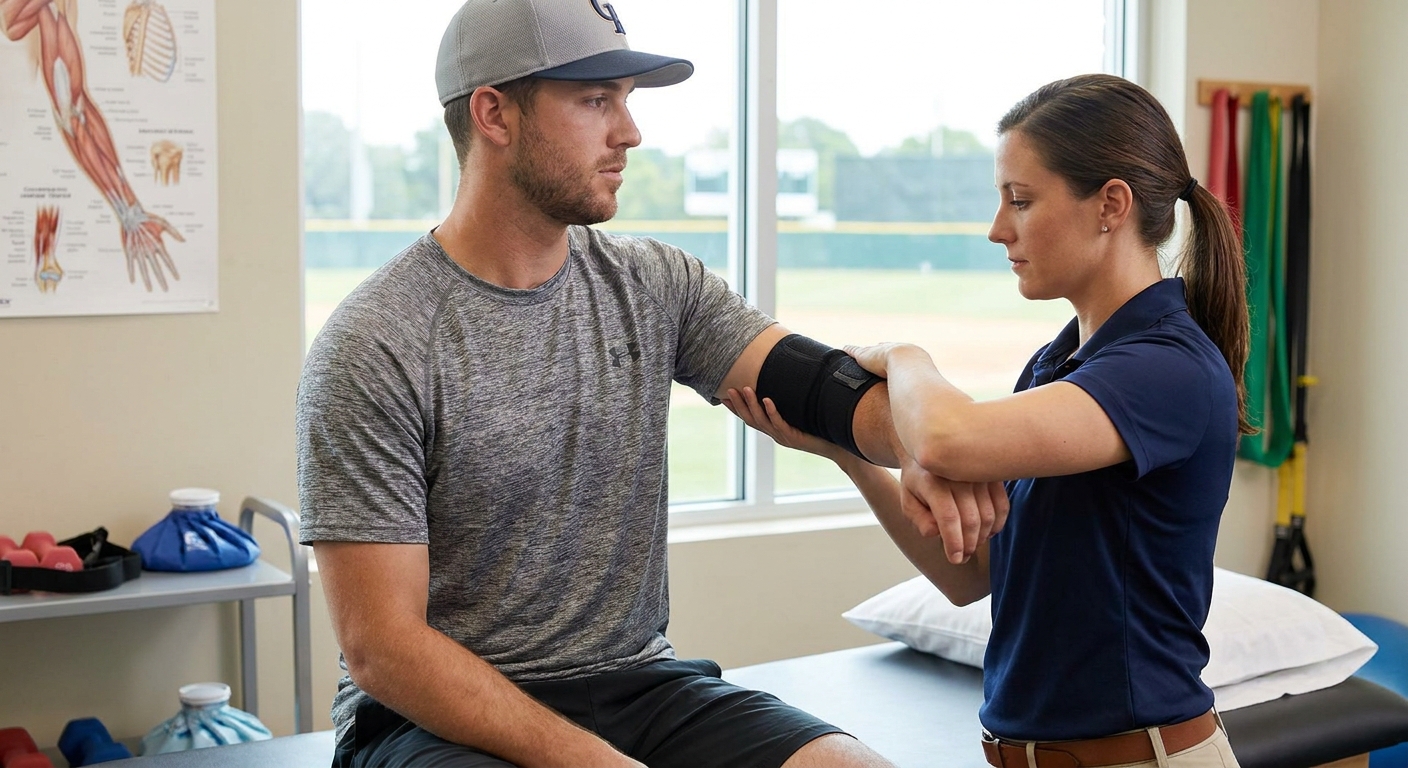
Elbow pain that shows up mid-windup or lingers after a bullpen session isn’t something to pitch through. Ulnar collateral ligament (UCL) strain, medial epicondylitis, and ulnar nerve irritation account for most throwing-related elbow injuries in 2026, and the treatment path changes completely depending on which one you’re dealing with.
TL;DR
- Baseball pitcher elbow pain treatment starts with stopping throwing and icing 15-20 minutes, 3-4 times daily for 48-72 hours.
- Medial elbow pain with numbness in the ring and pinky fingers points to ulnar nerve involvement, not just ligament strain.
- Grade 1-2 UCL sprains respond to 6-12 weeks of rest and rehab; Grade 3 tears often need surgical consult.
- Platelet-rich plasma injections show promise for partial UCL tears in athletes wanting to avoid Tommy John surgery.
- A pain management specialist can confirm the diagnosis with exam and imaging before you build a return-to-throw plan.
Why this matters
Throwing elbow pain rarely comes from one bad pitch. It builds from repeated valgus stress on the medial elbow, the same motion that stabilizes your arm during the late cocking and acceleration phases of a pitch. Ignore it and a mild strain can progress into a partial UCL tear, cubital tunnel syndrome from ulnar nerve compression, or a full ligament rupture that ends a season.
Youth pitchers face a version of this called Little League elbow, an injury to the growth plate rather than the ligament itself, and it needs a different management approach entirely. Adult recreational and competitive pitchers deal more often with medial epicondylitis and UCL sprains from cumulative pitch count and mechanics breakdown. Knowing which structure is inflamed determines whether you’re looking at two weeks off or a much longer road involving tennis elbow and golfer’s elbow treatment protocols.
What you’ll need
- Ice packs or a reusable cold wrap
- A compression sleeve for the elbow
- Access to a physical therapist or sports medicine provider
- A pitch count log from the last 4-6 weeks (helps identify overuse patterns)
- An interventional pain management evaluation if pain persists past 2 weeks
- Imaging referral (ultrasound or MRI) if instability or numbness is present
The steps
1. Stop throwing immediately
Any elbow pain during or after throwing means the arm stops that day, not “after this inning.” Continuing to pitch through medial elbow pain is the single biggest risk factor for converting a Grade 1 UCL sprain into a Grade 2 or 3 tear. Shut down all throwing, including flat-ground and long toss, until you’ve had an evaluation. Common mistake: pitchers rest the mound but keep doing bullpen “light tosses,” which still load the ligament.
2. Ice and compress for 48-72 hours
Apply ice for 15-20 minutes every 2-3 hours during waking hours for the first two to three days. This controls the inflammatory response around the medial epicondyle and ulnar nerve. Pair ice with a light compression sleeve between sessions, not tight enough to restrict circulation. Expect swelling and tenderness to noticeably decrease by day 3; if pain is worse instead of better, that’s a signal to escalate care rather than wait it out.
3. Get a clinical exam within the first week
A pain management specialist or sports medicine physician will check for valgus instability (the “moving valgus stress test”), tenderness location, and grip strength. This exam differentiates a UCL sprain from medial epicondylitis, flexor-pronator strain, or ulnar nerve irritation. Numbness or tingling into the ring and pinky fingers during this exam points toward nerve involvement, which changes the treatment plan toward options used for cubital tunnel syndrome nerve pain rather than pure ligament rest.
4. Confirm the diagnosis with imaging
Ultrasound can visualize UCL thickening and partial tears in-office, while MRI (with or without contrast) gives the clearest picture of ligament integrity and any associated bone or cartilage changes. Grade 1 sprains show ligament laxity without a clear tear; Grade 2 shows partial fiber disruption; Grade 3 is a complete rupture, usually visible as a clear gap on MRI. As of 2026, MRI remains the standard for surgical decision-making in competitive pitchers considering Tommy John reconstruction.
5. Build a structured rest and rehab timeline
Grade 1 sprains typically need 4-6 weeks off throwing paired with eccentric strengthening of the forearm flexors. Grade 2 partial tears run 3-6 months of rehab before a return-to-throw progression even begins. Expected outcome for a well-managed Grade 1 sprain: full return to mound work by week 8-10, assuming a gradual long-toss progression rather than jumping straight back to bullpens.
6. Consider PRP for partial tears
Platelet-rich plasma injections concentrate growth factors from your own blood and inject them directly into the damaged ligament tissue to stimulate healing. For competitive pitchers with a Grade 2 partial UCL tear who want to avoid surgery, platelet-rich plasma therapy for joint pain has become a common intermediate step before considering Tommy John surgery. It’s not a substitute for rest, but it can shorten the healing window in select cases.
7. Progress through an interval throwing program
Once pain-free at rest and through basic strengthening, start a structured long-toss program beginning at 30-45 feet and building distance every few days over 6-8 weeks. Only add mound work and full velocity in the final phase. Common mistake: skipping straight to bullpen sessions once the elbow “feels fine,” which is the top cause of re-injury in the same season.
8. Address mechanics and pitch count going forward
Many throwing elbow injuries trace back to mechanical breakdown late in games, from arm slot drop to early trunk rotation. Pair rehab with a mechanics assessment and a hard pitch count ceiling for the 2026 season based on age and role. Youth pitchers especially need innings and pitch-count limits enforced beyond just “how the arm feels.”
Troubleshooting
Pain persists past 2 weeks of rest. This usually means the injury is more than a mild strain. Get an imaging-confirmed diagnosis rather than continuing rest without a clear endpoint.
Numbness or weakness in the ring and pinky fingers. This points to ulnar nerve compression at the elbow, not just ligament strain, and needs its own evaluation and possibly nerve conduction testing.
Swelling returns every time you resume throwing. The interval throwing program is likely progressing too fast. Drop back one phase and hold there for an extra week before advancing.
Elbow feels unstable or “loose” during throwing. This is a red flag for a higher-grade UCL tear and needs an MRI and specialist consult before any further throwing.
Pain shows up only on breaking balls, not fastballs. This often points to grip and wrist mechanics on curveballs and sliders rather than the ligament itself, though it can still aggravate an existing strain.
Youth pitcher with elbow pain and no clear ligament finding. Check growth plates. Little League elbow behaves differently from adult UCL injuries and typically needs a longer, more conservative rest period.
Get your elbow pain evaluated
Board-certified interventional pain management at three NJ locations.
Tools and resources
- Compression sleeve and cold therapy wrap for daily use during the acute phase
- A physical therapist experienced with throwing athletes for eccentric strengthening protocols
- Ultrasound or MRI imaging to grade the UCL injury before deciding on rest versus intervention
- Sports injury pain treatment for youth athletes if the pitcher is under 18 and dealing with growth-plate concerns
- An interval throwing program template from your rehab provider, adjusted weekly based on symptoms
What to do next
Once the elbow is stable and you’re through the return-to-throw progression, check your shoulder mechanics too. The same overhead throwing motion that stresses the elbow also loads the rotator cuff and labrum, and a lot of pitchers who rehab the elbow correctly still end up back in an exam room a season later for the shoulder. Read the guide on shoulder pain treatment for golfers and overhead athletes before you ramp innings back up in 2026.
FAQ
What is the best baseball pitcher elbow pain treatment for a mild strain?
Rest from throwing, ice for 15-20 minutes several times daily, and 4-6 weeks of eccentric forearm strengthening treats most Grade 1 UCL sprains. Pain that doesn’t improve within 2 weeks needs imaging to rule out a partial tear.
How do I know if my elbow pain is a UCL tear or just tendinitis?
UCL tears typically cause pain and instability on the inside of the elbow during the throwing motion, while tendinitis causes more constant tenderness at the medial epicondyle. A clinical exam with a valgus stress test, backed by ultrasound or MRI, distinguishes the two reliably.
Do all pitchers with a UCL tear need Tommy John surgery?
No. Grade 1 and many Grade 2 partial tears heal with rest, rehab, and sometimes PRP injections. Surgery is generally reserved for complete Grade 3 tears or partial tears that fail 3-6 months of conservative treatment.
How long does it take to return to pitching after elbow pain?
A well-managed Grade 1 sprain allows return to mound work in 8-10 weeks. Partial tears treated conservatively often take 3-6 months before a full interval throwing program is complete.
Can numbness in my fingers after pitching mean nerve damage?
Numbness in the ring and pinky fingers after throwing points to ulnar nerve irritation at the elbow, separate from ligament injury. This needs its own evaluation since it can progress to cubital tunnel syndrome if ignored.
Are PRP injections effective for pitcher elbow injuries?
Platelet-rich plasma injections show benefit for partial UCL tears in athletes trying to avoid surgery, though results vary by tear severity and age. They work best paired with a full rehab program, not as a standalone fix.
Is Little League elbow the same as an adult UCL tear?
No. Little League elbow affects the growth plate in young pitchers, not the ligament itself, and generally needs a longer rest period with a gradual return to throwing under close monitoring.
When should a pitcher see a pain management specialist for elbow pain?
See a specialist any time elbow pain lasts more than 1-2 weeks, includes numbness or instability, or keeps recurring after rest. Early evaluation prevents a mild strain from becoming a season-ending tear.
One last thing
The pitchers who come back strongest in 2026 aren’t the ones who rested the longest, they’re the ones who got an accurate diagnosis in week one instead of guessing through six weeks of rest that treated the wrong structure. A five-minute valgus stress test at the first sign of medial elbow pain saves months compared to finding out at week eight that it was never a simple strain.
Related guides
- Tennis elbow and golfer’s elbow treatment
- Cubital tunnel syndrome nerve pain
- Platelet-rich plasma therapy for joint pain
- Sports injury pain treatment for youth athletes
- Shoulder pain treatment for golfers and overhead athletes
About the Medical Reviewer
Dr. Saurabh Dang is a double board-certified interventional pain management specialist serving Central and Northern New Jersey. He combines clinical expertise with a patient-centered approach to help patients find lasting relief from chronic pain conditions.
Read Full Bio →Ready to Find Relief from Pain?
Schedule your consultation with Dr. Saurabh Dang at our Englewood office.
Serving patients across Central and Northern New Jersey — Bergen, Passaic, and Middlesex counties.