
The Role of Nervous System Pain in Chronic Conditions

Medically reviewed by
Dr. Saurabh Dang, MD, MBA
The Role of Nervous System Pain in Chronic Conditions
TL;DR:
- The nervous system detects and regulates pain through complex pathways involving nerves, the spinal cord, and the brain. Chronic pain results from neuroimmune changes, central sensitization, and maladaptive brain plasticity that sustain pain beyond tissue healing. Effective treatment requires targeting these nervous system dysfunctions through multimodal approaches including nerve stimulation, behavioral therapies, and advanced interventional procedures.
The nervous system is the body’s primary pain detection and regulation system, responsible for identifying harmful stimuli and deciding how intensely you feel them. This process, called nociception, involves peripheral nerves, the spinal cord, and the brain working together in a continuous loop. The role of nervous system pain goes far beyond a simple alarm signal. Chronic pain often persists long after an injury heals because the nervous system itself becomes dysregulated. Understanding how this system works is the first step toward understanding why chronic pain is so hard to treat and what can actually help.
How does the nervous system process pain signals?
Pain processing follows a specific path through the nervous system, from the site of injury to conscious awareness. Understanding each step explains why pain can feel different depending on context, mood, or even time of day.
-
Nociceptor activation. Specialized nerve endings called nociceptors detect harmful stimuli, including heat, pressure, and chemical signals from damaged tissue. They convert these stimuli into electrical signals.
-
Peripheral nerve transmission. Those electrical signals travel along peripheral nerves toward the spinal cord. Two main fiber types carry pain: fast A-delta fibers, which produce sharp, immediate pain, and slower C fibers, which produce the dull, aching sensation that follows.
-
Dorsal horn relay. Signals arrive at the dorsal horn of the spinal cord, a key relay station where the first round of signal modulation occurs. The spinal cord does not simply pass signals along. It can amplify or reduce them based on context.
-
Ascending pathways to the brain. Modulated signals travel up the spinal cord through pathways like the spinothalamic tract to reach the brain’s thalamus, then spread to the cortex, limbic system, and other regions.
-
Brain interpretation. The brain integrates these signals with memory, emotion, and expectation to produce the final pain experience. Two people with identical injuries can feel very different levels of pain based on this interpretation.
Pro Tip: The brain sends descending signals back down the spinal cord to regulate pain intensity. These descending pathways can either suppress or amplify incoming pain signals, which is why stress, anxiety, and sleep deprivation can make pain feel significantly worse.
What changes occur in the nervous system during chronic pain?
Chronic pain is not simply acute pain that lasts longer. It reflects real structural and chemical changes in the nervous system, a process called central sensitization.

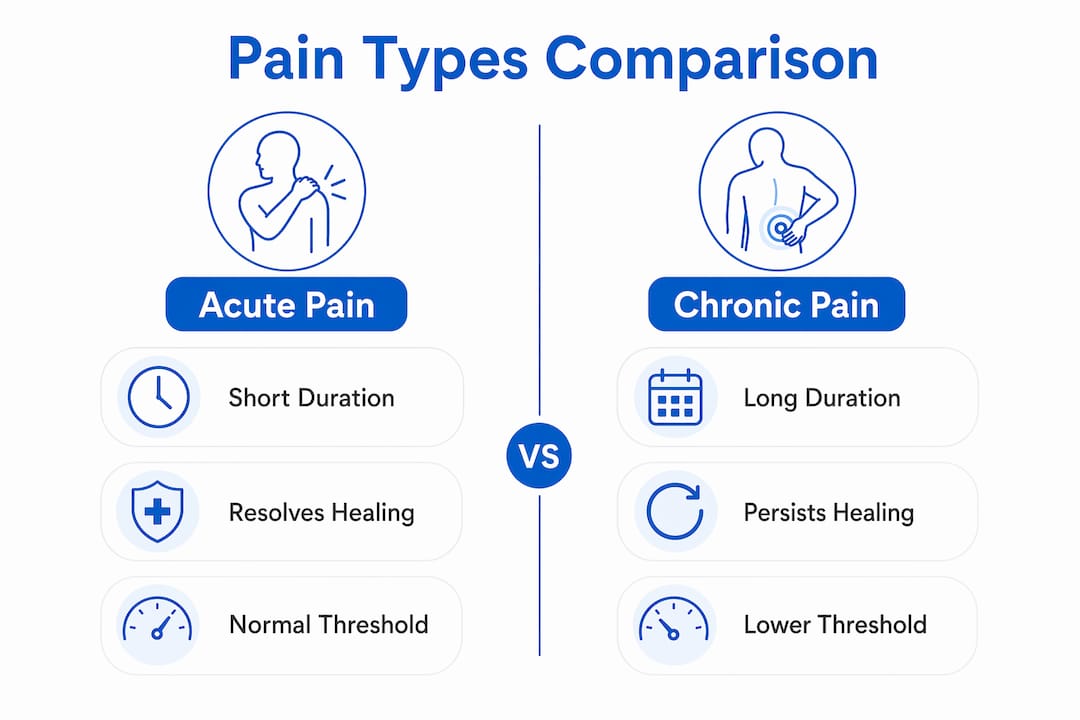
Central sensitization occurs when the spinal cord and brain become hyperexcitable. Pain thresholds drop, meaning stimuli that would normally feel mild or neutral start triggering pain responses. Central sensitivity syndromes cause a condition called allodynia, where even a light touch on the skin produces genuine pain. This is not psychological. It reflects measurable changes in how neurons fire.
At the molecular level, AMPA receptor subunit changes in spinal cord neurons drive much of this hyperexcitability. Specifically, neurons in the dorsal horn switch from GluA2 to GluA1 subunits, which allows more calcium to enter the cell with each signal. More calcium means stronger, more sustained firing. The result is a spinal cord that keeps broadcasting pain even when the original injury is gone.
| Feature | Acute pain | Chronic pain |
|---|---|---|
| Duration | Short, resolves with healing | Persists beyond tissue repair |
| Nervous system state | Normal sensitivity | Central sensitization |
| Pain threshold | Standard | Lowered; allodynia possible |
| Brain involvement | Reactive interpretation | Maladaptive neuroplasticity |
| Treatment focus | Injury site | Nervous system modulation |
Brain neuroplasticity in chronic pain involves maladaptive changes that keep pain signaling active independent of any peripheral injury. The brain physically rewires itself around the pain experience.
Pro Tip: Managing chronic pain effectively requires targeting nervous system sensitization, not just the original injury site. Treatments that address only tissue damage often fail because the real problem has shifted into the central nervous system.
What roles do glial and immune cells play in nervous system pain?
For decades, pain research focused almost entirely on neurons. The current understanding is far more complex. Glial cells, including microglia and astrocytes, actively participate in pain processing and maintenance.
Microglia are the immune cells of the central nervous system. When activated by injury or inflammation, they release cytokines, chemokines, and other inflammatory mediators that alter how neurons communicate. Astrocytes, which support neuronal function, also release substances that increase synaptic excitability. Together, glial cells sustain central sensitization long after the original trigger is gone.
Specific chemokine signaling pathways play a key role in this process. The CX3CL1/CX3CR1 pathway, for example, drives spinal microglial activation and sustains neuropathic pain. The CCL2/CCR2 pathway similarly recruits immune cells to the spinal cord, amplifying the inflammatory environment. These are not peripheral events. They happen inside the spinal cord itself.
The neuroimmune model of chronic pain also explains why many patients experience symptoms well beyond localized pain. Central sensitivity syndromes frequently include fatigue, cognitive difficulties often called brain fog, and widespread sensitivity. These are systemic effects of nervous system dysfunction, not separate conditions.
Key neuroimmune drivers of chronic pain include:
- Microglial activation releasing pro-inflammatory cytokines that lower neuronal firing thresholds
- Astrocyte signaling increasing glutamate availability at synapses, amplifying pain transmission
- T cell infiltration into the spinal cord, altering local immune and neuronal environments
- Chemokine pathways (CX3CL1/CX3CR1, CCL2/CCR2) sustaining long-term microglial reactivity
- Peripheral immune sensitization feeding back into central nervous system inflammation
The shift from a neuron-only model to a neuroimmune understanding of chronic pain explains why standard pain medications often fall short. They target neurons but leave the glial and immune components untouched.
How does the brain regulate pain, and what goes wrong in chronic pain?
The brain acts as a volume control for pain signals. It does not passively receive information. It actively decides how much pain you feel by sending signals back down the spinal cord through descending pathways.
Under normal conditions, these descending pathways dampen incoming pain signals. Endorphins, serotonin, and norepinephrine all play roles in this natural suppression system. This is why a soldier can sustain a serious injury in combat and feel little pain until the immediate threat passes. The brain turned the volume down.
In chronic pain, this regulation system can reverse. Instead of suppressing pain signals, the descending pathways begin to amplify them. The brain, now sensitized by months or years of pain input, starts treating normal signals as threats. Think of it like a fire alarm that gets stuck in the “on” position even after the fire is out. The alarm itself becomes the problem.
This faulty regulation contributes directly to conditions like fibromyalgia, complex regional pain syndrome, and persistent pain after surgery. The pain is real, measurable, and driven by the nervous system rather than ongoing tissue damage.
Pro Tip: Treatments that target the brain’s descending pathways, such as certain antidepressants, cognitive behavioral therapy, and spinal cord stimulation, work precisely because they restore normal pain regulation rather than simply blocking signals at the injury site.
What do nervous system pain mechanisms mean for treatment?
Understanding how the nervous system drives chronic pain changes what effective treatment looks like. Targeting only the injury site misses the central component of the problem. The most effective approaches address multiple levels of the nervous system simultaneously.
| Treatment type | Mechanism | Primary target |
|---|---|---|
| Nerve blocks | Interrupt peripheral pain signal transmission | Peripheral nervous system |
| Spinal cord stimulation | Modulate dorsal horn signal processing | Spinal cord |
| Cognitive behavioral therapy | Retrain brain’s pain interpretation and response | Brain cortex and limbic system |
| Physical therapy | Restore normal movement patterns and reduce sensitization | Peripheral and central nervous system |
| Pharmacologic agents (e.g., gabapentinoids) | Reduce neuronal hyperexcitability | Spinal cord and brain |
Physical therapy reduces central sensitization by restoring normal movement signals that compete with pain signals in the spinal cord. This is the gate control principle applied in practice. Cognitive behavioral therapy changes how the brain interprets pain, reducing the emotional amplification that worsens the experience.
Advanced interventional treatments like nerve block injections and spinal cord stimulation directly target the pain pathways in nervous system structures. Spinal cord stimulation, in particular, works by delivering mild electrical pulses to the dorsal horn, disrupting the abnormal signaling patterns that sustain chronic pain. For patients who have not responded to conservative care, these options address the nervous system directly rather than relying on systemic medications alone.
Emerging research on glial-mediated inflammatory cascades points toward future therapies that target microglia and astrocytes specifically. These treatments do not yet have widespread clinical availability, but they represent the next frontier in chronic pain management.
Hudson Pain and Spine’s approach to nervous system-driven chronic pain
Chronic pain rooted in nervous system dysfunction requires more than a prescription. It requires a specialist team that understands the full picture, from peripheral nerve compression to central sensitization.
Hudson Pain and Spine offers interventional treatments designed to address pain at the nervous system level. Services include nerve blocks and spinal cord stimulation targeting both peripheral and central pain pathways. Patients across Bergen, Passaic, and Middlesex counties can access comprehensive pain management at multiple convenient locations. If chronic pain is affecting your daily life, schedule an evaluation.
Key Takeaways
Chronic pain is a nervous system disorder, not simply an injury that failed to heal. Effective treatment must address central sensitization, neuroimmune changes, and brain modulation, not just the original pain source.
| Point | Details |
|---|---|
| Nociception is the foundation | Pain begins with nociceptors detecting harmful stimuli and transmitting signals through peripheral nerves. |
| Central sensitization drives chronicity | Molecular changes in spinal neurons lower pain thresholds and sustain pain after injury resolves. |
| Glial cells maintain chronic pain | Microglia and astrocytes release inflammatory mediators that keep the nervous system hyperexcitable. |
| Brain regulation can amplify pain | Descending pathways that normally suppress pain can reverse in chronic conditions, worsening the experience. |
| Treatment must target the nervous system | Nerve blocks, spinal cord stimulation, and behavioral therapies address pain at its neurological source. |
FAQ
What is nociception and how does it relate to pain?
Nociception is the nervous system’s process of detecting and transmitting signals from harmful stimuli. It is the biological mechanism behind pain perception, involving nociceptors, peripheral nerves, the spinal cord, and the brain.
Why does chronic pain persist after an injury heals?
The brain continues to broadcast pain signals even without active tissue damage, a result of central sensitization and maladaptive neuroplasticity that develop during prolonged pain states.
What is central sensitization?
Central sensitization is a state of nervous system hyperexcitability in which the spinal cord and brain become overly responsive to stimuli, lowering pain thresholds and causing conditions like allodynia and hyperalgesia.
How do glial cells contribute to chronic pain?
Microglia and astrocytes release inflammatory mediators that alter synaptic transmission and sustain central sensitization, keeping the nervous system in a heightened pain state long after the initial injury.
Can the brain be retrained to reduce chronic pain?
Treatments like cognitive behavioral therapy and spinal cord stimulation target the brain’s descending pain regulation pathways, helping restore normal pain modulation rather than simply blocking signals at the injury site.
Recommended
- Why Athletes Develop Chronic Pain: Causes and Solutions | Hudson Pain and Spine Blog
- Chronic Pain Treatment Options Explained for Adults | Hudson Pain and Spine Blog
- Could It Be CRPS? 4 Symptoms Beyond Chronic Pain | Hudson Pain and Spine Blog
- How Pain Affects Quality of Life: What You Need to Know | Hudson Pain and Spine Blog
About the Medical Reviewer
Dr. Saurabh Dang is a double board-certified interventional pain management specialist serving Central and Northern New Jersey. He combines clinical expertise with a patient-centered approach to help patients find lasting relief from chronic pain conditions.
Read Full Bio →Seeking Treatment for Chronic Pain?
Dr. Dang and the team at Hudson Pain and Spine offer specialized care and advanced interventional treatments.
Ready to Find Relief from Pain?
Schedule your consultation with Dr. Saurabh Dang at our Englewood office.
Serving patients across Central and Northern New Jersey — Bergen, Passaic, and Middlesex counties.